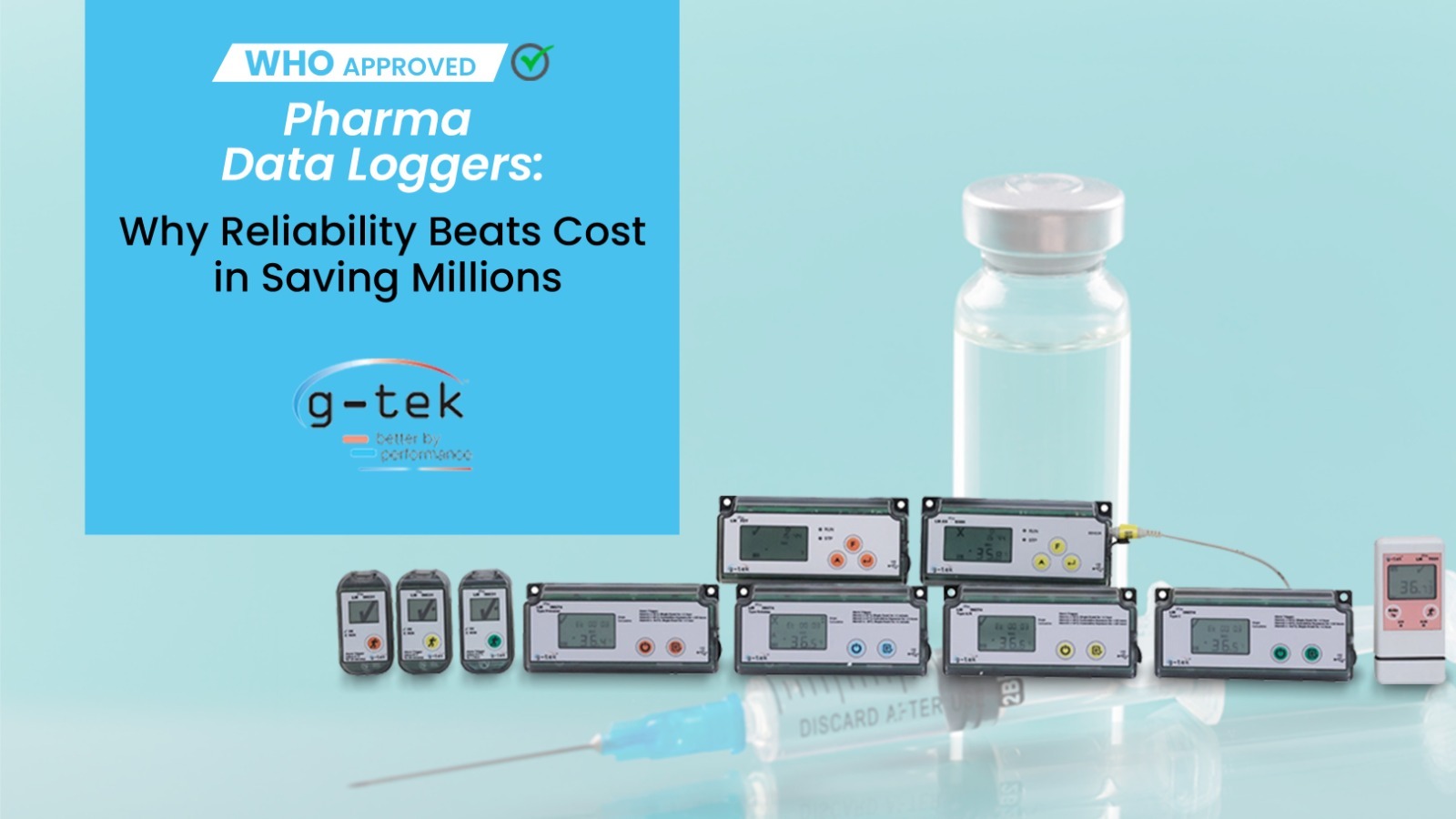
The Hidden Costs of Cheap Data Logger data logger in the pharmaceutical industry, where precision…
Everything You Need To Know About Data Logging vs. Monitoring

Many people think that data logging and data monitoring are the same things. However, they are different. People often use these terms interchangeably. Although the terms function differently, they work together to gather critical information. Both data logging and monitoring are valuable and offer insight into the performance of a machine or process that could affect safety and quality.
What Is Data Logging?
Data logging involves capturing, storing, and displaying one or multiple datasets to analyze activity, identify trends and help predict future events. Although most people prefer automating the processes through intelligent applications like artificial intelligence (AI), machine learning (ML), and robotic process automation (RPA), you can opt for manually automating the processes.
Data loggers serve several purposes across various industries, including tracking supply chain and transportation activity. It also helps measure temperatures and humidity levels in various locations, monitor growing conditions and environmental conditions in greenhouses and firms, and review network performances and CPU usage.
- Definition: Capturing, storing, and displaying datasets for analysis.
- Components: Microprocessor, memory, and sensors.
- Function: Sensors record parameters (temperature, humidity, light, sound, CPU usage, etc.), stored in memory for later transfer to a PC or software.
- Use Cases:
- Supply chain and transportation tracking.
- Greenhouse and farm environmental monitoring.
- Pharma cold chain compliance.
- Industrial process validation.
How Does Data Logging Work?
A data logger comprises three main components- a microprocessor, memory, and one or multiple sensors. During the logging process, one or multiple sensors gather and record data, such as sound, temperature, light, and ambient. The microprocessor then performs basic measurement and logic tasks, like adding, subtracting, transferring, and comparing numbers. The data gets stored in the logger’s memory, which you can transfer to a computer or an electronic device for analysis.
What Is Data Monitoring?
Data monitoring is a category of oversight mechanisms that helps to monitor and ensure the quality of each data instance created, utilized, and maintained within an organization. The mechanism includes processes for reviewing data to ensure its completeness, accuracy, consistency, security, and validity. You can also use the processes to evaluate adherence to established protocols and standards.
Often organizations couple data monitoring processes with a manual or automated reporting process with performance reports generated within an information system. The process also supports data governance initiatives by providing visibility into which an organization is using data and the person using it.
- Definition: Oversight mechanism ensuring data quality, accuracy, and adherence to standards.
- Function: Software scans data continuously against pre-set rules.
- Processes:
- Reviews completeness, accuracy, consistency, and security.
- Generates performance reports (manual or automated).
- Supports data governance by showing who uses data and how.
- Use Cases:
- Pharma QA/QC teams ensuring compliance.
- IT systems monitoring CPU/network performance.
- Industrial plants validating process parameters in real time.
How Does Data Monitoring Work?
You can configure data monitoring software to maintain data accuracy. First, you need to set the standards and quality parameters. Then, the software scans all data on an ongoing basis and compares it to established rules. With the arising of new objects, you can update the data monitoring rules and apply them through the software.
Which One Do You Need?
The type of system you require depends on why you are taking the measurements. If you are taking the measurements for analyzing the current value, look if it is in range, the monitoring system is all you need. However, if you plan to analyze it further and keep a record, you will need a data logger.
Logging vs Monitoring
| Aspect | Data Logging | Data Monitoring |
|---|---|---|
| Purpose | Record and store data for analysis | Ensure real-time accuracy and compliance |
| Output | Historical datasets, reports | Alerts, dashboards, performance checks |
| Tools | Data loggers, recorders, sensors | Monitoring software, dashboards |
| Industries | Pharma, food, agriculture, transport | Pharma QA/QC, IT, industrial automation |
| Compliance Role | Audit-ready documentation | Immediate corrective action |
Why Choose G-Tek?
For 25 years, G-Tek has emerged as a major player helping our customers monitor, record, analyze their vital process parameters, and meet compliance requirements. Our designs meet the Taguchi Method of Robust Design and Quality Function Deployment (QFD) to meet the expectations of customers’ needs in terms of product features, design requirements, and control parameters. Our passion for recording, controlling, and perfecting help us become “Better by Performance.”
FAQ
What is the difference between data logging and monitoring?
Data logging records and stores data for later analysis, while monitoring ensures real-time accuracy and compliance.
Which one should I use for pharma compliance?
Both are required—logging for audit-ready records and monitoring for immediate corrective action.
How does data logging work?
Sensors capture parameters, a microprocessor processes them, and memory stores the data for later transfer and analysis.
How does data monitoring work?
Software scans data continuously against pre-set rules, ensuring accuracy, consistency, and adherence to standards.
Why choose G-Tek India for logging and monitoring?
With 25+ years of expertise, G-Tek designs systems that meet FDA 21 CFR Part 11 and WHO standards, ensuring compliance, reliability, and cost-effectiveness.
Related Posts