Every minute counts in vaccine storage and transport. A power outage might seem minor but…
Farm to Fork: How Real-Time Cold Chain Visibility is Enhancing Potato Chip Quality
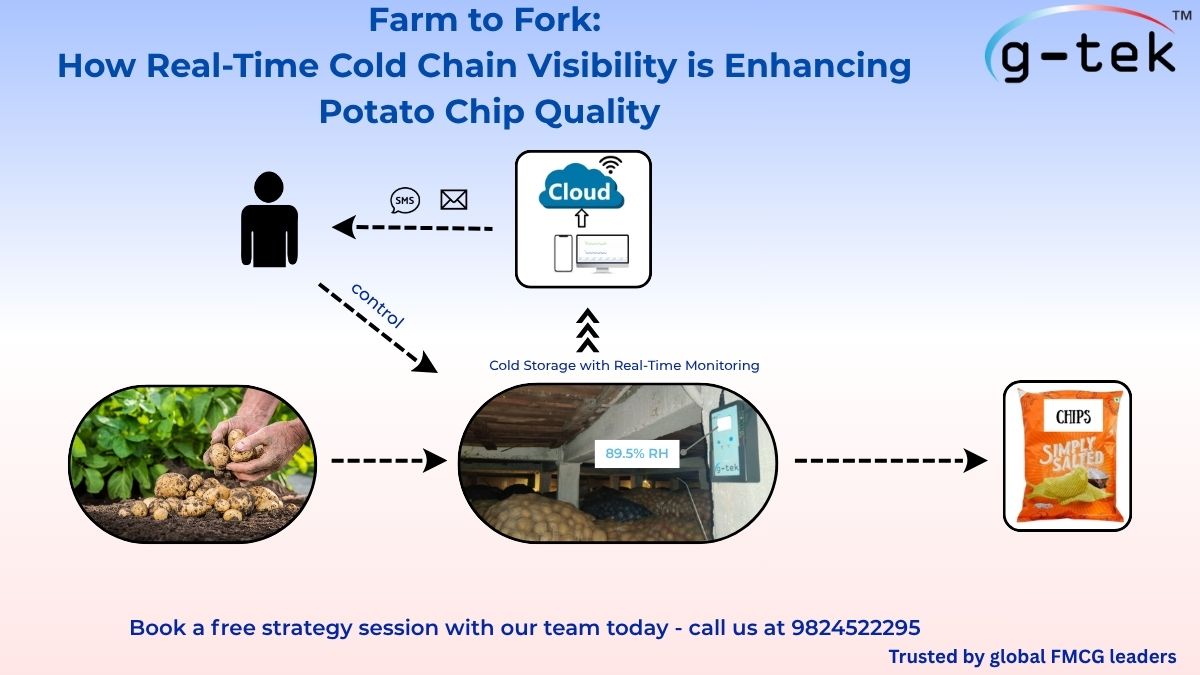
One of the largest FMCG companies in the world, known for its range of potato-based snacks, manages an extensive network of cold storage warehouses through various partners and suppliers. Maintaining the right temperature, humidity, and CO₂ levels in these facilities is critical to preserving potato quality before processing.
Even small deviations in storage conditions can affect starch conversion, leading to undesirable chip color, texture, or taste.
Key Insights from the Case Study
- Industry Context: A global FMCG company managing potato-based snacks relies on cold storage partners.
- Challenge: Even small deviations in storage conditions affect starch conversion, leading to poor chip color, taste, or texture.
- Solution: Deployment of WiFi-based data loggers in warehouses.
Features of G-Tek’s Real-Time Monitoring
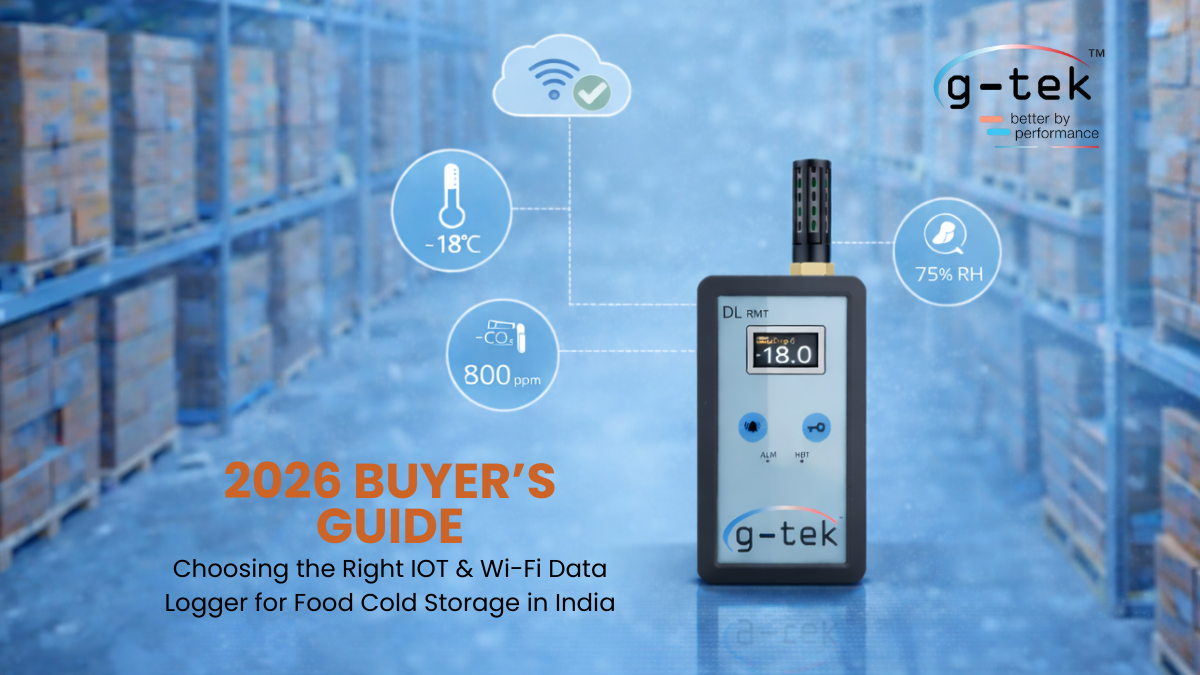
To help overcome this issue, we worked with cold storage operators supplying to this MNC and installed WiFi-based data loggers in their warehouses. These loggers:
- Continuous Monitoring: Tracks temperature, relative humidity, and CO₂.
- Cloud Integration: Data pushed to a secure cloud platform at regular intervals.
- Alerts: SMS and email notifications when parameters exceed thresholds.
- Supply Chain Integration: Data shared with the FMCG’s farm intelligence platform, linking crop data (acreage, irrigation, harvest timelines) with cold chain conditions.
Closing the Loop with End-to-End Visibility
In addition to local visibility and alerts, the collected data is also shared with the MNC’s extended supply chain system, which includes a farm intelligence platform tracking crop data such as acreage, irrigation status, and harvesting timelines.
This integration gives the MNC:
• Complete visibility from crop to cold chain
• Better traceability and planning
• Improved ability to correlate storage conditions with product quality
It supports their broader “Farm to Fork” initiative, aiming for greater control and consistency across the value chain.
Scalable Applications
This approach has now been extended to several other cold storage providers, both small and large, ensuring standardized monitoring and faster response across the supply chain.
- Small & Large Operators: Works across different warehouse sizes.
- Food Processing: Ensures consistency in FMCG products.
- Agribusiness: Integrates environmental monitoring with crop data.
- Competitive Necessity: Moving beyond manual checks is now essential for compliance and efficiency.
Benefits Observed
- Reduced Quality Rejections: Better control of potato storage conditions.
- Supplier Accountability: Standardized monitoring across multiple operators.
- Improved Planning: Aligns crop harvesting with processing schedules.
- Traceability: Complete visibility from farm to cold chain to finished product.
- Data-Driven Practices: Enhances storage methods and compliance readiness.
For companies in food processing, cold storage, or agribusiness, integrating environmental monitoring with crop data is no longer optional — it’s becoming a competitive necessity.
? If you’re responsible for quality, compliance, or operations, and you’re still relying on manual checks or isolated systems, it’s time to upgrade.
? Let’s show you what real-time visibility can do.
Whether you’re managing one warehouse or a global supply chain, this model is scalable, proven, and ready to deploy.
? Book a free strategy session with our team today — and discover how you can bring “Farm to Fork” transparency into your own operation.
Related Posts