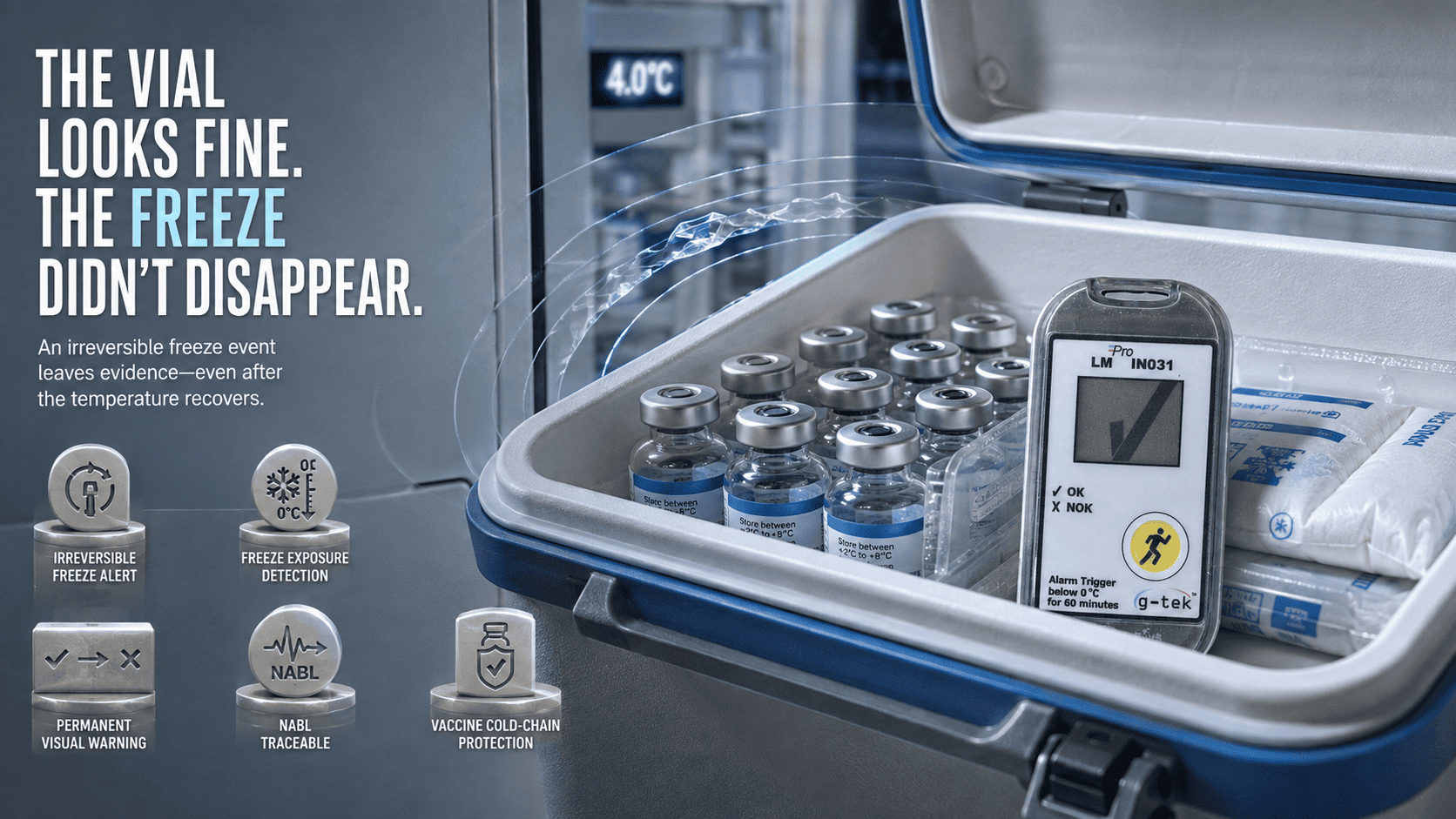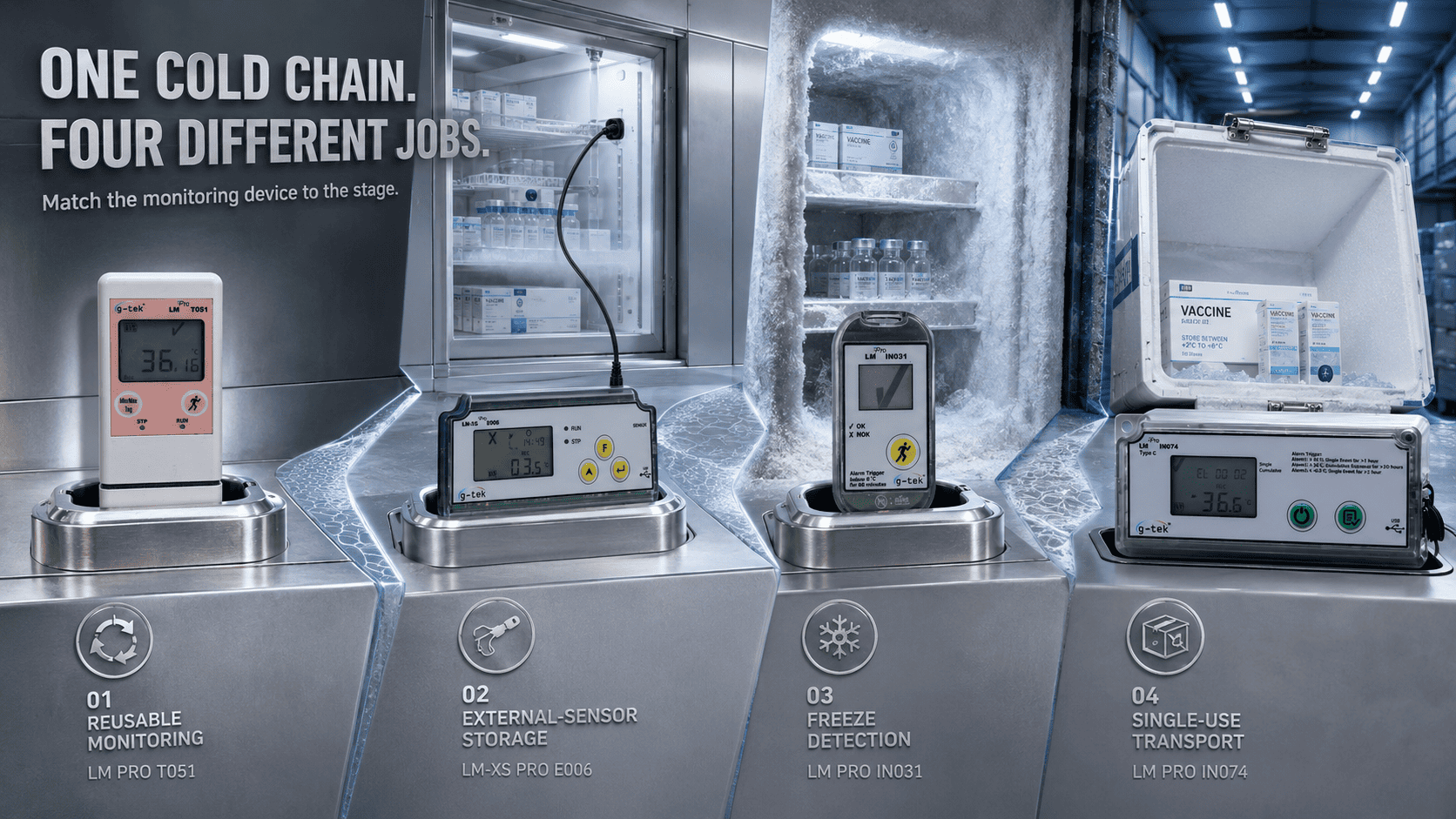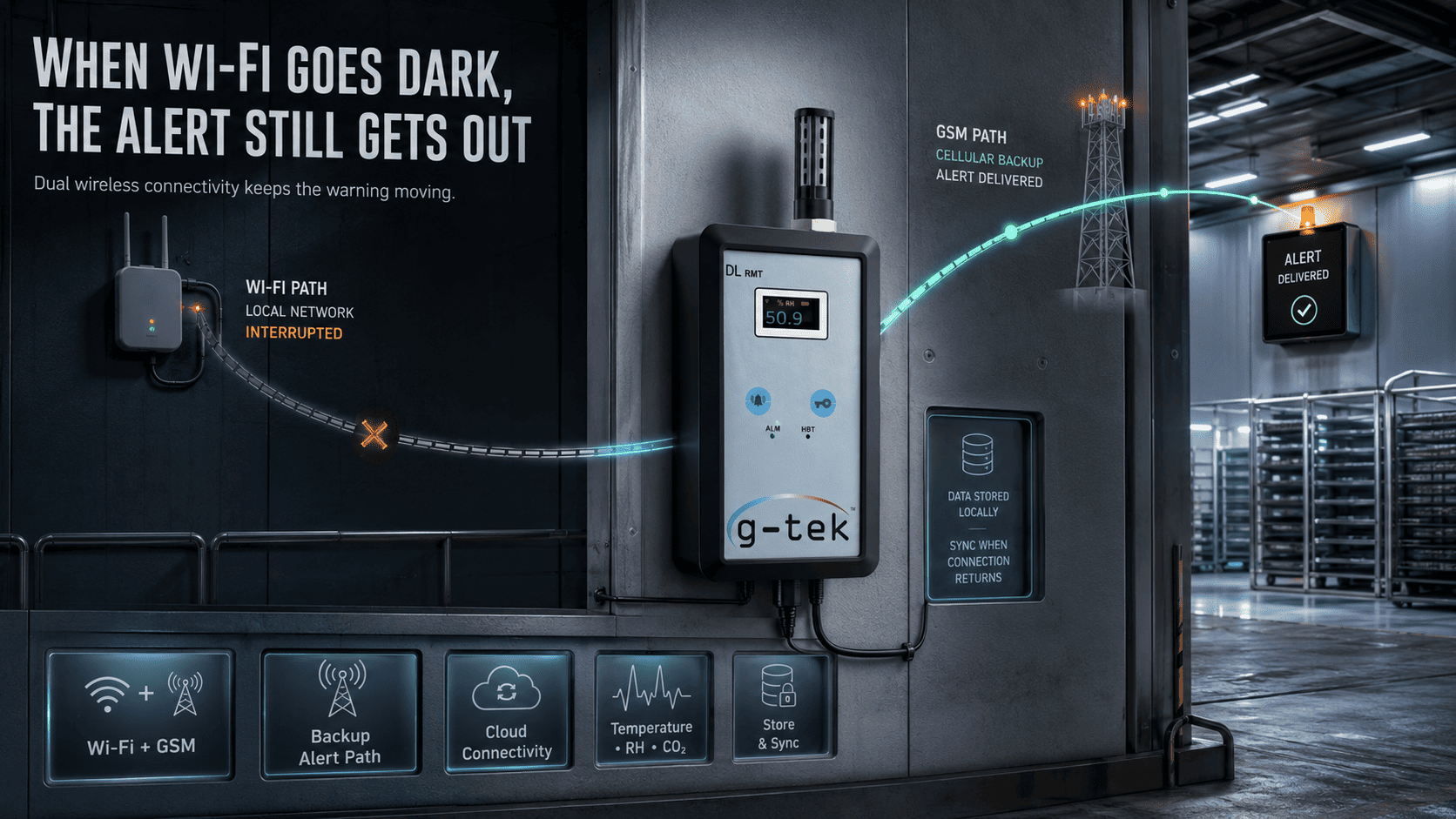
A health worker lifts a vial from the cold box. It reads 4°C. It's clear…
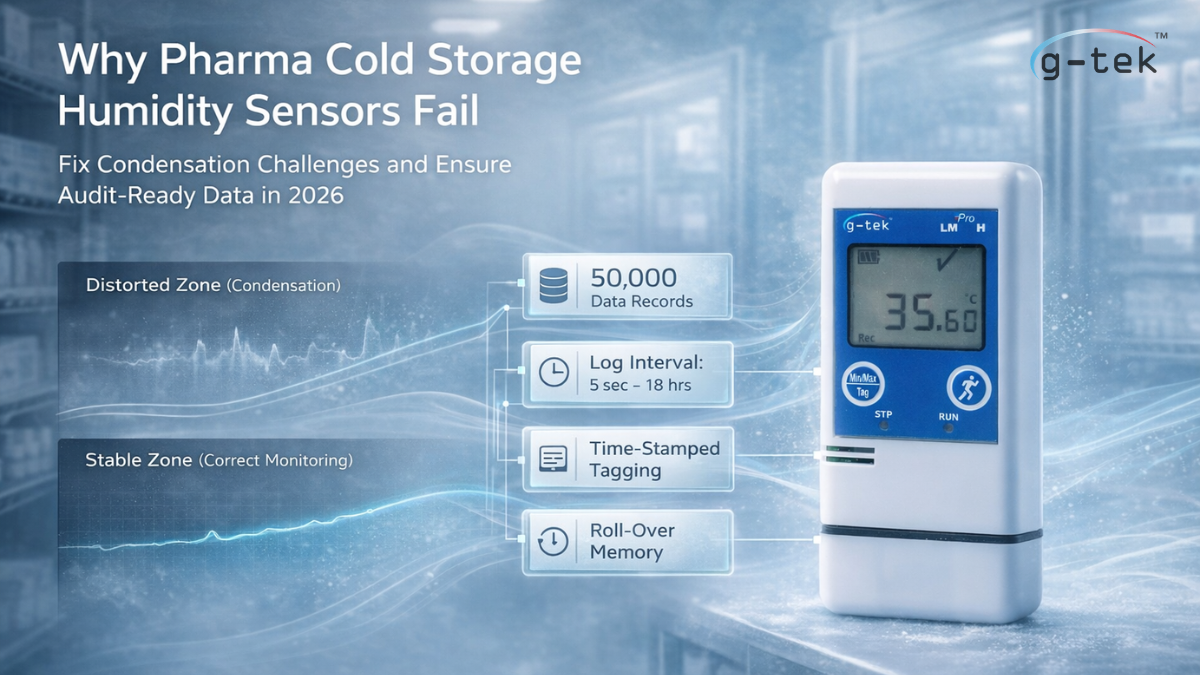
Why Pharma Cold Storage Humidity Sensors Fail — Fix Condensation Challenges and Ensure Audit-Ready Data in 2026
If you manage cold storage for pharmaceuticals, you know that temperature control is only part of
the equation. Humidity plays an equally critical role, but at low temperatures, sensors often behave
unpredictably. Inconsistent humidity data can create compliance headaches, audit risks, and
operational uncertainty.
Here’s the truth: most humidity “failures” aren’t device problems, they’re environmental issues
caused by condensation and rapid temperature changes, which can distort readings.
The Hidden Challenge of Humidity Monitoring
Imagine your cold room is near freezing, and humidity readings suddenly spike or drop in a data logger for cold storage system. Your QA/QC team spends hours justifying logs during audits. The cause isn’t a faulty sensor it’s condensation forming on sensor surfaces, sudden airflow from doors, and high moisture saturation. Essentially, sensors in a data logger for cold storage setup measure both environmental humidity and interference from condensation, making readings less interpretable without context.
Why This Matters for Pharma Leaders
For QA/QC managers, validation engineers, and executives:
- Increased time spent analysing inconsistent data instead of focusing on operations
- Difficulty demonstrating compliance during audits
- Risk of operational uncertainty in critical storage zones
Even minor fluctuations in regulated environments can attract scrutiny. Clear, traceable, and audit-
Ready data isn’t optional, it’s essential.
How Condensation Distorts Sensor Accuracy
At low temperatures:
- Air reaches near-saturation rapidly
- Moisture condenses on sensors and cold surfaces
- Condensation temporarily alters sensor response
- Repeated exposure delays stabilization and distorts trends
Sensors are reflecting moisture interference as well as environmental conditions, which
complicates interpretation.
Practical Approach to Audit-Ready Monitoring
Sensor Placement: Avoid direct airflow, high-traffic doors, and condensation-prone surfaces. Place
sensors in zones representing stable storage conditions.
Stabilization Time: Allow readings to settle after operational disturbances before evaluating data.
Contextual Monitoring: Use solutions that capture uninterrupted data, track operational events,
and correlate temperature-humidity trends for audit-ready logs.
Low-Temperature Sensor Selection: Choose sensors built to handle sub-zero conditions and
condensation exposure. Proper deployment ensures consistent, interpretable, and compliant data.
Take Action for Clear Humidity Data
If you want expert guidance on managing humidity measurement challenges in pharma cold storage,
Schedule a 1-1 meeting with our expert to explore how G-Tek’s monitoring solutions deliver
accurate, interpretable, and audit-ready humidity data, empowering confident decision-making
across your cold storage operations.
Related Posts