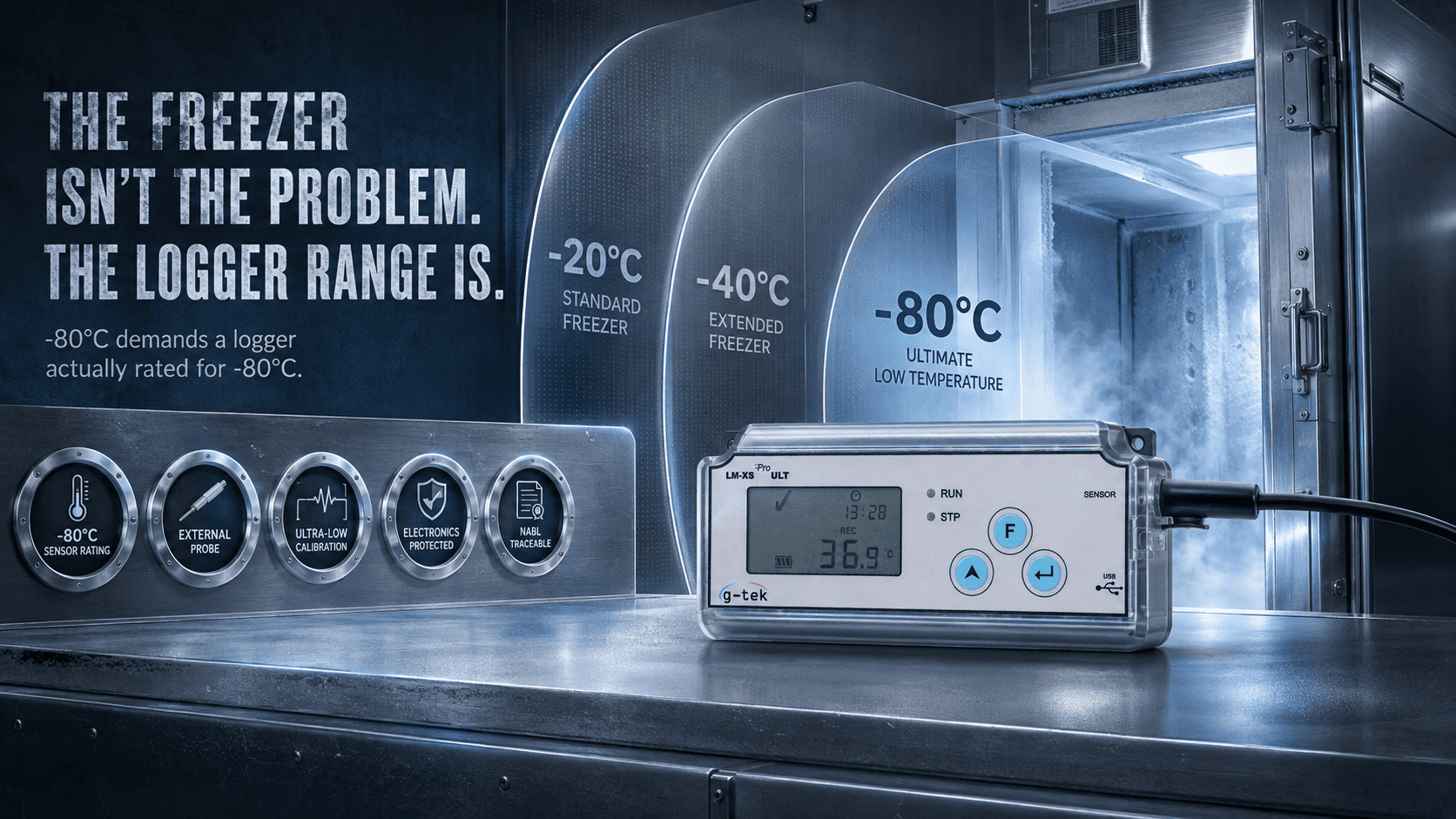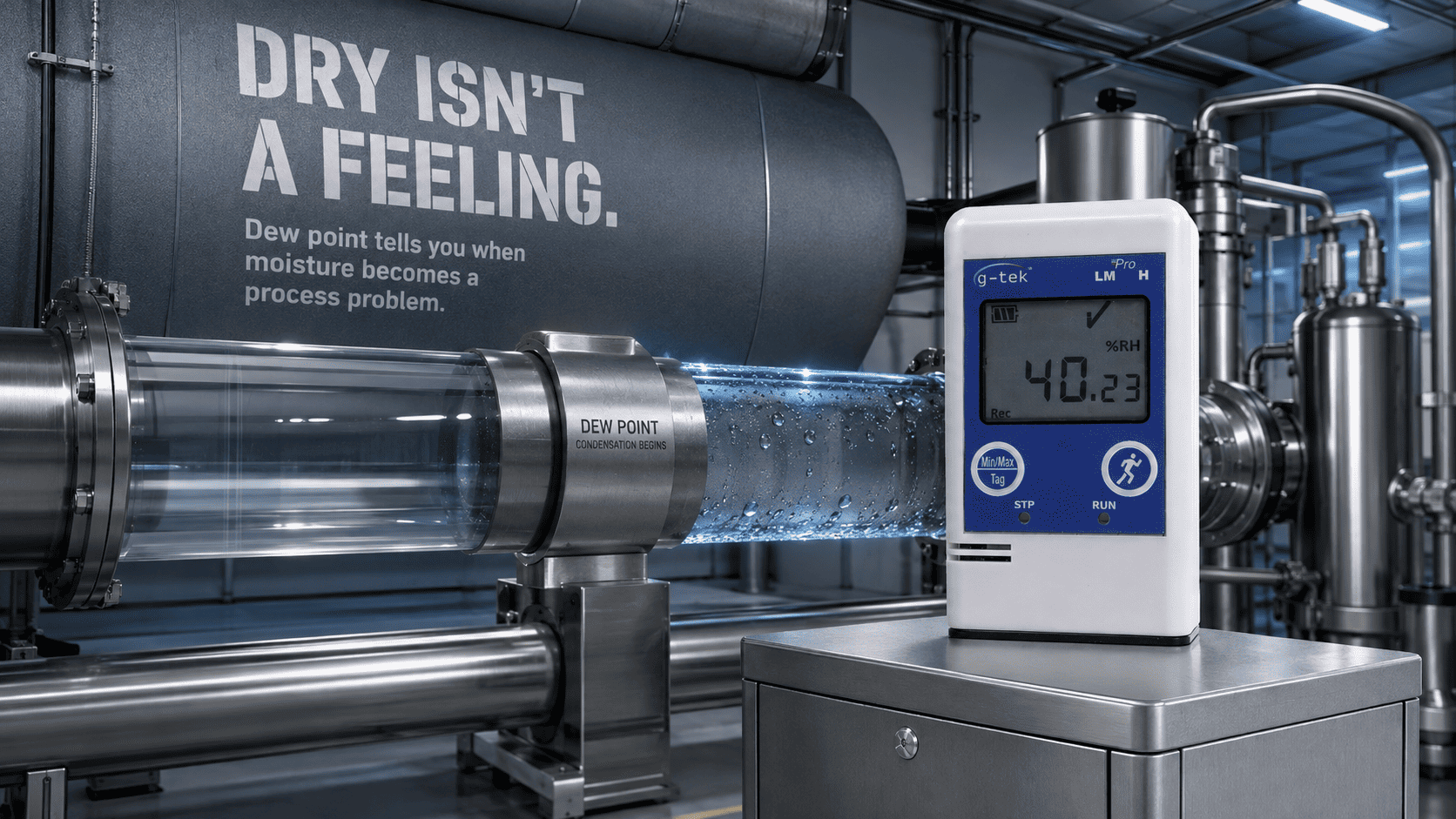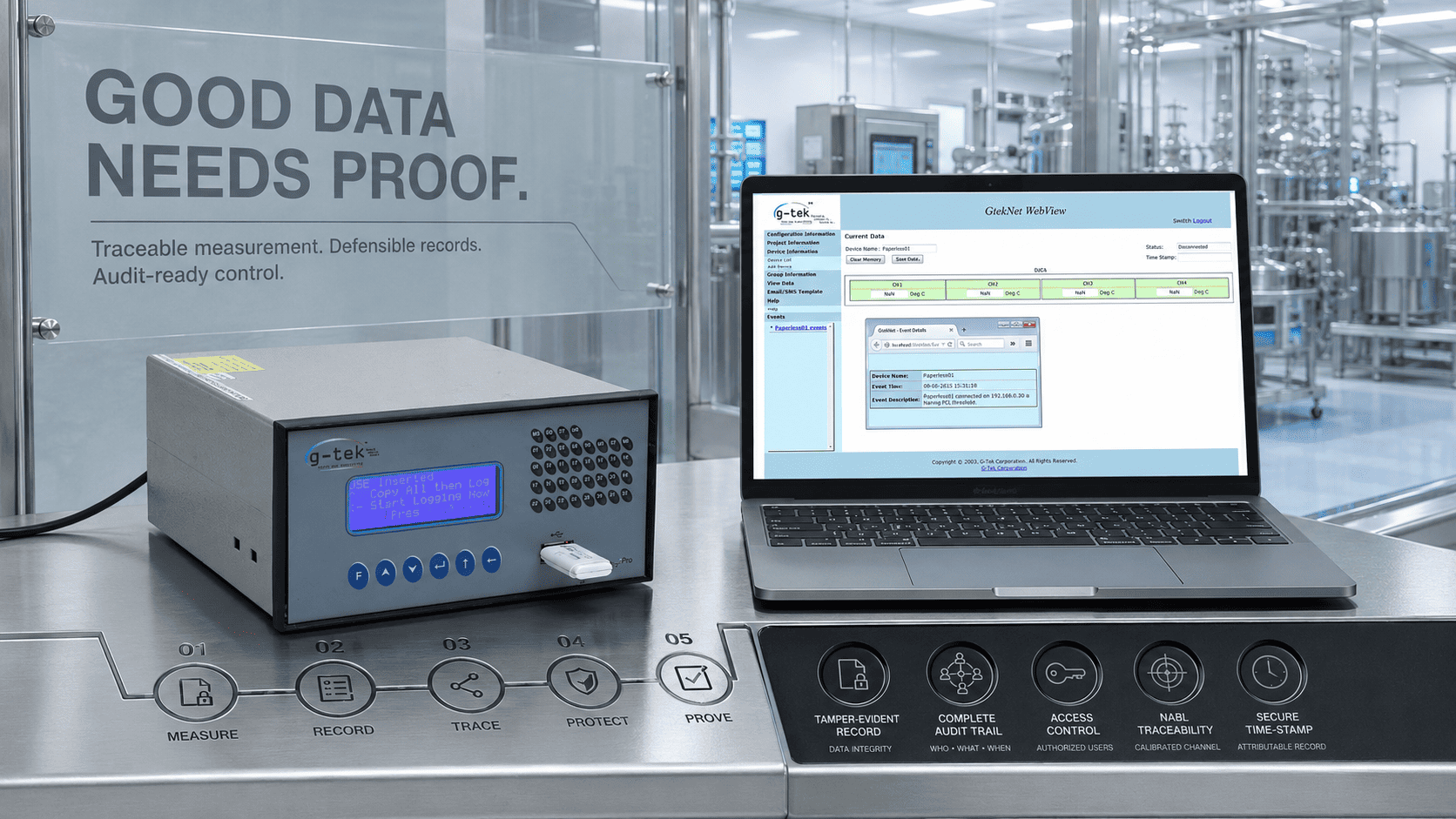
Ask yourself one thing before your next ultra-low purchase: is the logger you're about to…
Server Room Monitoring: Supporting ISO/IEC 20000-1 Compliance and Audit Readiness
The Auditor Asked One Question. The IT Team Had No Answer.
“Show me the last twelve months of server room environment data.”
The room went silent.
The team had a few screenshots from the AHU display. They also had a handwritten logbook with missing entries. Unfortunately, that was not enough. The auditor raised an ISO/IEC 20000-1 observation before lunch. As a result, the organization delayed certification by an entire quarter.
If your organization is pursuing IT Service Management certification in 2026, this situation may sound familiar. In fact, many teams across India face similar challenges during audit preparation.
The Gap Nobody Talks About Until Audit Day
Most organizations spend months preparing for certification audits. Incident management processes are documented. Service level agreements are monitored. Change control procedures are well established.
However, another requirement often remains unnoticed.
The moment an auditor enters the server room and requests continuous environmental records, the certification process can slow down dramatically. Many teams discover a gap they never expected.
ISO/IEC 20000-1 does not specify exact temperature or humidity limits. However, the standard expects organizations to protect service availability, capacity management, continuity, and operational reliability. Therefore, environmental control becomes an important part of demonstrating compliance.
Without records, there is no evidence.
Without evidence, certification becomes more difficult.
Why Environmental Records Matter
The deeper organizations examine audit expectations, the clearer the requirements become.
Many auditors refer to ASHRAE TC 9.9 guidance when reviewing server room conditions. These recommendations suggest temperatures between 18°C and 27°C and relative humidity between 40% and 60% for Class A1 and Class A2 data centres.
These limits exist for a reason.
Excessive heat can increase equipment failures and unplanned downtime. Similarly, humidity fluctuations can create static discharge risks or condensation problems. Both situations can affect service continuity and operational performance.
Because of this, occasional spot checks are rarely enough. Organizations increasingly need continuous server room monitoring records that demonstrate environmental conditions remained within acceptable limits throughout the year.
The G-Tek LM Pro-H Difference
This is where the G-Tek LM Pro-H Temperature & Humidity Data Logger provides a practical solution.
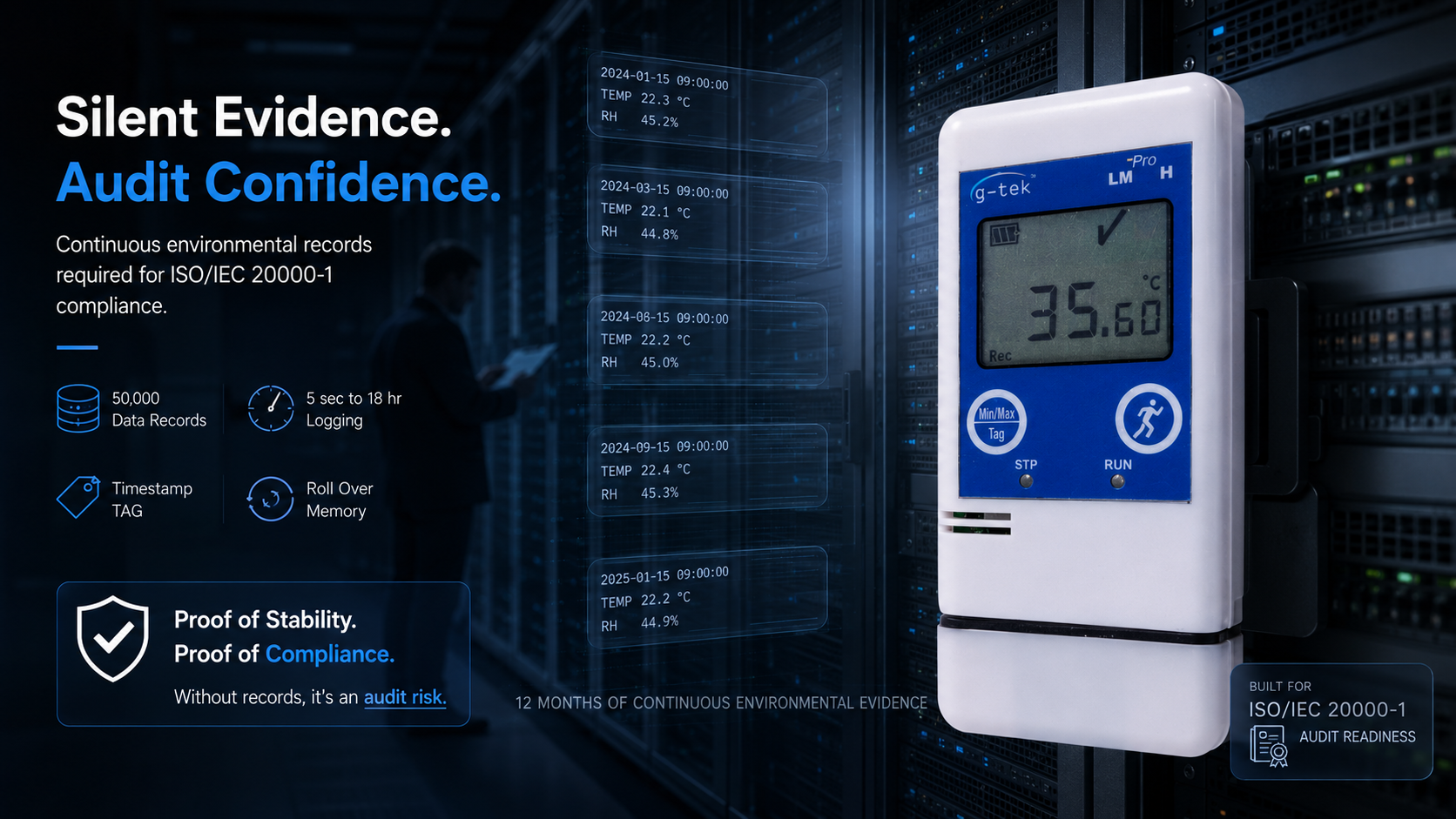
The LM Pro-H continuously records server room conditions using NABL-calibrated sensors and operates independently of existing IT infrastructure. In addition, its compact design allows installation inside a 1U rack space or near critical equipment.
Teams can generate downloadable PDF reports through USB whenever auditors request environmental records. Furthermore, alarm tagging helps identify temperature and humidity excursions quickly, ensuring important events are never overlooked.
Instead of relying on scattered screenshots or manual logs, organizations gain a complete environmental history that remains available throughout the audit cycle.
One device. One monitoring point. Twelve months of documented audit support.
One Monitoring Solution. Multiple Compliance Benefits.
The value of server room monitoring extends beyond ISO/IEC 20000-1.
The same environmental records can support:
• ISO 27001 compliance initiatives
• ISO 22301 business continuity programs
• Uptime Institute Tier assessments
• Internal IT infrastructure audits
Because of this, a single monitoring solution can support several compliance objectives at the same time. Moreover, organizations can reduce documentation gaps, improve audit readiness, and gain greater visibility into environmental risks affecting critical IT assets.
Before the Auditor Walks Into Your Server Room
Consider one important question.
If an auditor arrived tomorrow morning, could your team immediately produce twelve months of continuous, timestamped, NABL-traceable environmental records?
Would those records be audit-ready?
Would they demonstrate continuous environmental control?
If the answer is uncertain, the gap may already exist within your server room.
More importantly, that gap could delay certification, create audit findings, or weaken your ability to demonstrate operational control. Therefore, server room monitoring becomes an essential part of maintaining compliance and supporting business continuity.
👉 Speak with a G-Tek specialist to evaluate your current monitoring strategy and align your server room with ISO/IEC 20000-1, ISO 27001, and ASHRAE recommendations before your next audit.
Related Posts