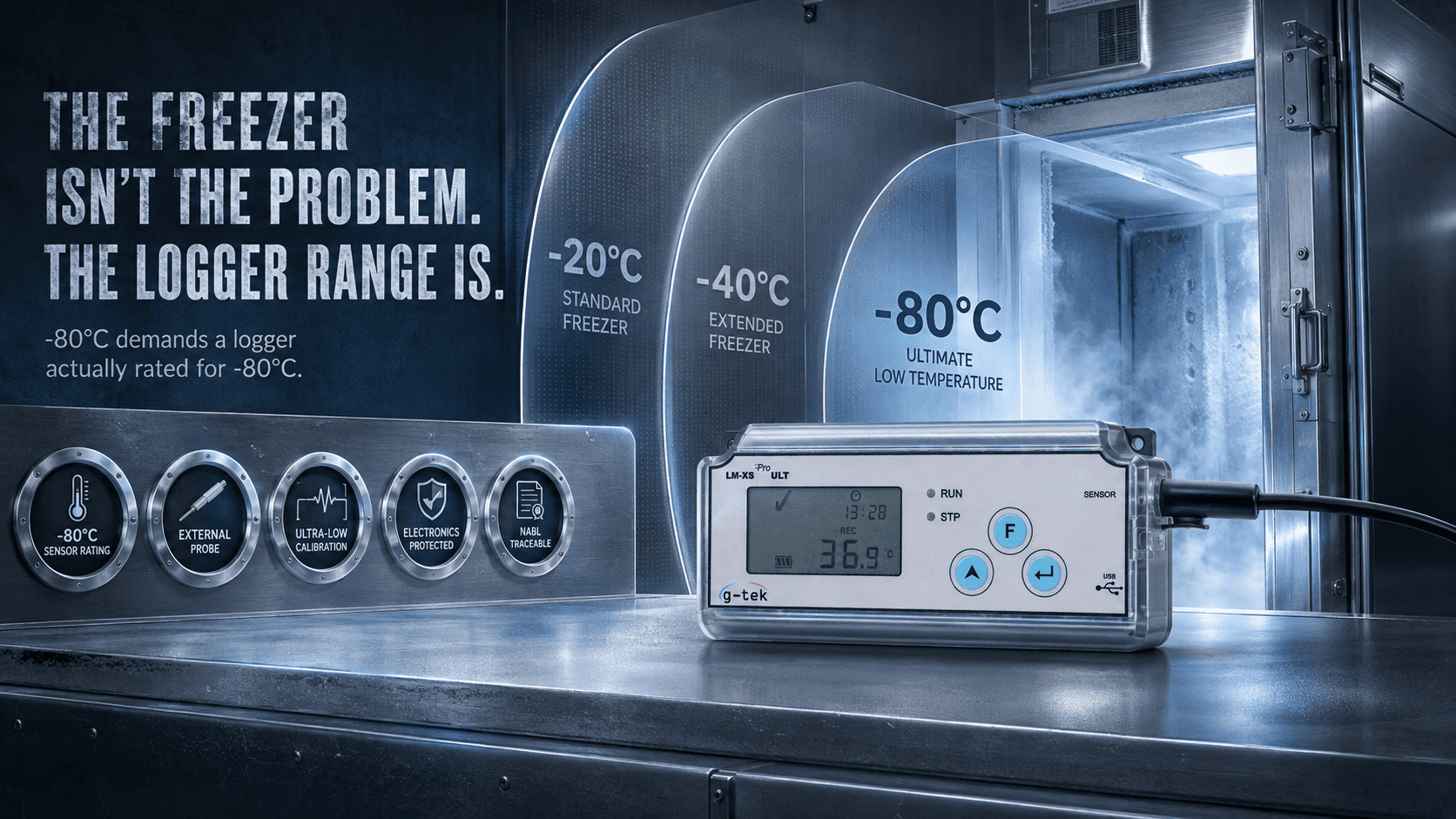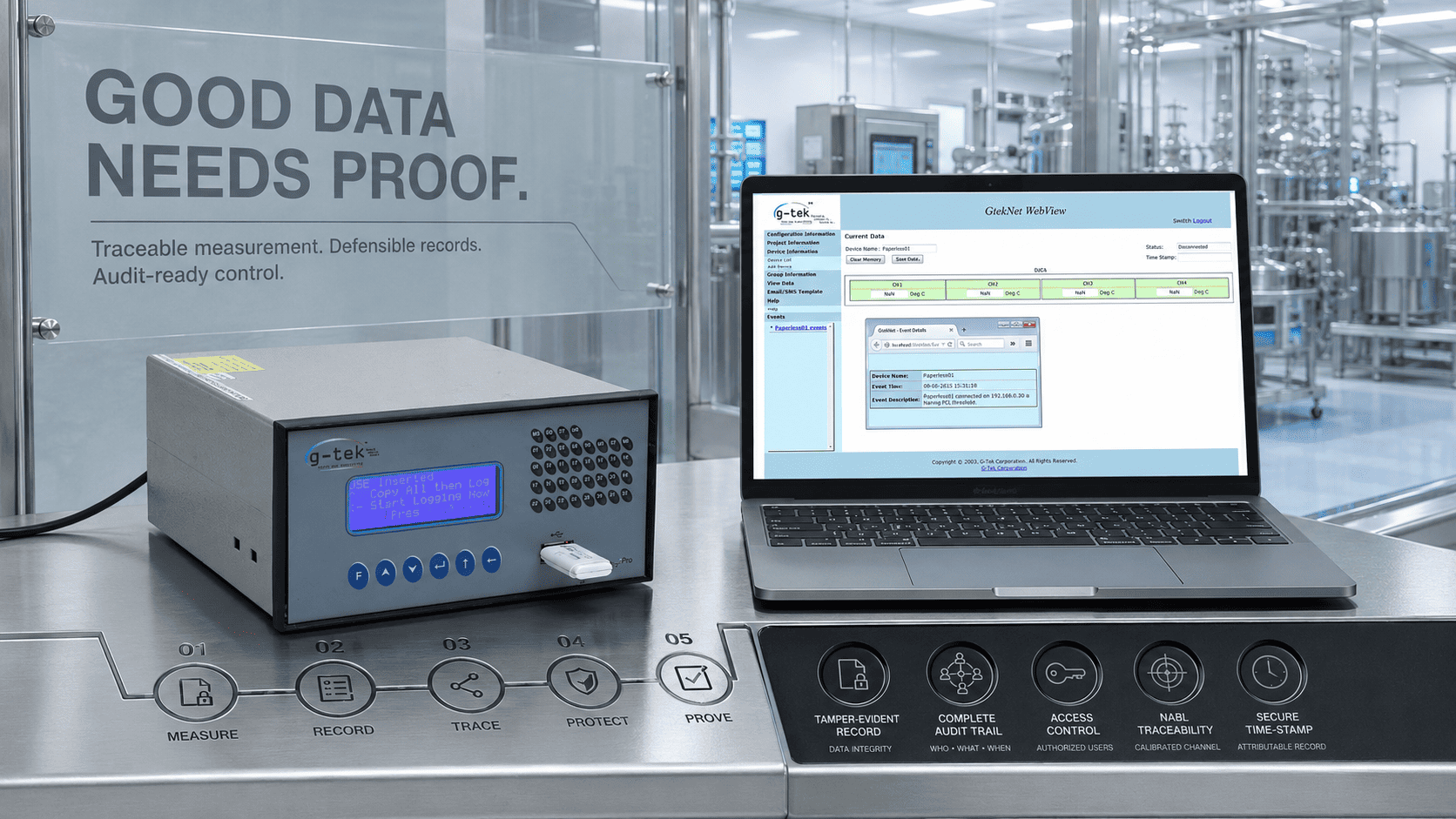
Ask yourself one thing before your next ultra-low purchase: is the logger you're about to…
The 7 Specs Pharma Buyers Wish They’d Checked Before Signing the Data Logger PO in 2026
The logger looked perfect on the quote. Clean spec sheet. Signed, installed, running. Then the first audit arrives, and the questions start. Is the calibration scope right for this range? Is it traceable? Can it support a 21 CFR Part 11 audit trail? Suddenly, the spec sheet that looked complete has gaps nobody checked.
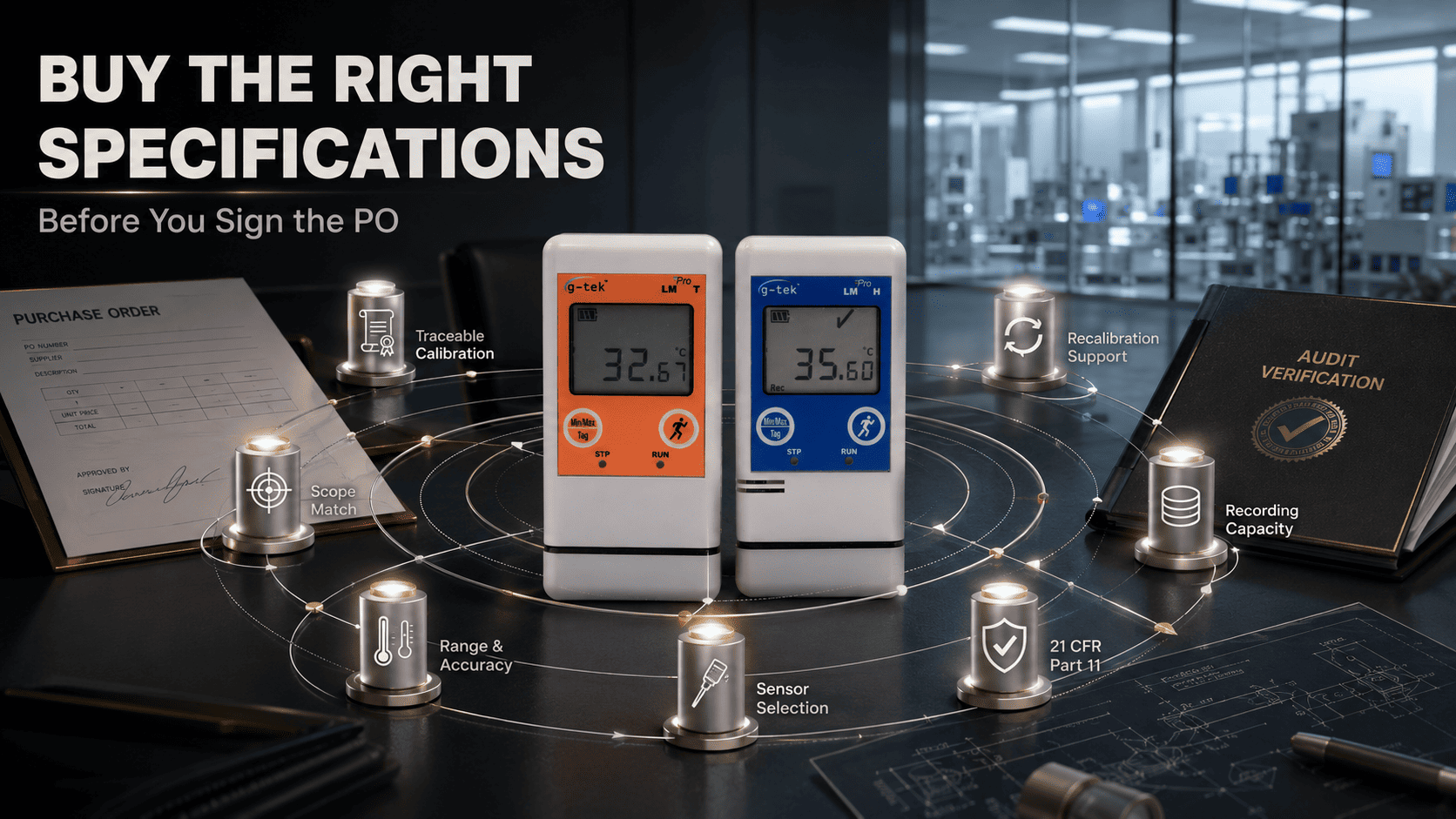
In 2026, most data logger buying mistakes aren’t made at installation. They’re made at the PO, when a spec that looked fine on the quote turns out to be the one an auditor asks about. These are the seven data logger specifications worth verifying before you sign, not after.
🎯 Key Takeaways
- Most logger buying mistakes are locked in at the PO, not discovered until the first audit
- Calibration must be traceable, and its scope must match the range you’ll actually measure
- Data-integrity features help determine whether records can withstand a regulated audit
- Range, accuracy, and sensor type must fit the real application, not just look good on paper
- Recalibration support after the warranty is a specification worth checking, not an afterthought
Which Data Logger Specifications Should You Verify Before Signing the PO?
Before signing a data logger PO, verify seven things: calibration traceability, calibration scope match, range and accuracy, sensor type, data-integrity features, recording capacity, and recalibration support. These are the details an audit may examine, not just the headline number on the quote.
1.calibration traceability.
Is it traceable to national standards through an accredited NABL ISO/IEC 17025 laboratory, with stated measurement uncertainty?
2.calibration scope match.
Does the certificate cover the exact range you’ll measure, such as 2–8°C or −20°C, rather than only a broad generic band?
3.range and accuracy.
Does the device fit the real application, with enough margin at the extremes you’ll actually see?
4.sensor type.
Body-mounted or external probe; RTD or thermocouple. Is the sensor matched to ambient, ultra-low, or hot-process conditions?
5.data integrity.
Are audit trail, electronic signatures, tamper-evidence, and user-access controls available where required for the regulated application, including environments that follow frameworks such as EU GMP Annex 11 and ALCOA+ principles?
6.recording capacity and interval.
Does the logger have enough memory and a suitable logging interval to capture the full study without gaps?
7. recalibration after warranty.
Who recalibrates it, how quickly can it be returned to service, and how is its measurement performance verified after recalibration?
These are the details buyers should weigh when they compare data loggers for regulated storage.
Which of These Specs Actually Decide an Audit and Why?
Among the most important data logger specifications for regulated applications are calibration scope and traceability together with appropriate data-integrity controls. Auditors need confidence that the data is accurate for the range being measured and that electronic records are appropriately controlled.
A certificate proves calibration was performed, but the scope shows whether that calibration covers the range that matters for your application.
This is why a scope-matched calibration certificate can be more useful than a generic certificate when assessing a logger for regulated storage or monitoring.
For environments that reference frameworks such as USP <1058>, suitability, calibration, qualification, and documented performance can all form part of the broader equipment-control process.
Traceability through a recognized laboratory system, including NABL-accredited calibration, provides another important point for procurement and QA teams to verify before signing the PO.
A cheaper quote can quickly become expensive if the logger later fails to meet the site’s actual quality or documentation requirements.
Where G-Tek Closes the Spec Gap
This is where dealing with the actual manufacturer can change the buying conversation.
Making monitoring instruments in Vadodara since 1990, G-Tek Corporation calibrates its LM Pro T and LM Pro H data loggers through its own NABL ISO/IEC 17025-accredited laboratory, with calibration documentation designed around the measurement requirements of the application.
G-Tek offers body-mounted and external-probe options for different monitoring conditions. Its LmView software also supports data-management features intended for regulated monitoring workflows.
Because calibration and recalibration support are available in-house, buyers can also evaluate the long-term service requirements of the logger before placing the order rather than addressing them only when the next calibration is due.
For pharma and other regulated users, this helps bring the conversation back to the data logger specifications that matter throughout the device lifecycle, not just on the day it is purchased.
Check the Specs Before the PO Not After the Audit
If a data logger PO is on your desk, the specifications that matter aren’t only the ones highlighted on the front of the quote.
Pay particular attention to calibration scope, traceability, data integrity, range and accuracy, sensor type, recording capacity, and recalibration support.
Checking these requirements before purchase can reduce the risk of discovering a specification gap during qualification, routine use, or a future audit.
👉 Send the G-Tek team the loggers you’re about to buy and the range and audit requirements you need to support — and get a clear read on whether the specifications fit before you sign.
Frequently Asked Questions
What data logger specifications should I check before buying?
Verify seven areas: calibration traceability, calibration scope match, range and accuracy, sensor type, data-integrity features, recording capacity, and recalibration support after warranty.
Why does calibration scope matter more than a certificate alone?
A certificate confirms that calibration was performed, but the scope should cover the actual working range of the application. This helps ensure the calibration evidence is relevant to the measurements being recorded.
Which data logger specifications matter most during an audit?
Calibration scope, traceability, and appropriate data-integrity controls are among the most important areas because they help demonstrate that measurements are reliable and electronic records are properly controlled.
Why does recalibration support count as a buying specification?
Data loggers require periodic calibration based on the site’s quality system, application, risk, and calibration programme. Knowing who will recalibrate the device, how long the process takes, and what documentation is supplied helps avoid future operational disruption.
Which G-Tek product fits a specification-checked pharma purchase?
The LM Pro T and LM Pro H are designed for temperature and temperature-humidity monitoring applications and are supported by calibration through G-Tek’s NABL ISO/IEC 17025-accredited laboratory. Buyers should select the model and configuration based on their required range, sensor arrangement, monitoring interval, and data-management requirements.
Related Posts