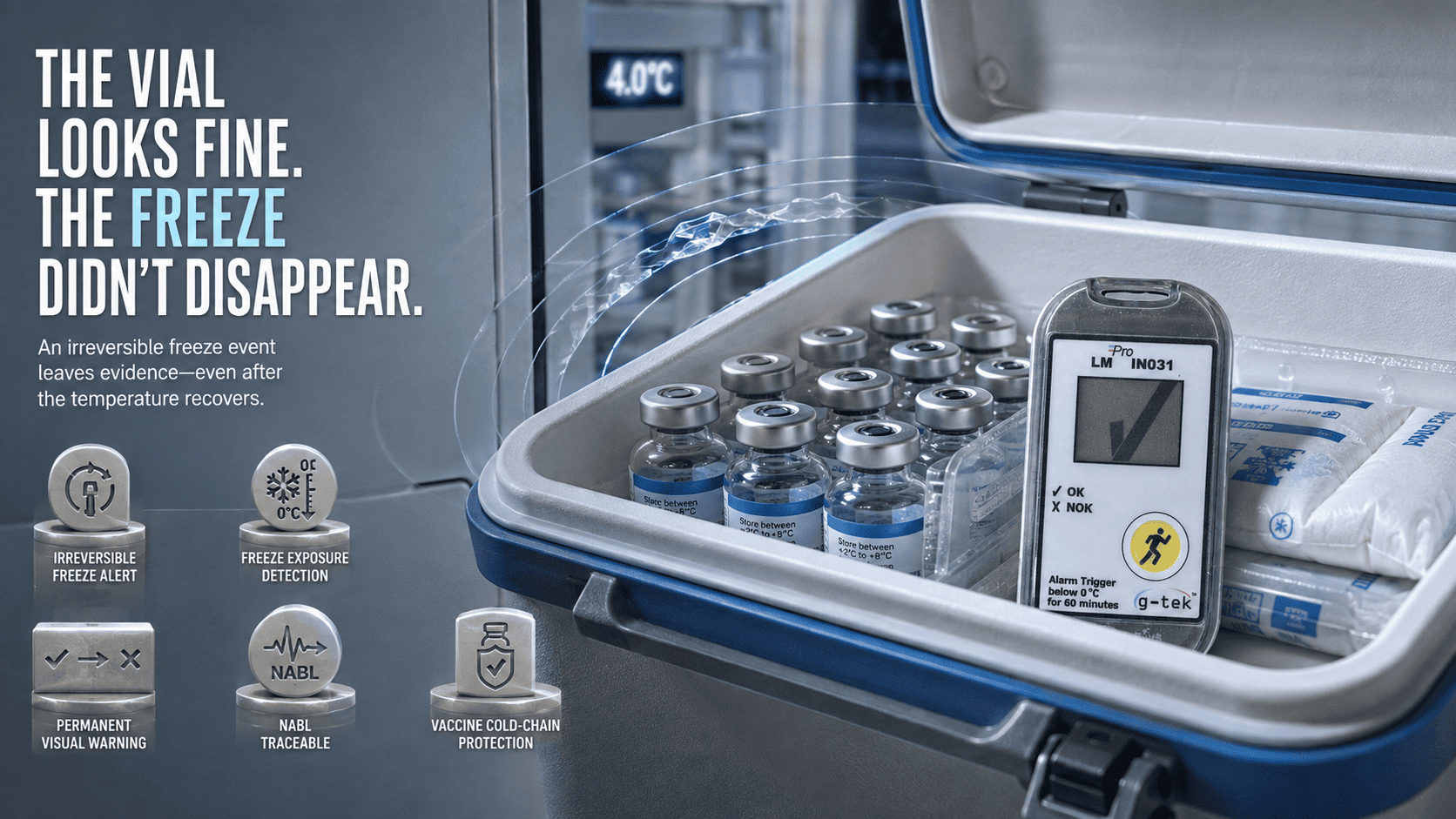
A health worker lifts a vial from the cold box. It reads 4°C. It's clear…
Art Storage Monitoring for Fine Art Protection During Storage and Transit
When the Crate Opens and the Damage Speaks First
A masterpiece leaves the studio in perfect condition. Days later, the crate opens at the gallery, and the canvas tells a different story.
Fungal spots appear along the edges. Hairline cracks form in the pigment. The frame warps. The varnish softens.
The artist blames the logistics company. The gallery refuses acceptance.
Then the insurer asks a question that often determines the outcome of the claim:
“Where is the environmental record for this shipment?”
This is why art storage monitoring has become increasingly important for galleries, museums, and art logistics companies.
The Silent Fear Every Art Handler Lives With
You packed the artwork correctly. You sealed it properly. You shipped it on time.
However, the artwork may pass through a hot airport tarmac, a cold warehouse, a humid customs facility, and multiple transport vehicles before reaching its destination.
High humidity can encourage mold growth. Low humidity can crack paint layers. Excess heat can soften varnish and affect pigments.
Unfortunately, the damage often remains hidden until the packaging is removed.
That moment can damage reputations, trigger insurance disputes, and weaken trust between artists, galleries, collectors, and museums.
The Shift That Changed How Art Travels
Conservation experts have long defined recommended environmental conditions for artwork preservation.
Guidelines from ASHRAE, ICOM-CC, and AIC generally recommend temperatures between 18°C and 22°C and relative humidity between 45% and 55% for many types of fine art.
Different materials require different environmental conditions.
Oil paintings, watercolours, photographs, canvases, manuscripts, and sculptures all have unique preservation requirements.
The breakthrough was not in packaging technology.
Instead, it was in art storage monitoring that provided continuous environmental proof throughout storage and transportation.
A compact monitoring device can travel inside the crate and record every temperature and humidity change from origin to destination.
As a result, galleries, museums, logistics providers, and insurers gain access to objective environmental records whenever questions arise.
Today, many insurers expect documented environmental records when evaluating high-value artwork claims.
The Logger That Travels Inside the Crate
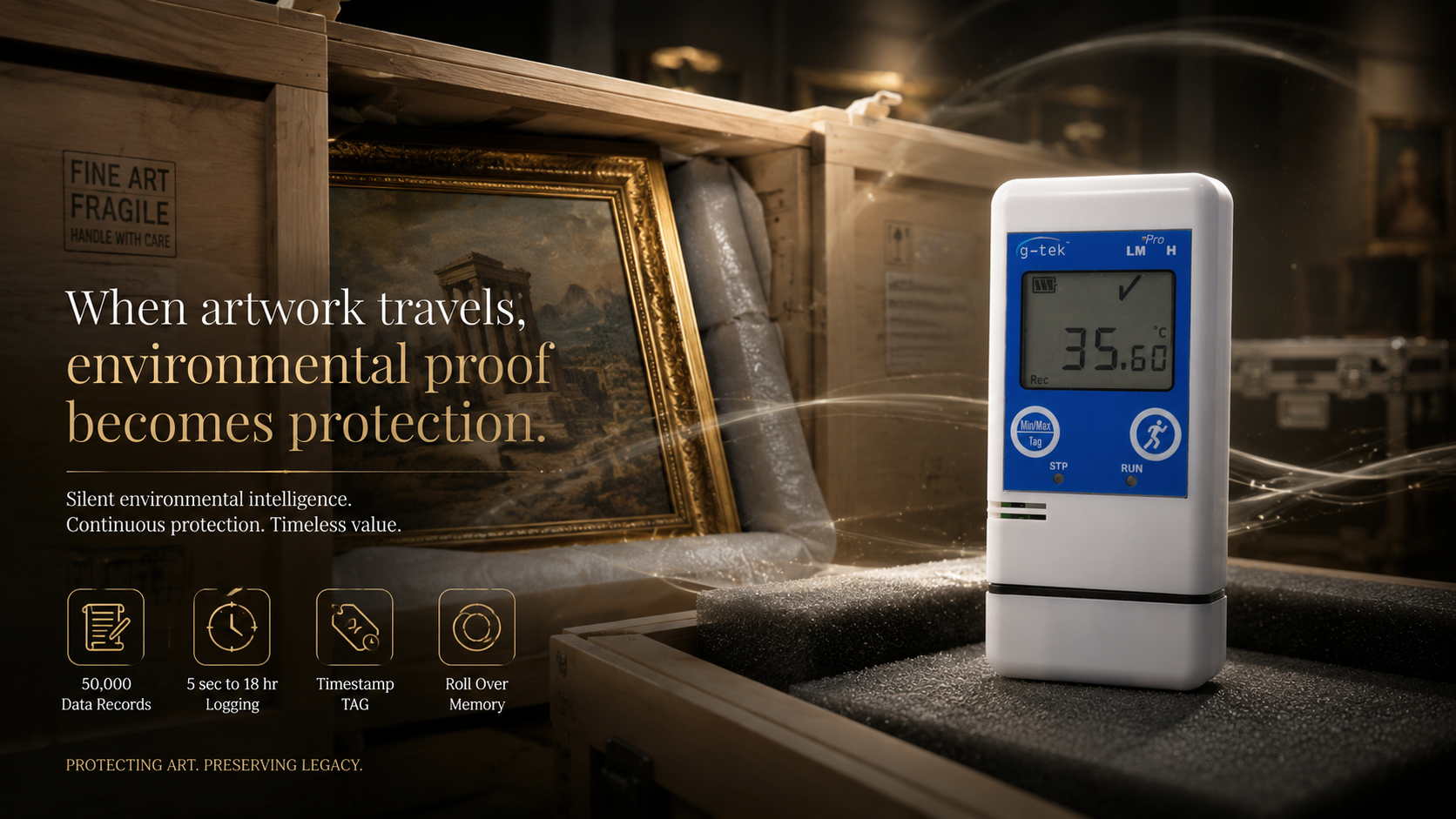
The G-Tek LM Pro-H Temperature & Humidity Data Logger is designed for artwork transportation, storage, and exhibition environments.
Its features include:
• 🎨 NABL-calibrated sensing for reliable environmental measurements
• 📡 High and low excursion tagging for quick identification of environmental events
• 📄 USB-accessible PDF reports suitable for documentation and claim support
• 🛡️ Long battery life for multi-day domestic and international shipments
• 📦 Compact design suitable for crates, storage racks, transport containers, and archive rooms
The logger travels with the artwork through storage facilities, packing areas, transportation vehicles, and customs checkpoints.
Throughout the journey, it creates a continuous environmental record that supports art storage monitoring from collection to delivery.
Beyond artwork, the same approach can help protect antique furniture, museum collections, manuscripts, photographs, sculptures, and archival materials.
The Next Shipment Will Either Defend You or Expose You
Every artwork shipment arrives with one of two outcomes.
Either there is a complete environmental record available for review by galleries, insurers, collectors, and artists.
Or there is no documented evidence of what occurred during transit.
Art storage monitoring removes uncertainty from that process.
Instead of relying on assumptions, stakeholders can review documented environmental conditions throughout the journey.
For galleries, this helps protect valuable collections.
For logistics providers, it helps support service quality.
For insurers, it provides objective shipment records.
One monitoring device can help support all three.
👉 Discover how the G-Tek LM Pro-H can strengthen art storage monitoring and help protect valuable artwork during storage, transit, and exhibition.
Related Posts