A tyre plant's process engineer pulls a batch flagged for inconsistent cure and walks to…
When a Factory Disputes Your Reading, a Calibrated Handheld Answers
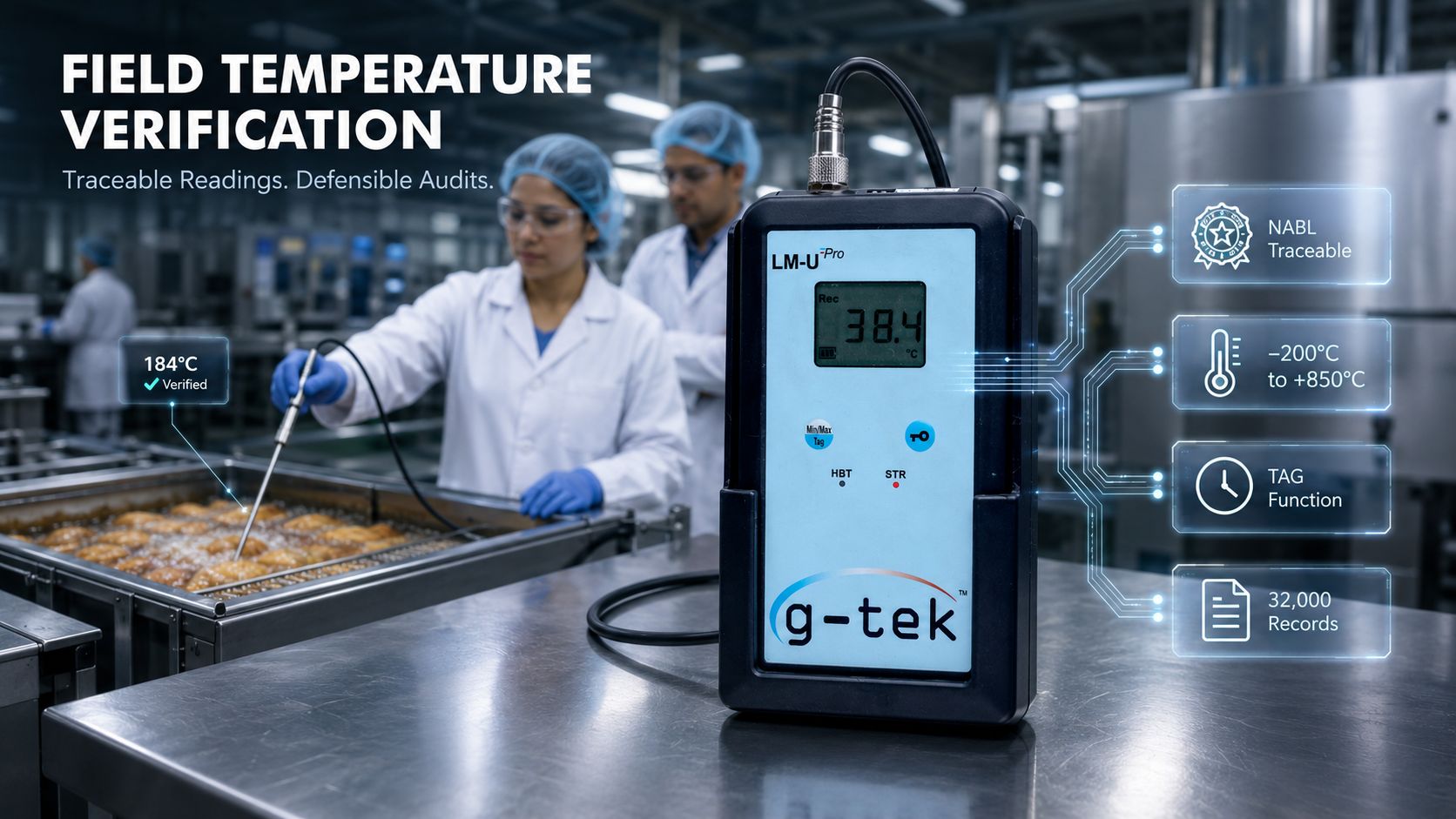
You probe the fryer during a surprise visit. 184°C above the limit. You note it down. Then the factory manager leans in: “Our gauge says 178.”
Now it’s your instrument against theirs.
And the only thing that settles it is whose device is calibrated and traceable. If your handheld has no certificate behind it. if it isn’t a properly calibrated handheld your finding quietly collapses.
In 2026, a food auditor’s finding is only as defensible as the instrument that produced it. When a factory disputes a spot temperature, the reading holds up only if the handheld behind it is calibrated and traceable to national standards otherwise it’s just one number against another.
🎯 Key Takeaways
- An audit finding is only as defensible as the instrument that measured it
- A field reading holds up when the handheld is calibrated and traceable to national standards
- Inspection bodies are expected to use traceable measuring equipment under ISO/IEC 17020
- One probe spanning hot oil to cold storage means one instrument, one calibration to carry
- A tagged, time-stamped, exportable reading turns a spot-check into documented evidence
That Quiet Moment When the Number Stops Being Yours
Every auditor knows the feeling. You take the reading. You trust your routine. Then someone questions it and suddenly you’re defending your own tool, not the factory’s process.
You did the work right. Yet without provenance behind your number, your expertise becomes opinion. The finding weakens. So does the firm’s name on the report.
Why a Calibrated Handheld Makes a Field Temperature Reading Hold Up?
A field temperature reading holds up only when the instrument that took it is calibrated and traceable to national standards otherwise the factory can dispute it and the finding won’t stand.
Your number is evidence. Evidence needs provenance. Inspection bodies accredited to ISO/IEC 17020 are expected to use calibrated, traceable measuring equipment. An uncalibrated handheld turns a clear finding into a he-said-she-said exactly the gap a properly traceable temperature logger is built to close.
Why Should One Handheld Measure Both Hot Oil and Cold Storage?
One handheld should cover both because a single audit spans frying lines near 180°C and cold rooms below 5°C and two instruments mean two calibrations to maintain and defend.
An external probe with a wide range lets you verify the fryer, then the chiller, then the freezer with the same calibrated device. Fewer instruments. One certificate to track. Consistent traceability across every point the discipline accredited field measurement demands.
The LM-U Pro: One Calibrated Handheld for Every Point You Verify
Making monitoring instruments in Vadodara since 1990, G-Tek Corporation built the LM-U Pro for exactly this field work.
It’s a handheld, AA-battery device that takes an external RTD or thermocouple probe spanning −200 to +850°C so the same instrument verifies a fryer near 180°C and a freezer below −18°C on one visit. Its TAG function captures a reading at the exact moment it matters, holding it in a 32,000-record memory. The data exports through LmView into a time-stamped PDF or spreadsheet documented evidence, not a number on a clipboard.
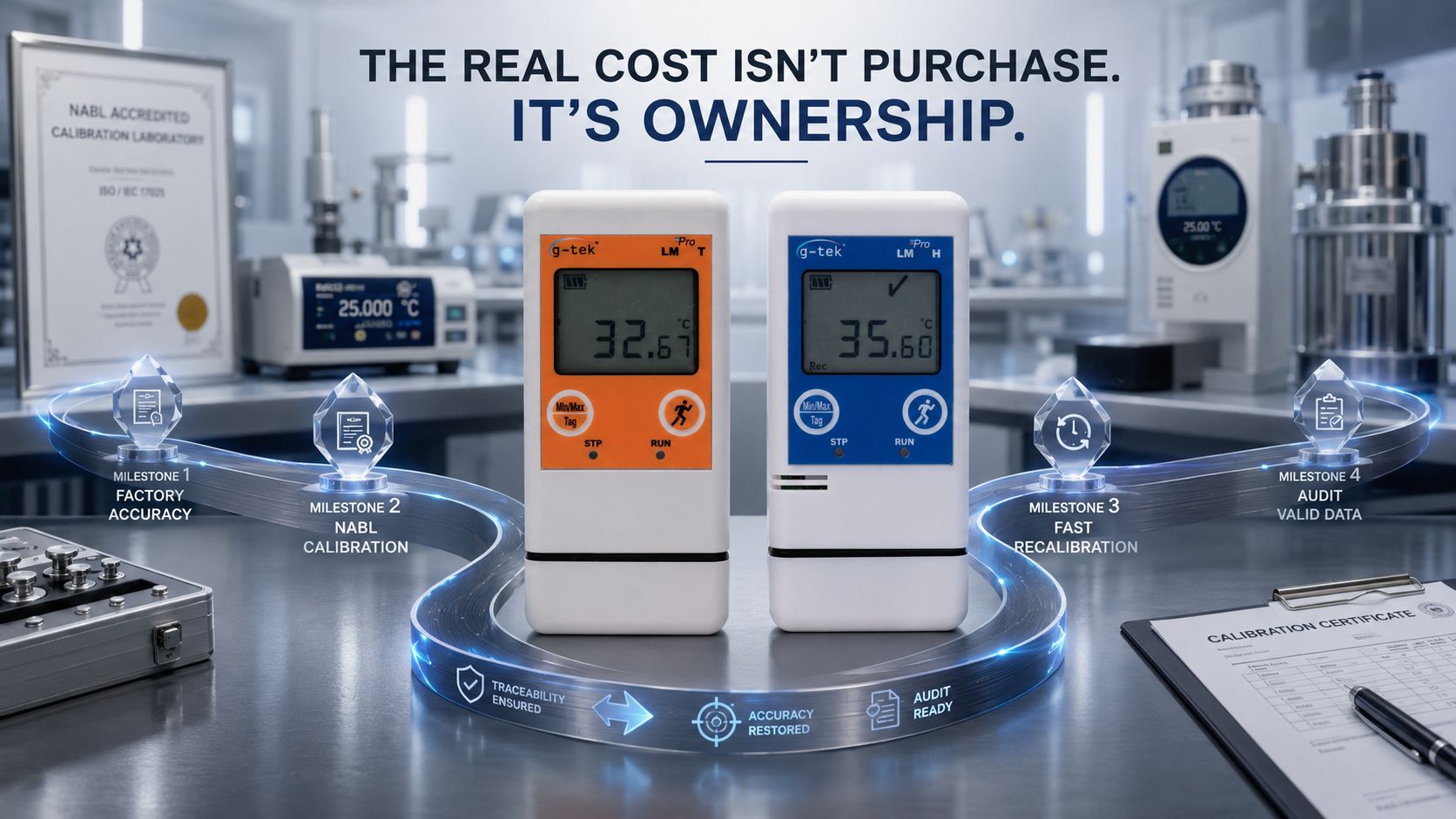
Every unit carries a calibration certificate from G-Tek’s own NABL ISO/IEC 17025-accredited laboratory, traceable through NABL India to national standards which is what lets your reading stand when a factory pushes back.
A Reading That Holds Up When It’s Challenged
If your field findings have to survive a factory pushing back, the instrument behind them decides it. A calibrated, traceable handheld is the difference between a finding that holds and a number someone argues away.
👉 Put your field verification points in front of the G-Tek team your temperature ranges and the standards you audit against and get a clear recommendation on the handheld setup that keeps every finding defensible.
Frequently Asked Questions
Why does an auditor's temperature instrument need calibration?
Because a finding is evidence, and evidence must be traceable. A calibrated handheld that’s NABL-traceable lets your reading stand if a factory disputes it.
Can one handheld measure both frying oil and cold storage?
Yes. The LM-U Pro’s external probe spans −200 to +850°C, verifying a fryer near 180°C and a freezer below 18°C one device, one calibration.
What standard governs an inspection body's measuring equipment?
ISO/IEC 17020 sets requirements for inspection bodies, including calibrated, traceable measuring equipment for field work.
How does an auditor turn a spot reading into documented evidence?
The LM-U Pro’s TAG function captures a reading at the moment it matters, then exports a time-stamped PDF or spreadsheet through LmView.
Where is G-Tek Corporation located?
G-Tek is based in Vadodara, Gujarat, manufacturing monitoring instruments since 1990, with an in-house NABL ISO/IEC 17025-accredited calibration laboratory.
Related Posts