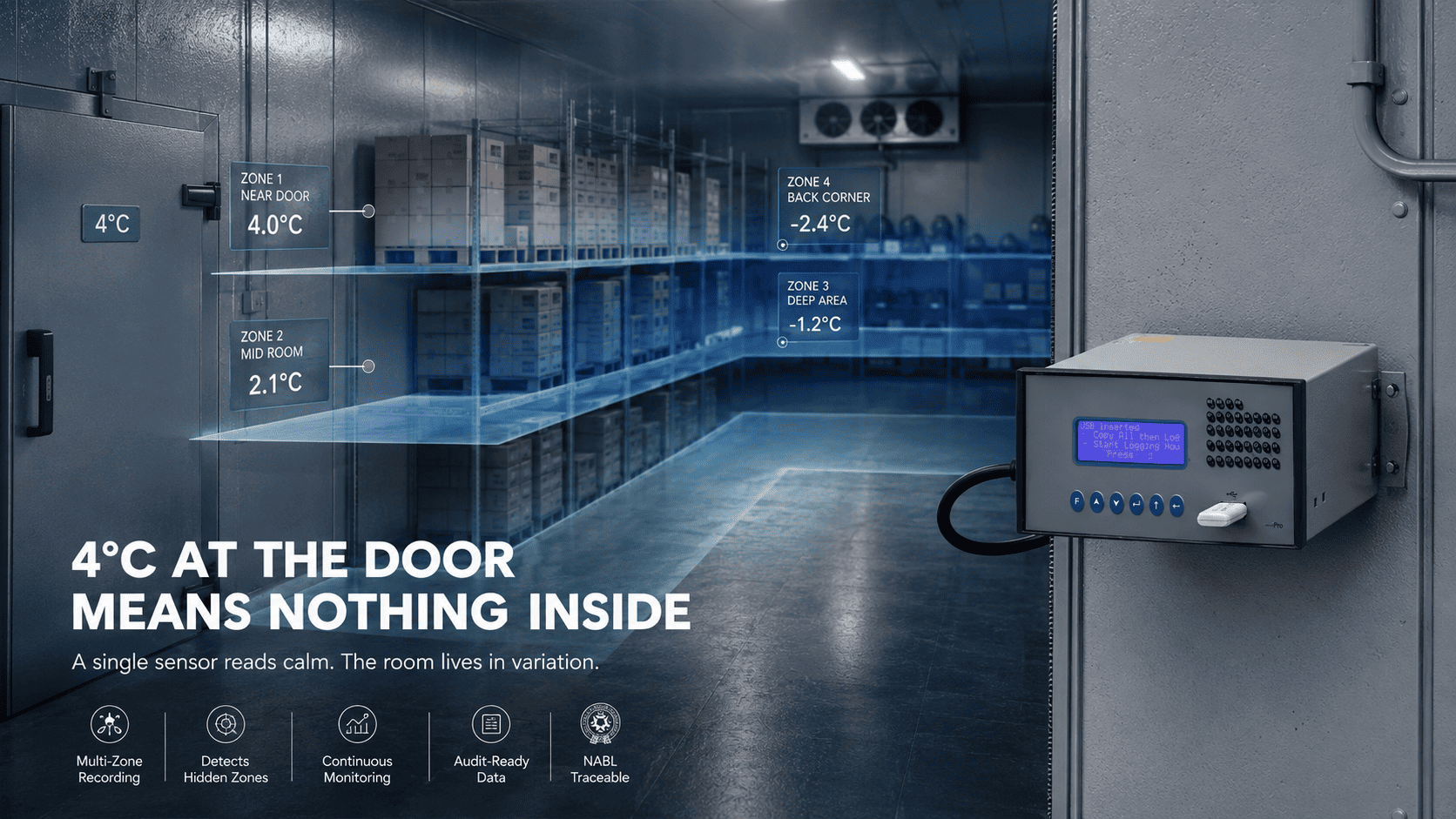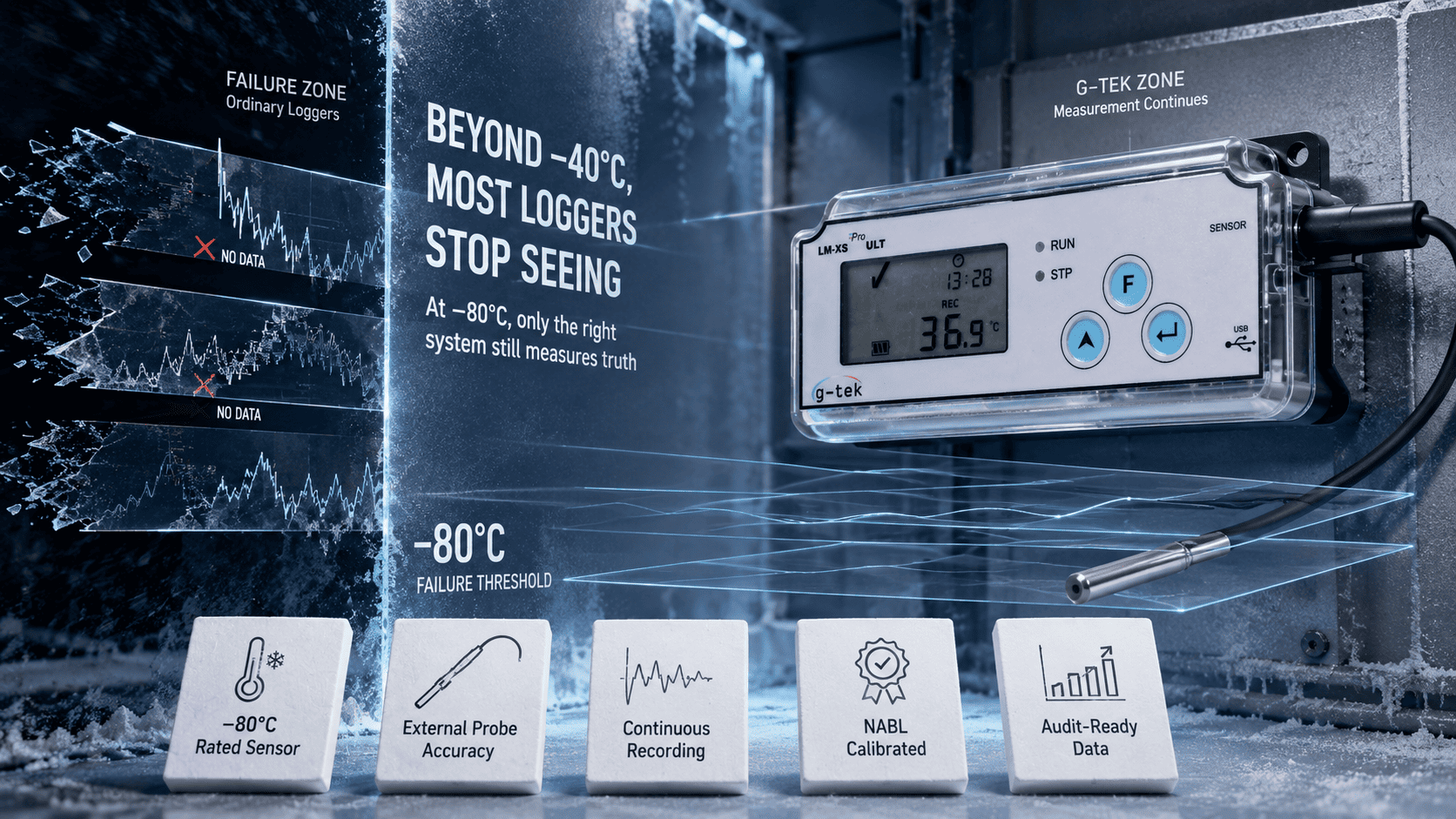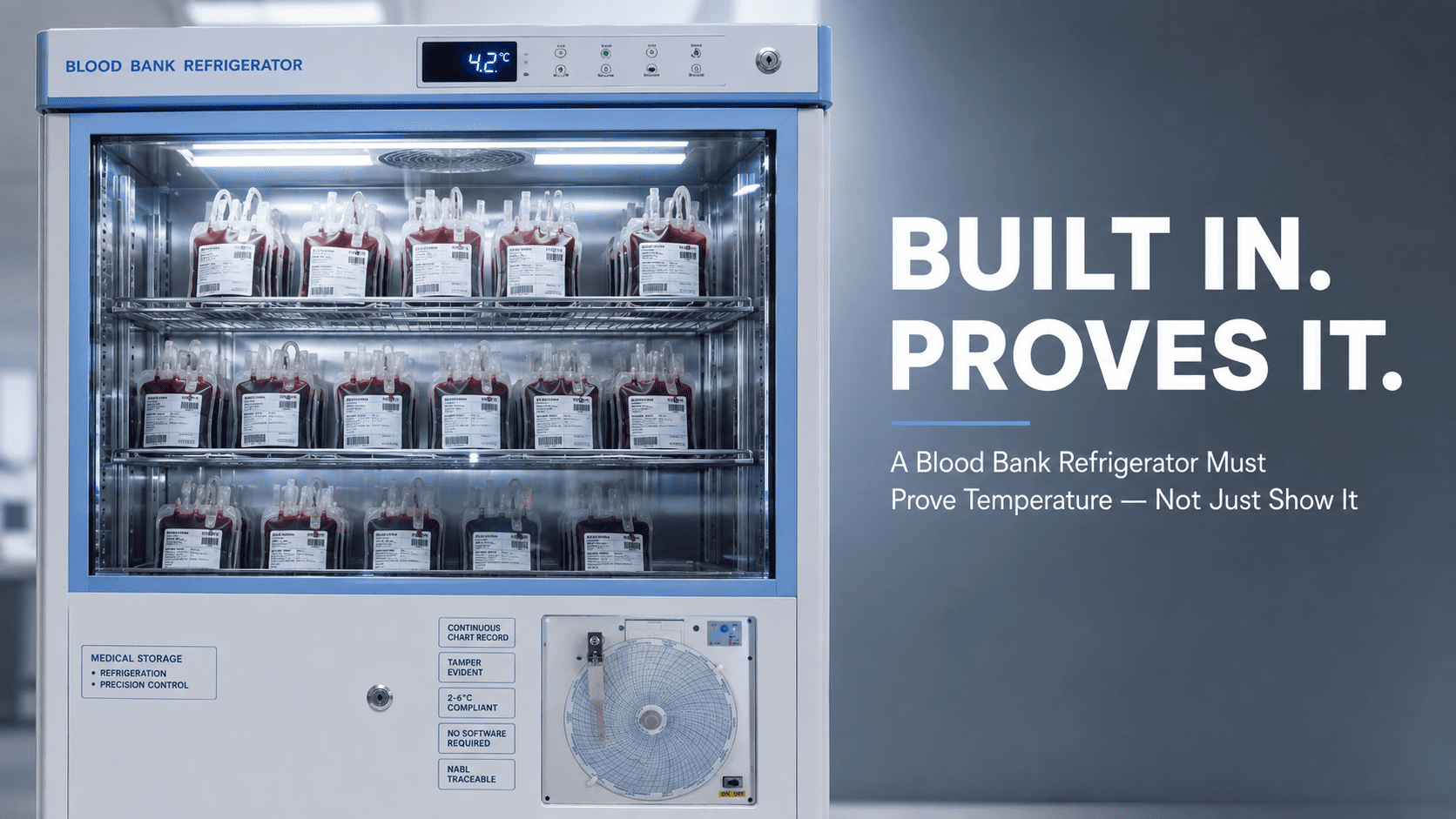
A warehouse supervisor walks into a large cold room and glances at the wall display…
Tyre Curing Process Recorder: Why Temperature, Pressure and Time Must Be Recorded Together
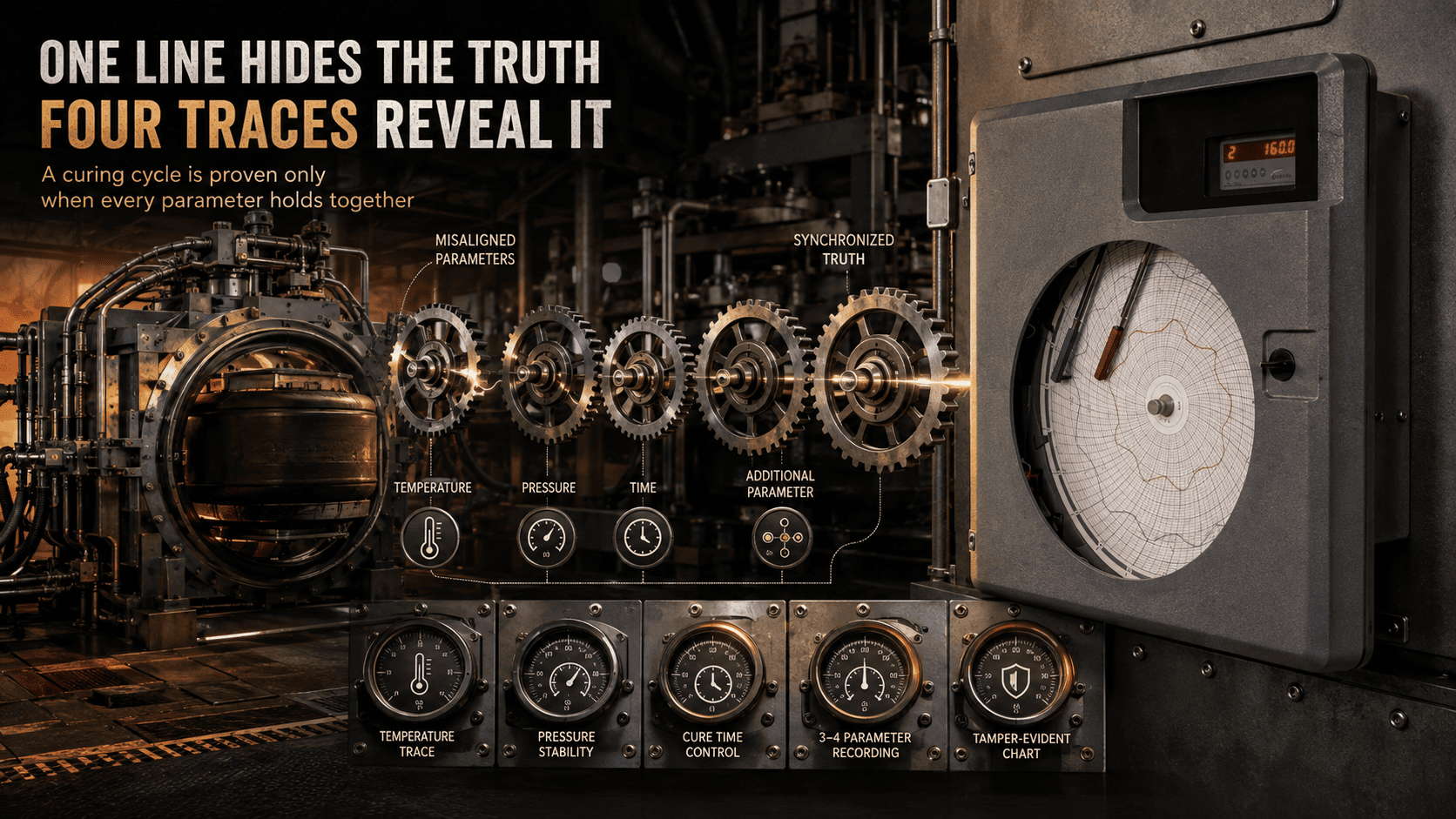
A tyre plant’s process engineer pulls a batch flagged for inconsistent cure and walks to the press recorder to see what went wrong. The chart shows one trace: temperature. But the cure never depended on temperature alone.
It held only because pressure and time moved with it, together, across the whole cycle. With a single line on the paper, the story of that cure is half-told. The root cause stays hidden. And the press builder gets the call.
A reliable tyre curing process recorder needs to capture several parameters at once. Temperature, pressure, and time must all hold together for the rubber to vulcanize correctly. A recorder that captures only one of them proves nothing about the rest.
🎯 Key Takeaways
- A tyre cure depends on temperature, pressure, and time together, not one alone.
- Recording a single parameter can’t prove the whole cure held.
- A multi-parameter recorder captures 3–4 traces on one chart, showing the full cure at a glance.
- A physical chart at the press gives operators and auditors an immediate, tamper-evident record.
- OEMs who build in multi-parameter recording ship presses that make cure quality provable.
Why Does a Tyre Cure Need More Than One Parameter Recorded?
A tyre cure needs more than one parameter recorded because vulcanization depends on temperature, pressure, and time holding together. If any one drifts, the cure changes, and a single-trace record can’t show which parameter caused the variation.
Rubber vulcanizes only when the right temperature is held under the right pressure for the right duration. These parameters are interdependent. Pull one, and the cure shifts.
A record showing temperature alone can’t reveal a pressure dip or a timing shortfall that quietly under-cured the batch. So when a plant traces a quality issue back to the press, a one-line chart leaves the question open. That silence is what gets a press OEM blamed.
This is where a wider look at circular chart recorders built for multi-parameter processes changes what a press can document.
Why Is a Multi-Parameter Chart Recorder Right for a Curing Press?
A multi-parameter chart recorder is right for a curing press because it captures 3–4 parameters as separate traces on one chart. This allows an operator or auditor to see the whole cure at a glance on a tamper-evident physical record right at the machine.
Multiple traces on one 11-inch chart plot temperature, pressure, and other parameters against the same timeline.
The chart is immediately available at the press no PC to boot and no file to open. That’s exactly why the shop floor trusts it and why it supports documented process control during IATF 16949 and ISO 9001:2015 audits.
The automotive quality standard that governs tyre supply chains emphasizes process control that can be demonstrated and documented.
One Tyre Curing Process Recorder, the Whole Cure on One Chart
Manufacturing recording instruments in Vadodara for over 30 years, G-Tek Corporation built the CR11″ 3P-4P Circular Chart Recorder for exactly this kind of process.
It records three to four parameters as distinct traces on a single 11-inch chart. This allows a tyre curing press to produce a complete picture of each cure, with temperature, pressure, and other parameters against one timeline, on a tamper-evident physical record with no software required.
Every unit is traceable to G-Tek’s own NABL ISO/IEC 17025-accredited calibration laboratory, giving the cure record strong measurement traceability.
For tyre press OEMs, it turns a machine that merely ran the cure into one that can prove it, cavity by cavity and cycle after cycle.
Your Press Ran the Cure. Can It Prove It?
If your curing presses are being specified by tyre manufacturers who trace quality issues back to the curing process, a single-parameter record leaves gaps.
A tyre curing process recorder that documents the full multi-parameter cure provides a more complete record of temperature, pressure, and time across each cycle.
👉 Building your next curing press? Walk the G-Tek team through the parameters you cure on temperature, pressure, and time and get a clear recommendation on multi-parameter recording built in from the start.
Frequently Asked Questions
Why does tyre curing need multiple parameters recorded?
Vulcanization depends on temperature, pressure, and time holding together. If any one drifts, the cure changes, so one parameter alone can’t prove the whole cure held.
What is a multi-parameter circular chart recorder?
It captures three to four parameters as separate traces on one chart, showing several process variables against the same timeline so the full cure can be reviewed at a glance.
Why use a physical chart recorder on a curing press?
A physical chart gives an immediate, tamper-evident record with no PC needed. It also keeps the cure record visible directly at the machine.
Which G-Tek recorder suits a tyre curing press?
The CR11″ 3P-4P tyre curing process recorder records three to four parameters on one 11-inch chart, giving the curing press a complete cure record with NABL-traceable calibration.
Related Posts