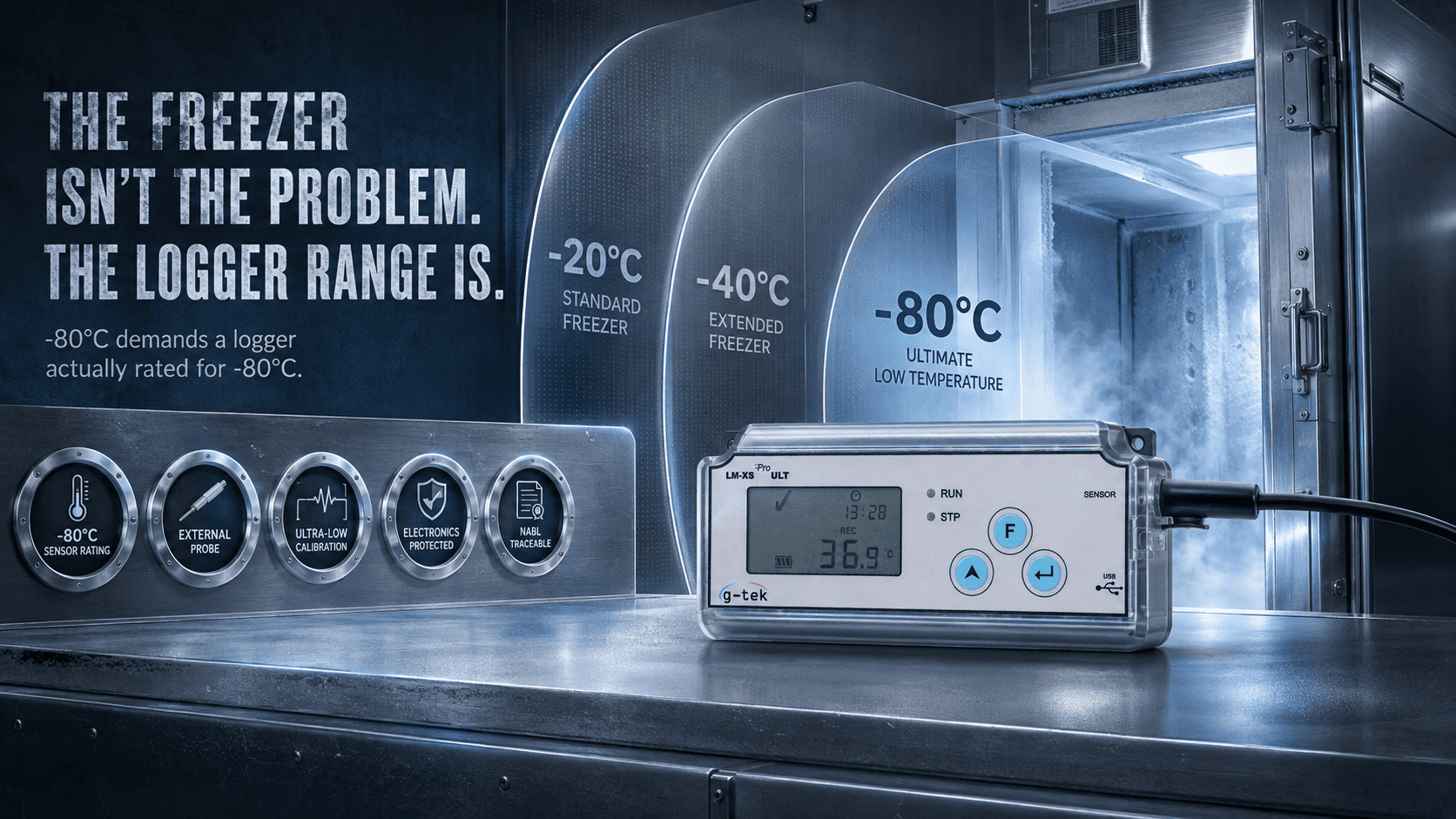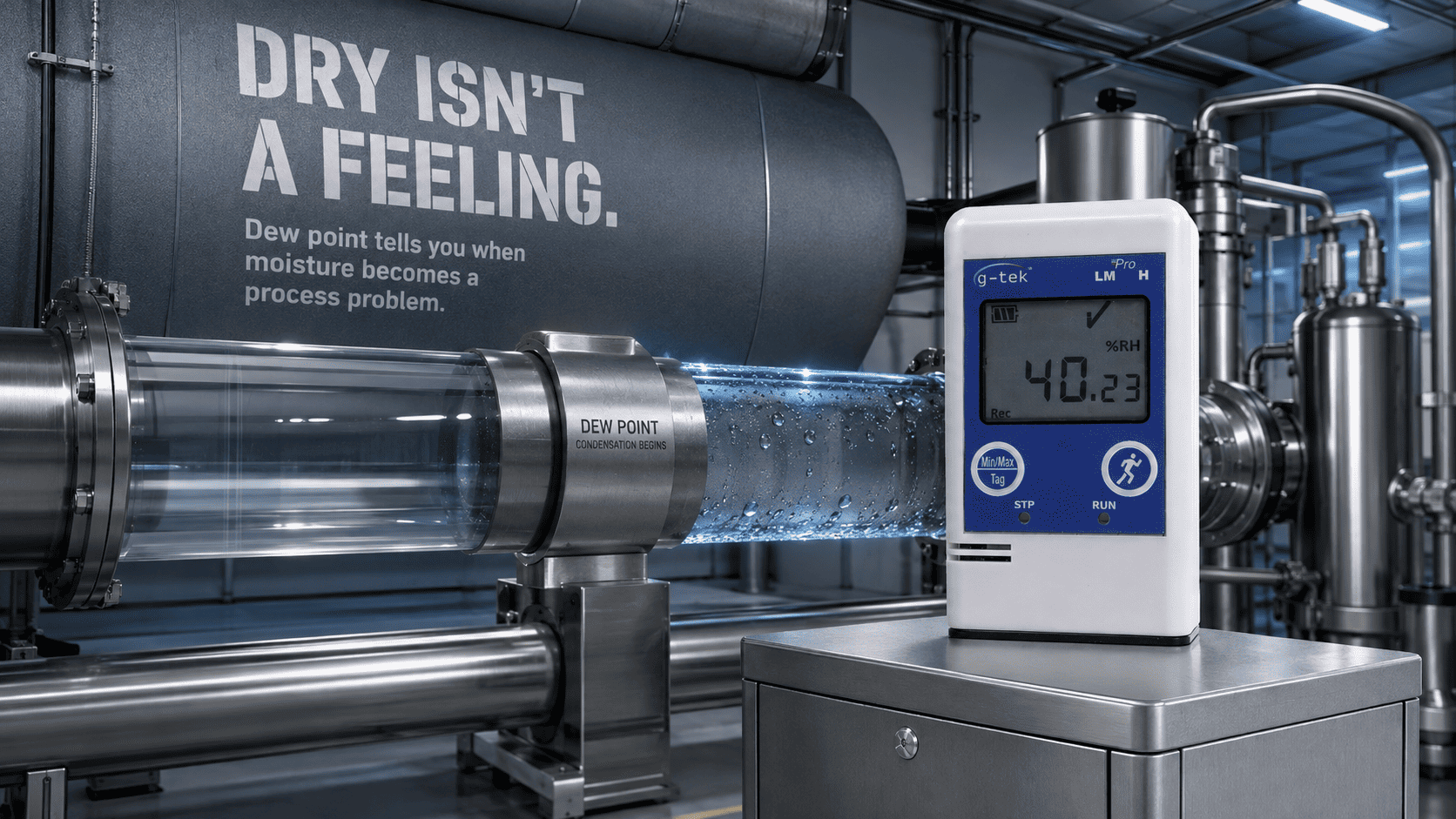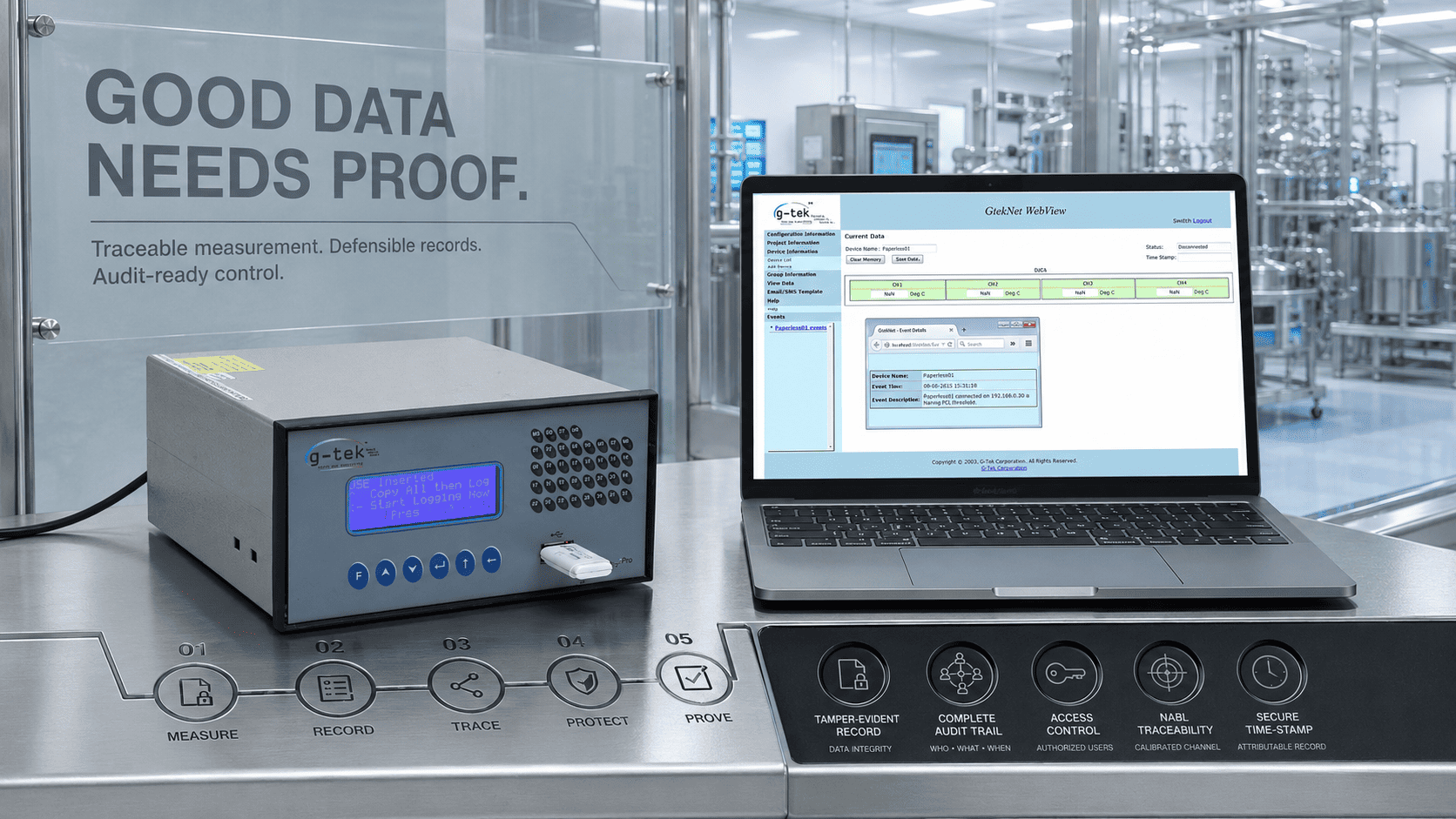
Ask yourself one thing before your next ultra-low purchase: is the logger you're about to…
The Vaccine Left Cold and Arrived Warm Choosing a Transport Logger That Proves It in 2026
A vaccine consignment leaves the cold store perfectly within range. Hours or days later, it arrives with a temperature concern, and the logger inside the box wasn’t built or approved for vaccine transport. Now the shipment’s condition is in doubt, and so is the paperwork behind it.
In 2026, choosing a cold chain data logger for vaccine transport isn’t simply about which device records temperature. Most do. It’s about which one produces a continuous, WHO-PQS-grade record that helps prove the vaccine stayed within its required temperature range end-to-end and can support GDP and health-authority scrutiny at the other end.
🎯 Key Takeaways
- A vaccine transport logger’s job isn’t just to record. It’s to prove the cold chain held with a defensible temperature record
- WHO-PQS approval is an important benchmark for monitoring devices intended for vaccine cold-chain applications
- The record should be continuous across the whole journey, not limited to spot readings at either end
- NABL-traceable calibration supports confidence in the recorded temperature data
- Using a logger that is not suitable for vaccine transport can make a temperature excursion more difficult to assess and document
What Makes a Cold Chain Data Logger Right for Vaccine Transport?
A cold chain data logger is suited to vaccine transport when it meets the required vaccine-monitoring criteria, records continuously across the journey, and provides traceable calibration. Vaccine cold chains depend on documented temperature history, not just individual readings.
You know the feeling. The consignment is out of your hands the moment it leaves the dock. Vaccines are temperature-sensitive, the allowable window can be tight, and many routinely transported vaccines are maintained within +2°C to +8°C, although specific vaccine requirements may differ.
If the logger inside the box isn’t suitable for vaccine use, an accurate reading alone may not provide all the documentation a QA or cold-chain team needs.
That’s why selecting the right logger before dispatch matters. You can explore the full vaccine logger family here to see how devices designed for vaccine cold-chain monitoring are configured.
Why Does WHO-PQS Approval Matter More Than Basic Recording?
WHO-PQS approval matters because it indicates that a monitoring device has been assessed against defined performance and quality requirements for use in vaccine programmes.
An ordinary temperature logger may record data accurately, but a vaccine-monitoring programme can require more than basic recording.
For vaccine cold-chain applications, requirements associated with WHO PQS, good distribution practices, and relevant health-authority procedures can influence the type of monitoring device selected.
The core principle remains simple: the logger should provide reliable, continuous, retrievable temperature evidence for the journey.
A generic logger may record the trip. A properly selected cold chain data logger helps provide the documentation needed to assess whether transport conditions remained acceptable.
Inside the Vaccine-Series Logger Built for the Journey
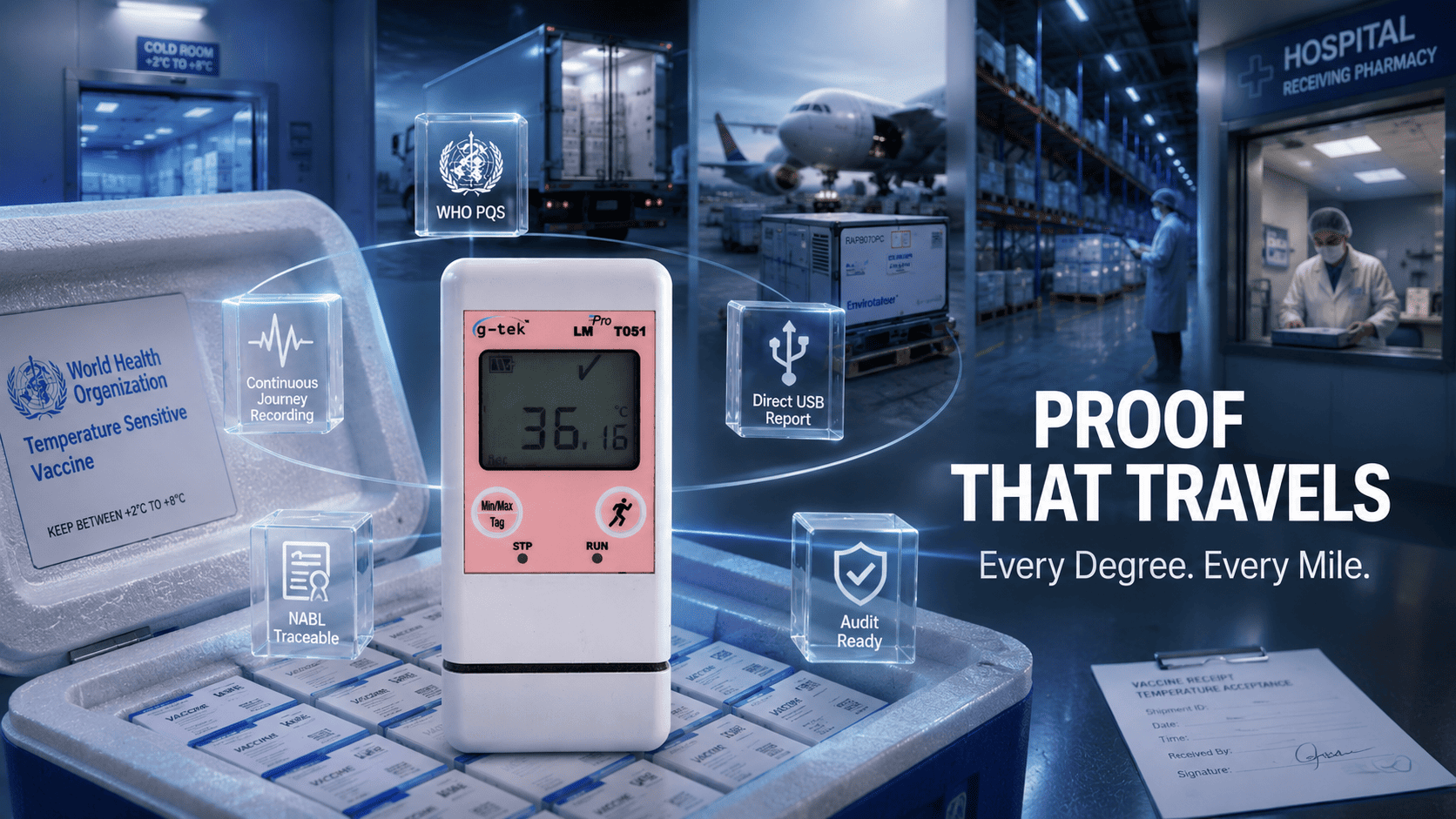
Making monitoring instruments in Vadodara since 1990, G-Tek Corporation developed the LM Pro T051 specifically for vaccine cold-chain monitoring.
The LM Pro T051 is a user-programmable, multi-use temperature data logger with an integrated sensor designed to meet WHO/PQS/E006/TR05.1 requirements.
It stores up to 50,000 temperature readings and provides clear status indication during monitoring. Recorded data can be downloaded and reviewed through LmView and direct USB connectivity, giving users access to the temperature history of the journey.
Every unit is supported by an individual NABL-traceable calibration certificate from G-Tek’s in-house ISO/IEC 17025-accredited laboratory.
This is why the calibration backing the data is an important part of the overall monitoring record. Traceable calibration helps demonstrate that the measurements came from an instrument whose performance has been verified.
The range also carries applicable certifications and compliance credentials including ISO 9001, NABL, WHO/PQS, CE, and RoHS.
For teams moving vaccines between regional stores, distribution centres, healthcare facilities, or remote sites, the right cold chain data logger can make the difference between having only a temperature reading and having a documented cold-chain record that can be reviewed when questions arise.
Ship Vaccines with a Record You Can Stand Behind
If you’re moving vaccines, the logger you choose influences how clearly you can answer a temperature question at delivery.
A suitable cold chain data logger, supported by WHO-PQS requirements and NABL-traceable calibration, helps provide a continuous record of what happened during transport.
That record gives QA and cold-chain teams the evidence they need to assess the journey from dispatch to delivery.
👉 Put the G-Tek LM Pro T051 in front of your QA head and see the trip record designed to make every vaccine shipment more traceable and defensible.
Frequently Asked Questions
What should I look for in a cold chain data logger for vaccine transport?
Look for suitability for vaccine cold-chain use, relevant WHO-PQS requirements, continuous journey recording, adequate memory, easy data retrieval, and traceable calibration. The goal is a defensible temperature record, not simply individual readings.
Why is WHO-PQS approval important for a vaccine logger?
WHO-PQS approval indicates that the device has been assessed against defined performance and quality criteria used for vaccine cold-chain equipment. This gives procurement and QA teams an additional basis for evaluating whether a logger is suitable for vaccine monitoring.
What temperature range do vaccines need during transport?
Many routinely distributed vaccines are maintained within +2°C to +8°C, but requirements vary by vaccine and manufacturer. Some vaccines require frozen or ultra-cold conditions. The specified storage and transport requirements for the individual vaccine should always be followed.
Which G-Tek logger is designed for vaccine transport?
The LM Pro T051 is designed for vaccine cold-chain monitoring and meets WHO/PQS/E006/TR05.1 requirements. It is a user-programmable, multi-use logger with an integrated sensor, direct USB connectivity, and NABL-traceable calibration support.
Where is G-Tek Corporation located?
G-Tek is based in Vadodara, Gujarat, and has been manufacturing monitoring instruments since 1990. It also operates an in-house NABL ISO/IEC 17025-accredited calibration laboratory and provides support across India.
Related Posts