By Asutosh Shah & Alpesh Shah · Founders, G-Tek Corporation · 30+ years in temperature…
Data Logger Logging Interval: How Often Should It Record?
By Asutosh Shah & Alpesh Shah · Founders, G-Tek Corporation · 30+ years in temperature monitoring, recording, and calibration instrumentation.
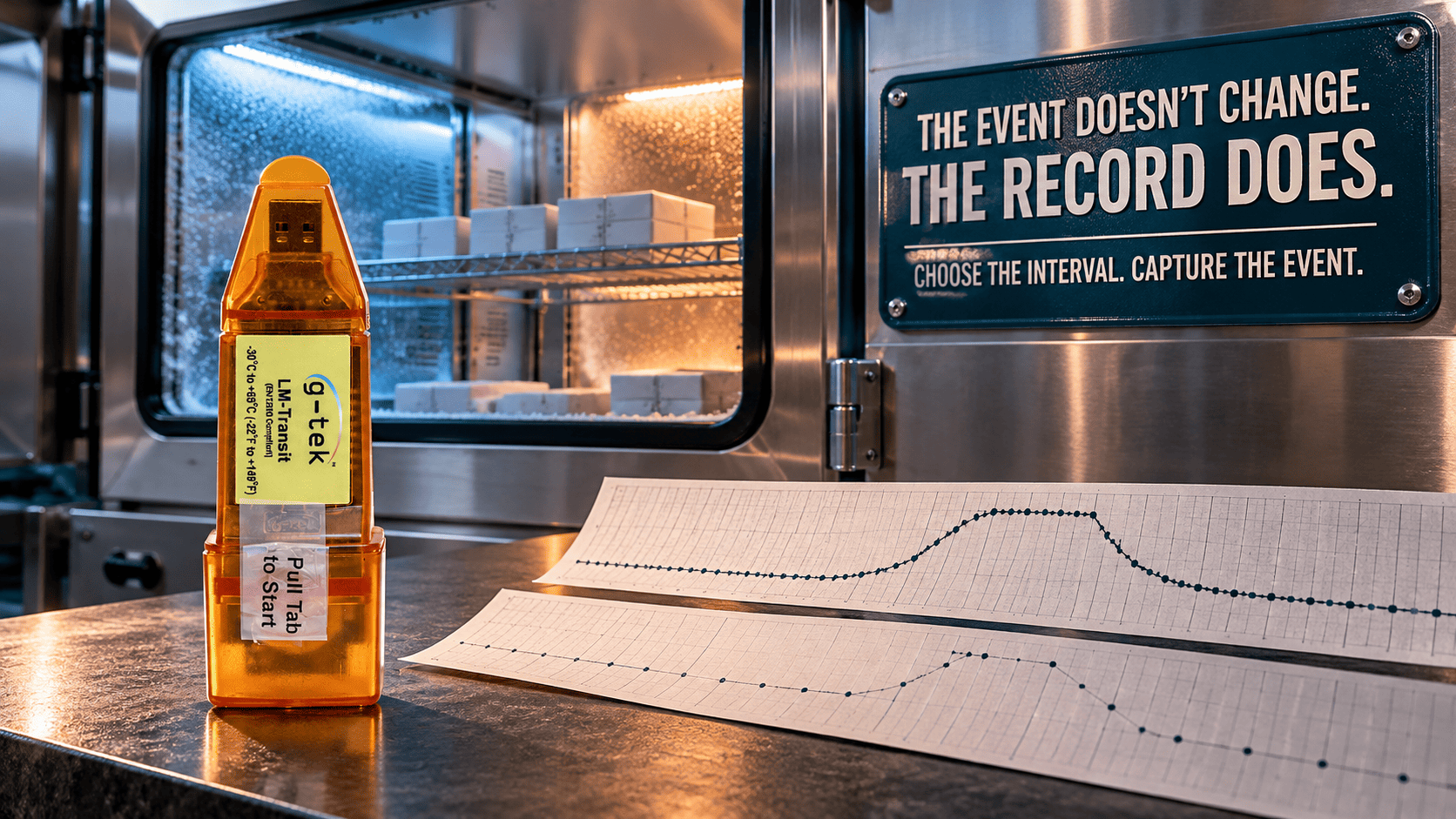
Set a logger to record every minute, and a three-hour excursion appears as 180 data points.
Set it to every thirty minutes, and the same event appears as six data points or fewer, depending on whether it starts and ends between readings.
Nothing about the temperature changed. Only the interval did.
The data logger logging interval is how often a data logger takes and stores a reading.
A shorter interval captures more detail but fills memory and drains the battery faster. In contrast, a longer interval extends the study duration but can miss short events entirely.
Key Takeaways
- The interval decides the detail captured and how long the logger runs.
- Shorter interval, finer detail, faster memory and battery use.
- Interval × memory capacity sets your maximum recording duration.
- Pick the interval from the shortest event you must see.
- An event shorter than the interval can be missed completely.
The Interval Is a Trade-Off Between Detail and Duration
Every logging interval trades detail against duration.
Recording more often captures shorter events clearly but consumes memory and battery faster. Meanwhile, recording less often extends how long the logger runs but makes brief events harder to see.
The logger measures, stores, sleeps, and repeats. More readings per hour mean finer resolution and faster memory use.
There is no universally correct interval. Only the right one for the job.
That is why it belongs in your logger setup routine, not a saved default.
How Do You Work Out Whether Your Interval Will Last the Study?
Multiply the interval by the logger’s memory capacity to get the maximum recording duration.
If that total is shorter than your study, the logger stops recording before the study ends.
Take the LM Transit, which holds 16,000 records.
At a 15-minute interval, that memory covers roughly 166 days. At a 1-minute interval, the same device covers around 11 days.
Same device, same memory. A fifteenfold difference in duration.
So, interval and duration are decided together.
A three-week thermal mapping study recording every minute needs enough memory to reach the end. This is one reason capacity ranks high among specifications worth checking first.
Battery is the second half.
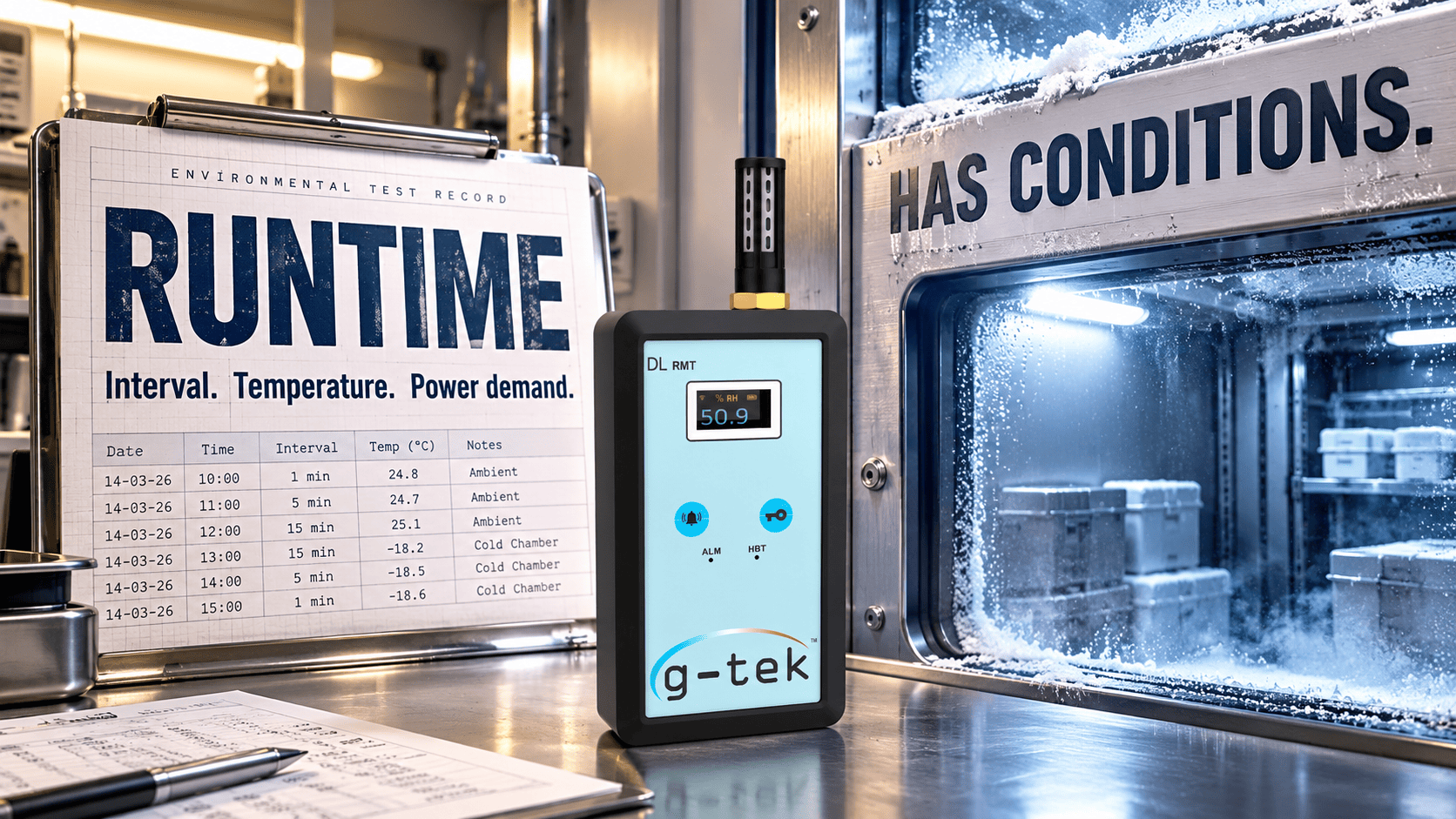
Any stated battery life assumes a specific interval and temperature. Record more often, and real runtime shortens.
Set the Data Logger Logging Interval by the Shortest Event You Need to See
Choose the interval short enough that your briefest meaningful event produces several readings.
This is because an event shorter than the interval can fall entirely between two readings and never appear in the data.
Work backwards.
If a door-opening excursion lasts ten minutes and you need its shape, a 30-minute interval gives one reading or none.
However, a 2-minute interval gives five points and a readable curve. This is the logic behind the WHO temperature mapping supplement and qualification expectations under EU GMP Annex 15.
This is the balance G-Tek Corporation’s data loggers are built around, after more than 30 years of manufacturing in Vadodara.
The interval is configured through LmView during programming. Therefore, it is matched to each study instead of inherited from the last one.
Published memory capacities also let the duration maths happen before day one.
Every unit is calibrated in G-Tek’s own NABL ISO/IEC 17025-accredited laboratory.
Frequently Asked Questions
What Is a Logging Interval?
How often a logger takes and stores a reading, such as every minute, five minutes, or fifteen minutes.
How Do I Know if My Interval Will Last the Study?
Multiply the interval by memory capacity. If the result is shorter than your study, recording stops early.
What Happens if the Interval Is Too Long?
A short excursion can fall between two readings and never appear.
Does the Interval Affect Battery Life?
Yes. More measurements mean more write cycles, so runtime shortens.
Stated battery life assumes one interval.
Where Is G-Tek Corporation Located?
Vadodara, Gujarat — building monitoring instruments for 30+ years, with an in-house NABL ISO/IEC 17025 calibration laboratory.
Do the Duration Maths Before the Study Starts
An interval set by habit is how a logger ends up full on day nine of a three-week run.
A minute of arithmetic beforehand prevents it.
Choosing the right data logger logging interval helps balance recording detail, memory capacity, and battery life throughout the study.
Unsure what interval your study needs? Give the G-Tek team your study duration and the shortest event you must capture. Get a clear answer on interval and logger choice.
Related Reading
Related Posts