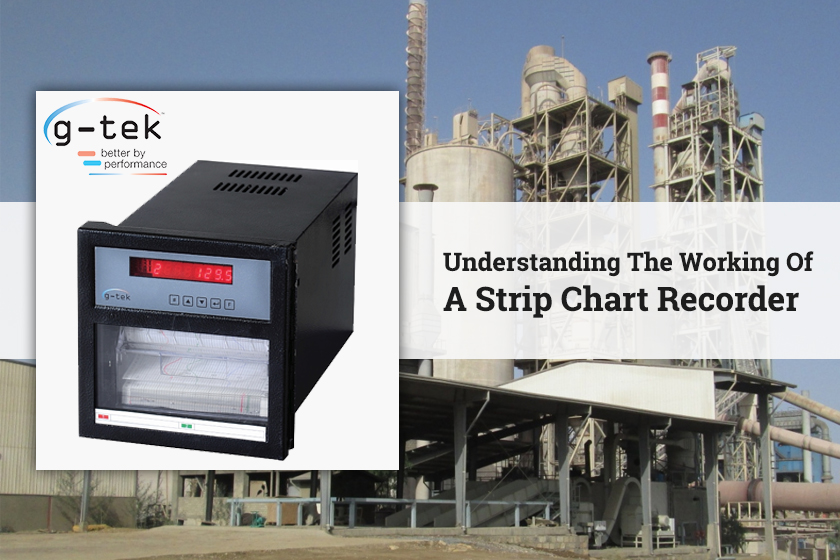
A chart recorder is a device that records electrical or mechanical input on a piece…
How Many Data Loggers Do You Need for Temperature Mapping?
By Asutosh Shah & Alpesh Shah · Founders, G-Tek Corporation · 30+ years in temperature monitoring, recording, and calibration instrumentation.
“How many loggers do we need?”
It is the question our team hears most, and the honest answer is that it cannot be given until a few other things are known.
So, how many data loggers for temperature mapping does your facility actually need?
The number of data loggers needed for a temperature mapping study depends on the volume and layout of the space, the parameters being mapped, and the coverage the applicable audit requires.
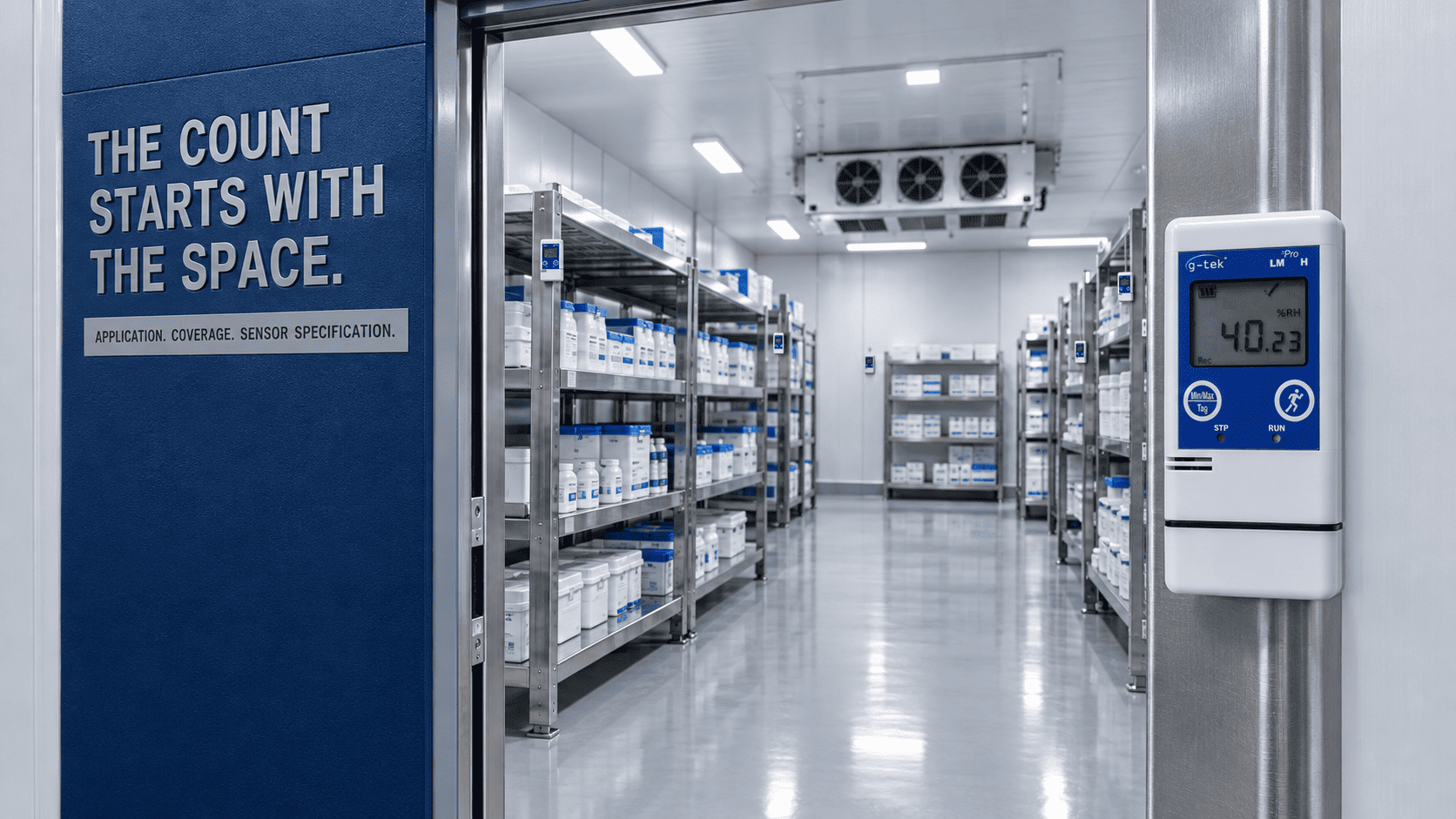
Loggers are placed at corners, the centre, door zones, and different heights so hot and cold spots are captured.
Key Takeaways
The count comes from the space, the parameters and the audit requirement, never a fixed figure.
Pharma audits often specify how many loggers a room of a given size must carry.
Placement spans corners, the centre, door zones and every height level.
Under-ordering leaves hot and cold spots unmeasured, which surfaces as an audit finding.
Sensor specification must be settled before any count can be advised.
What Do You Need to Know Before Anyone Can Give You a Number?
Before a count can be advised, four things need settling: the application being mapped, the parameters measured, the size and layout of the space, and the sensor specification that environment demands.
The application comes first.
A one-time mapping study, continuous monitoring and humidity mapping each pull the requirement in a different direction.
Our thermal mapping guidance for pharma storage shows where those paths separate.
Then comes the sensor specification, because a count means nothing if the sensor is wrong for the job:
Sensor type: RTD or otherwise.
Temperature range: The range the space actually runs at.
Probe diameter: This decides where it can physically sit.
Cable type and length: Requirements for the installation.
Working conditions: Conditions at each placement point.
The Audit Decides the Coverage, Not Convenience
In pharma, the applicable criteria often specify how many loggers a room of a given size must carry.
Coverage is set by what must be proven, not by what looks sufficient on site.
WHO TRS 961 Annex 9 and the WHO Technical Supplement on temperature mapping treat full spatial coverage as the purpose of the exercise.
Additionally, WHO GDP (TRS 957 Annex 5) carries that same expectation into distribution.
Mapping exists to locate hot spots and cold spots.
Picture a 40-foot cold room, racking three levels high, with a busy door at one end.
Loggers at eye level in the open aisle produce a clean-looking study. Yet the warmest point most likely sits near that door at the top level, where nothing was placed.
Our warehouse mapping notes work through exactly that layout.
The shortfall surfaces later, when the data is reviewed.
G-Tek Corporation’s team has this conversation most often, drawing on more than 30 years in Vadodara.
Before advising a count, they settle the application, the parameters and the sensor specification: RTD type, range, probe diameter and cable.
LM Pro and LM-XS Pro loggers are calibrated in G-Tek’s own NABL ISO/IEC 17025-accredited laboratory.
Additionally, LmView consolidates every placement point into one mapping report instead of separate files per instrument, with records meeting 21 CFR Part 11.
Settle the Sensor Specification Before You Settle the Count
Fix sensor type, range, probe diameter and cable requirement first. Then decide the number.
The right quantity of the wrong sensor still leaves the study incomplete.
When determining how many data loggers for temperature mapping are needed, sensor suitability and placement coverage must be considered together.
Before You Order Mapping Loggers, Settle These
Application: Mapping study, continuous monitoring, or both.
Parameters: Temperature only, or temperature with humidity.
Audit expectation: Coverage your criteria demand for that room.
Sensor specification: Type, range, probe diameter, cable.
Placement plan: Corners, centre, doors, every height.
Calibration: NABL-traceable across the range being mapped.
Match specification against the G-Tek data logger range and the in-house calibration laboratory before committing to quantity.
Get the Count Right Before the Study, Not After the Audit
A mapping study only proves what it measured.
Settling the application, the sensor specification and the coverage your audit expects turns a logger order into evidence that holds.
Planning a mapping study? Tell the G-Tek team your application, room layout and sensor requirement. Get a clear recommendation on the number and specification you actually need.
Frequently Asked Questions
How Many Data Loggers Are Needed for a Mapping Study?
It depends on the volume and layout of the space, the parameters mapped, and what the applicable audit expects across corners, the centre, doors and heights.
What Information Is Needed Before Deciding the Number?
The application, the parameters involved, the room’s size and layout, and the sensor specification.
This includes sensor type, temperature range, probe diameter and cable requirement.
What Happens If You Order Too Few Loggers?
The study misses the room’s hot and cold spots, so the real extremes go unrecorded.
In pharma, this commonly surfaces as an audit finding.
Where Should Loggers Be Placed?
At corners, the centre, near doors and at different heights.
These are the positions where temperature extremes are most likely to occur.
Where Is G-Tek Corporation Located?
Vadodara, Gujarat — manufacturing monitoring instruments for over 30 years, with an in-house NABL ISO/IEC 17025-accredited calibration laboratory and pan-India support.
Related Posts