By Asutosh Shah & Alpesh Shah · Founders, G-Tek Corporation · 30+ years in temperature…
Pharmacy Refrigerator Temperature Monitoring: What Hospital OEMs Must Build In
By Asutosh Shah & Alpesh Shah · Founders, G-Tek Corporation · 30+ years in temperature monitoring, recording, and calibration instrumentation.
A hospital pharmacy refrigerator used to be treated as just a fridge. A box that kept things cool, checked by someone glancing at a dial and writing a number on a sheet twice a day.
That is no longer good enough.
Pharmacy refrigerator temperature monitoring needs continuous temperature recording rather than manual logging. Stored vaccines, insulin, and biologicals require a complete record of the storage period.
A built-in chart recorder provides a continuous, tamper-evident trace without anyone taking readings by hand.
The same unit now holds vaccines, insulin, reagents, and biologicals carrying real regulatory expectations. A log taken twice a day proves nothing about the fourteen hours in between.
Key Takeaways
Hospital and pharmacy fridges store vaccines, insulin, reagents, and biologicals with real compliance expectations.
Manual twice-daily logs leave the hours in between completely undocumented.
A continuous recorder captures the full storage period without staff effort.
Compact 4-inch and 5-inch recorders suit small under-counter and ward units.
OEMs who build recording in ship units that are inspection-ready on delivery.
A Manual Log Documents Two Moments and Misses the Rest of the Day
A handwritten temperature log records only the moments someone was present to take a reading.
As a result, overnight hours and weekends stay undocumented. This is exactly when an unnoticed failure or a door left ajar does its damage.
The gap is not a paperwork problem. It is an evidence problem.
Insulin and vaccines degrade on exposure, so the record has to cover the whole storage period, not two snapshots of it.
Manual logging also depends on staff being free to walk over and look. However, in a busy ward, they frequently are not.
Under NABH accreditation and the storage expectations of the Drugs & Cosmetics Act, what an inspector asks for is the trace, not the intention.
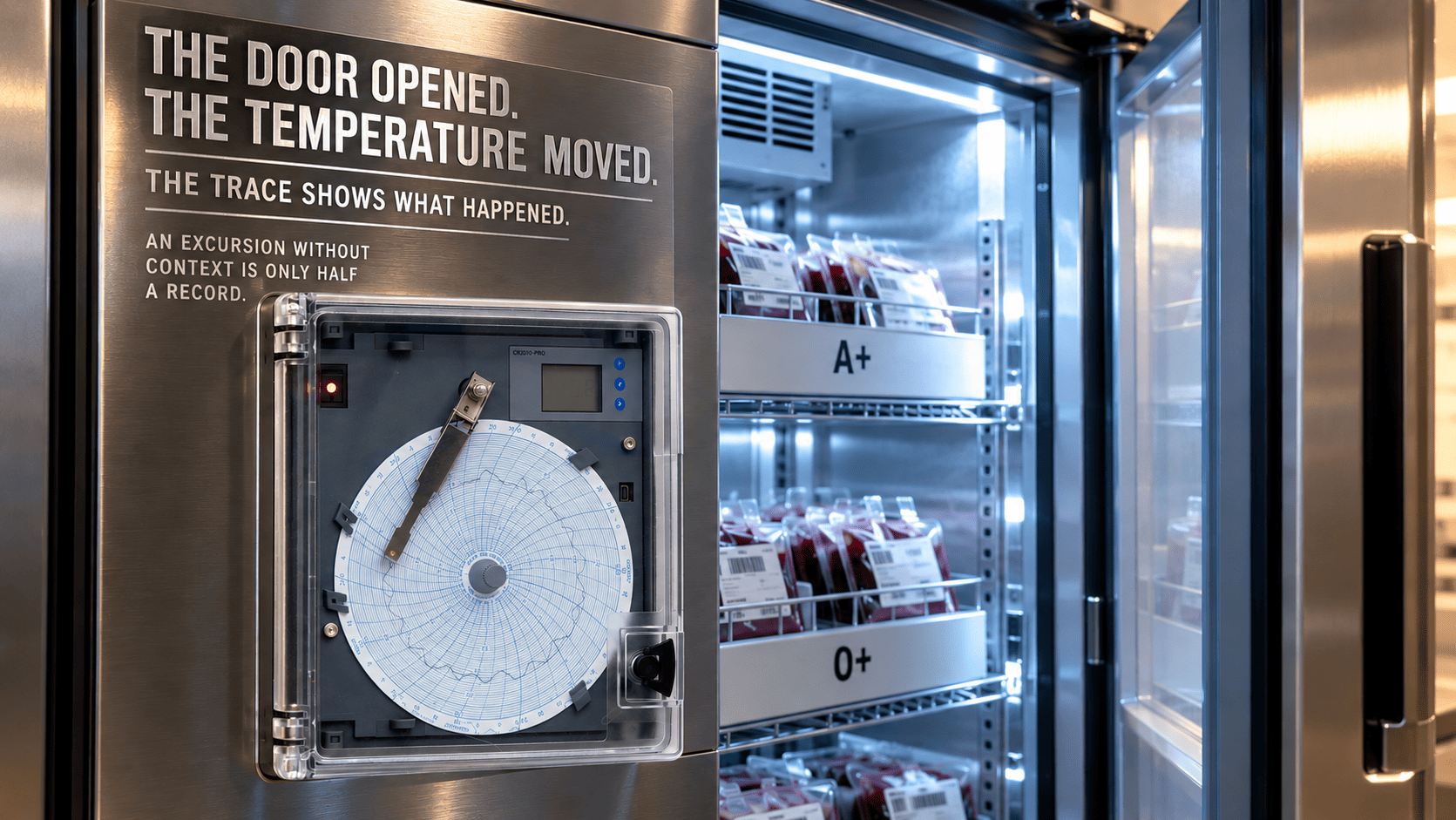
The same evidence logic already drives blood bank temperature monitoring.
How Do You Fit a Recorder Into a Small Under-Counter Unit?
Compact recorders are made for exactly this.
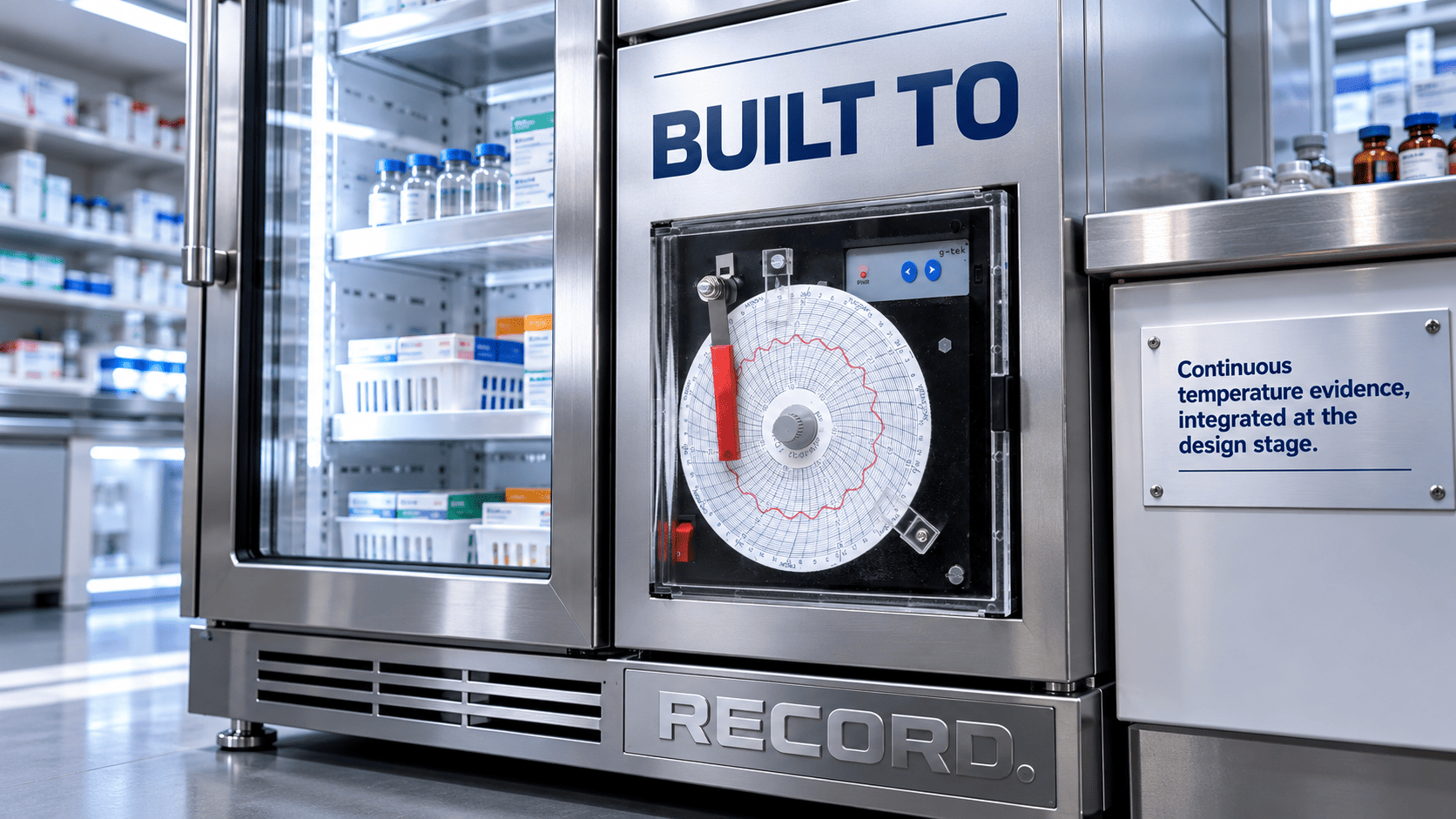
4-inch and 5-inch chart recorders are designed for small medical units with limited panel space. An open-frame version integrates into the refrigerator’s own front panel rather than sitting as a separate box.
The practical options:
CR4″ No-Display: Smallest footprint, microcontroller-based, for the tightest units.
CR5″ No-Display: Universal power or battery-only, for units without dedicated supply.
CR6″ Open Frame: Built into the panel at manufacture, RTD Pt-100, maintenance-free pressure pen.
All accept a direct RTD input, so no separate transmitter is needed. This is the same approach proven in cold storage chart recording.
Design the Recorder Into the Unit, Not Around It
Specify the recorder and its panel cutout at the design stage. This is because a recorder added afterwards nearly always compromises either the panel layout or the storage volume.
Fitting recording into small medical units is familiar ground for G-Tek Corporation, which has built circular chart recorders in Vadodara for over 30 years.
Its compact range covers 4-inch, 5-inch, and 6-inch models sized for blood banks, incubators, and small medical refrigeration. This includes an open-frame unit designed to integrate into a refrigerator’s own front panel.
The inkless models mark on pressure-sensitive paper, so there is no pen to dry out.
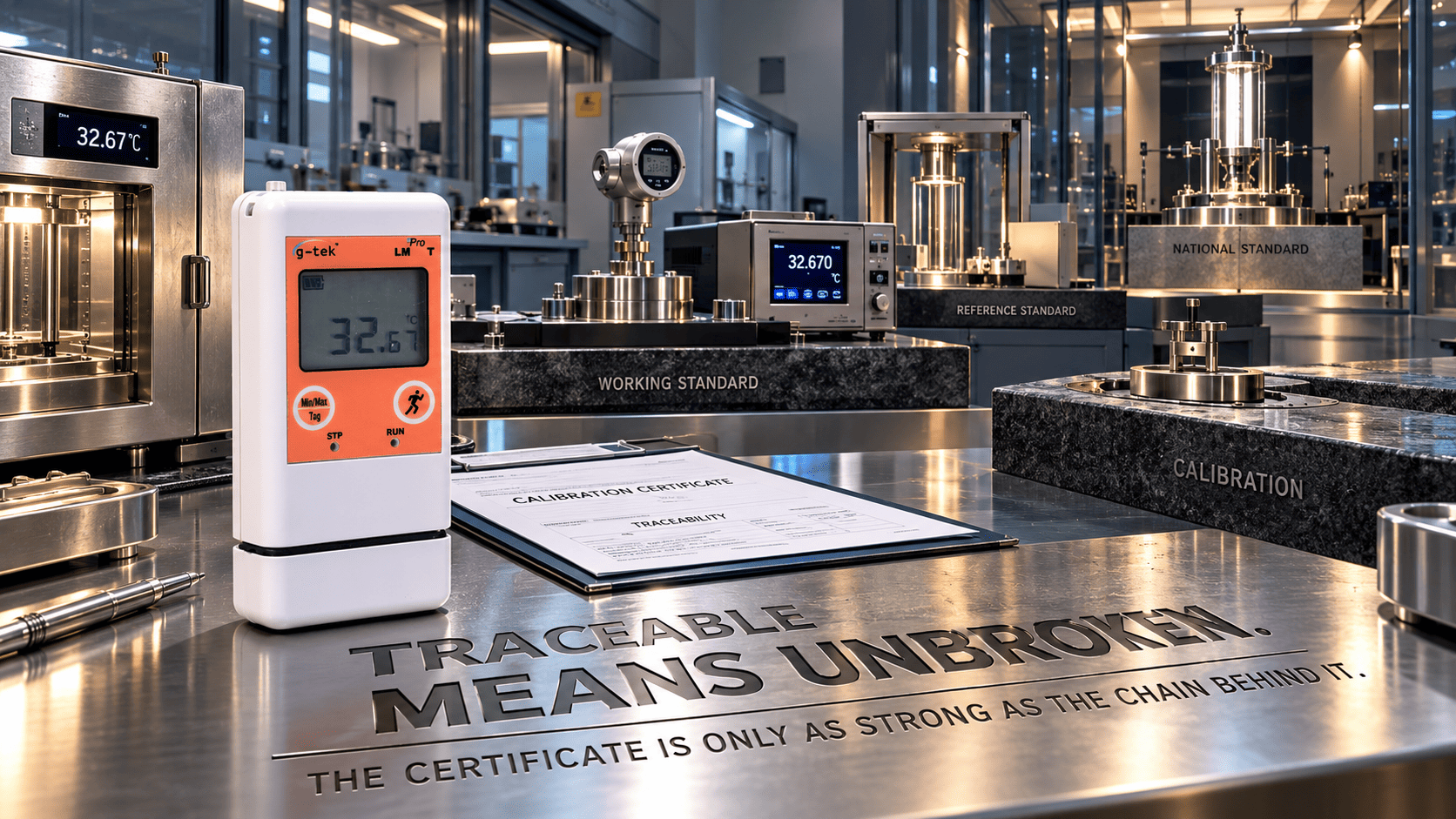
Additionally, every unit is calibrated in G-Tek’s own NABL ISO/IEC 17025-accredited laboratory. The same discipline is applied across vaccine cold chain monitoring, in line with WHO guidance.
A small unit was never a reason to skip recording. It was only ever a reason to size it correctly.
Ship a Medical Fridge That Documents Its Own Storage
A hospital pharmacy should not have to add a recorder to a refrigerator built to store medicines.
A unit that documents itself from delivery is a unit that specifies easily.
With pharmacy refrigerator temperature monitoring built into the unit, OEMs can provide continuous temperature records without relying solely on manual checks.
Designing a pharmacy or ward refrigerator? Send the G-Tek team your panel dimensions and available space. Get a clear recommendation on the compact recorder that fits.
Frequently Asked Questions
Why Isn't a Manual Temperature Log Enough for a Pharmacy Fridge?
It records only the moments someone took a reading.
The hours between, including overnight and weekends, stay undocumented. This is usually when damage happens.
Can a Chart Recorder Fit a Small Under-Counter Medical Fridge?
Yes. Compact 4-inch and 5-inch recorders are built for limited panel space.
Additionally, open-frame versions integrate directly into the refrigerator’s front panel.
Does a Small Recorder Need a Separate Transmitter?
No. G-Tek’s compact recorders accept a direct RTD Pt-100 input, so the sensor connects straight to the recorder without additional signal conditioning.
What Should a Hospital Refrigerator OEM Build In?
A continuous recorder sized to the unit and specified at the design stage with its panel cutout.
This ensures the fridge documents the full storage period on delivery.
Where Is G-Tek Corporation Located?
G-Tek Corporation is based in Vadodara, Gujarat. It has manufactured recording and monitoring instruments for over 30 years and operates an in-house NABL-accredited calibration laboratory.
Related Posts