By Asutosh Shah & Alpesh Shah · Founders, G-Tek Corporation · 30+ years in temperature…
Blood Bank Refrigerator Door Openings: The Temperature Risk Nobody Records
By Asutosh Shah & Alpesh Shah · Founders, G-Tek Corporation · 30+ years in temperature monitoring, recording, and calibration instrumentation.
Thirty seconds. That is often all it takes for a blood bank refrigerator door to swing open, a unit to come out, and the door to shut again.
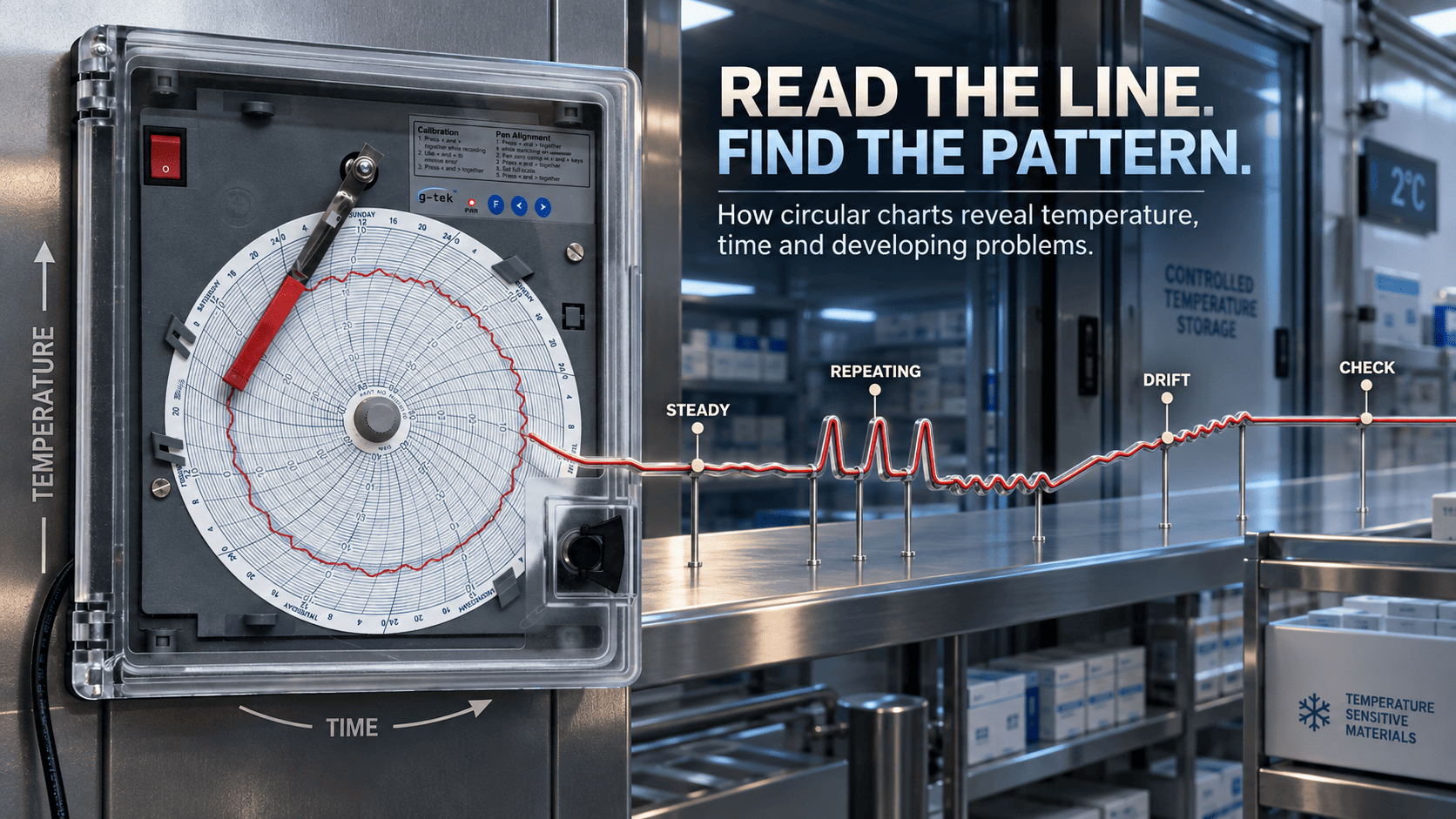
Do that twenty times across a shift, and the chart carries a jagged trace nobody can account for. That’s because the thing causing it was never recorded.
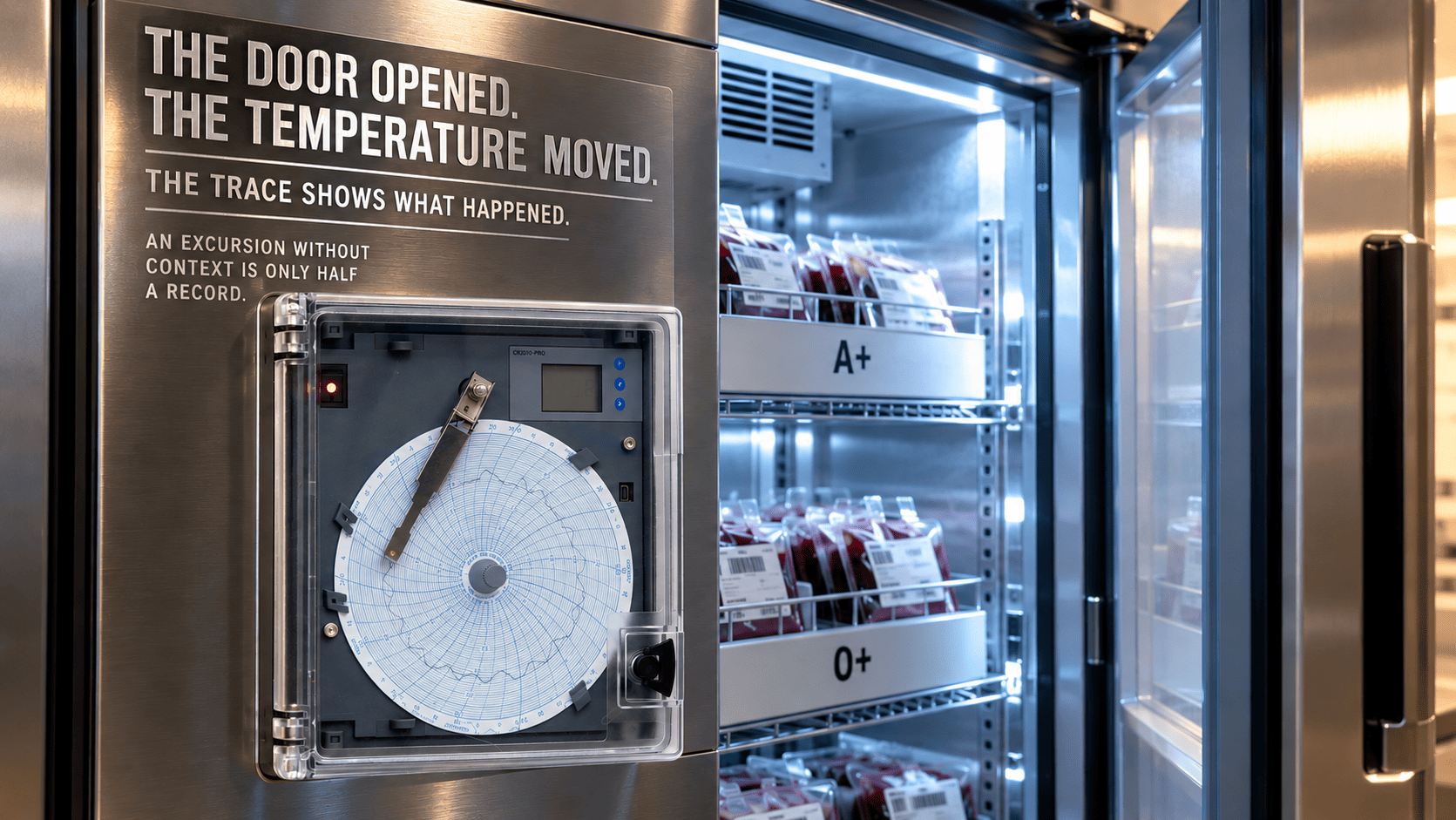
Blood bank refrigerator door monitoring uses a door-switch input wired into the recorder. It time-stamps every open and close event alongside the temperature trace.
As a result, a temperature rise can be matched to the door event that caused it instead of standing as an unexplained excursion.
Key Takeaways
A blood bank refrigerator is opened continuously, and every opening disturbs the internal temperature.
A standard chart shows the rise but never the cause.
A door-switch input lets the recorder log each open and close with a time stamp.
Reading the event log against the trace explains an excursion instead of leaving it open to question.
OEMs who design door monitoring in ship units a blood bank can defend at inspection.
In a Blood Bank Fridge, the Door Is the Main Source of Temperature Disturbance
Door openings are the most frequent cause of temperature movement inside a blood bank refrigerator.
Warm room air enters each time a unit is removed. Therefore, the trace climbs because the door opened, not because the equipment faltered.
Unlike a sealed storage freezer, a BBR is in near-continuous use. Components go out, components come back.
Each opening is a small thermal event, and what decides the damage is frequency and duration.
A quick open settles fast. However, a door left ajar during a busy issue window is a different story altogether. The circular chart recorder in a blood bank will faithfully draw both identically.
How Does Blood Bank Refrigerator Door Monitoring Identify Temperature Problems?
You tell them apart by recording both. A recorder with a door-switch input logs every open and close with a time stamp.
Therefore, a rise that aligns with a door event is explained, while a rise with no door event points squarely at the unit.
That single overlay changes the conversation at an audit.
“Unexplained excursion at 15:04” becomes “door open eleven minutes at 15:04.”
One is a non-conformance waiting to be written. The other is a training observation with evidence attached.
It also exposes a door repeatedly left open during stock checks. This is behaviour no blood bank refrigerator chart recorder can reveal on temperature alone.
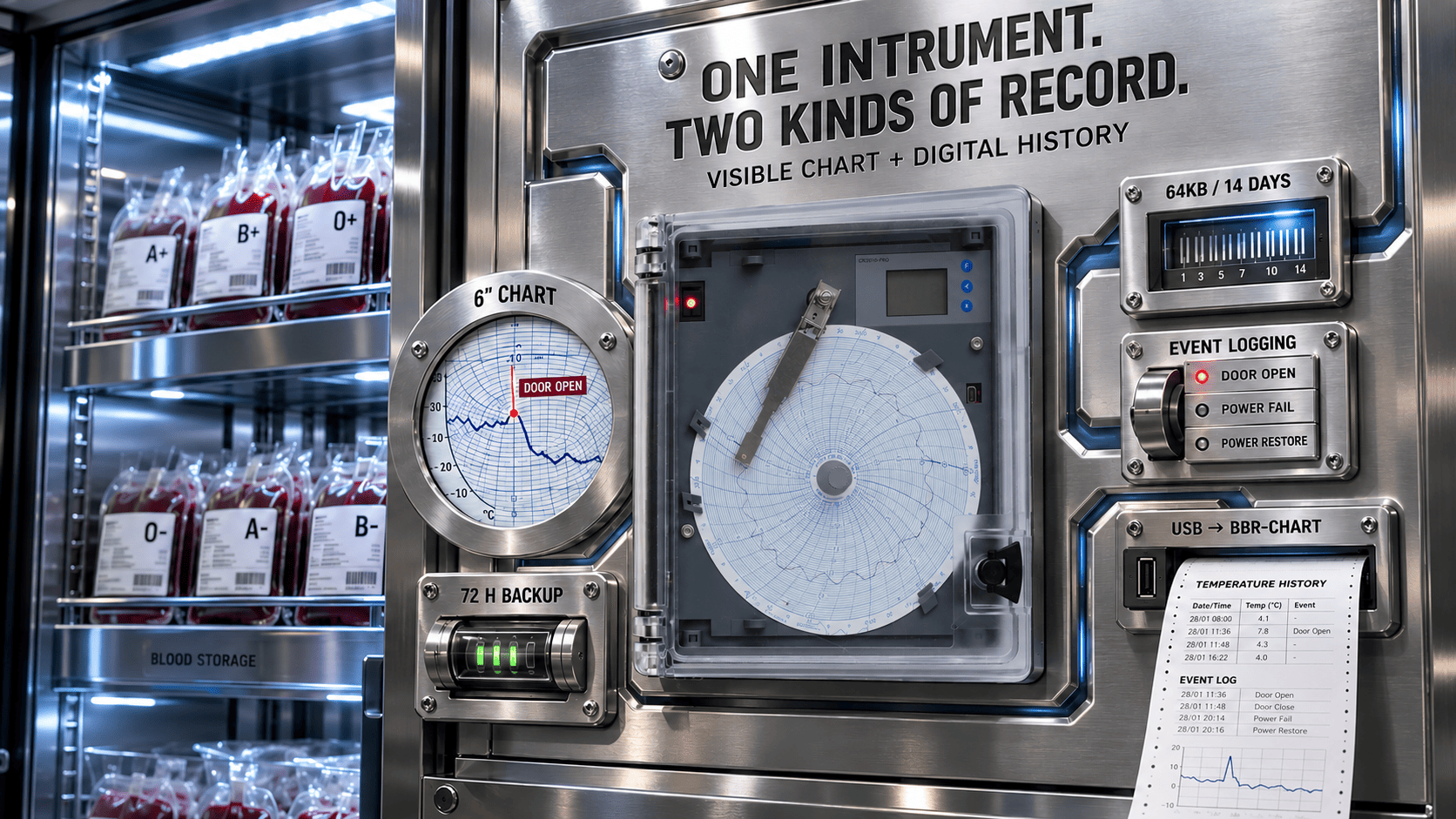
G-Tek Corporation built the CR2010 series BBR around blood bank refrigerator use, drawing on more than three decades of instrumentation work in Vadodara.
Alongside the 6-inch inkless chart marked on the unit itself, it accepts a door-switch input through a potential-free contact.
It logs every door open and close, together with power failure and restore, into 64KB of internal memory. This holds up to 14 days of data at a 5-minute interval.
Battery backup keeps it recording through a power cut. Additionally, BBRChart software pulls the complete record over USB for analysis and reports.
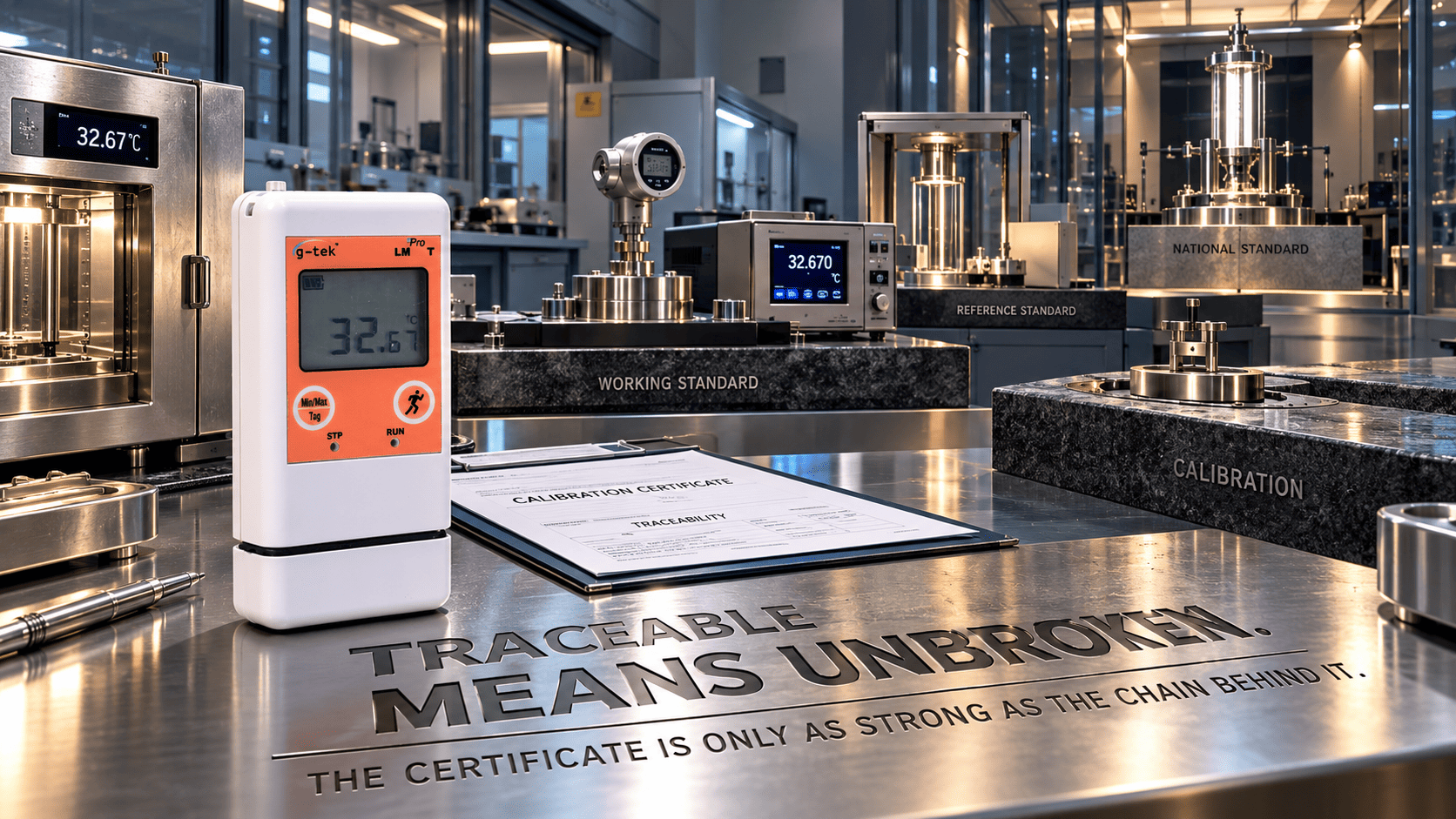
Every one of these storage recorders is calibrated in G-Tek’s own NABL ISO/IEC 17025-accredited laboratory.
Design the Door Input In From the Start
Build the door-switch input into the refrigerator’s recorder at the design stage rather than leaving it for a retrofit.
This ensures every unit ships able to explain its own temperature trace from day one.
Blood storage sits under the Drugs & Cosmetics Act, and accreditation under NABH turns storage records into inspection evidence.
A hospital technician will not wire a switch after installation.
The OEM who integrates it, alongside the right circular chart recorders for the panel, ships the defensible unit.
This is a point worth weighing when you review the ideal storage recorders for blood banks.
Ship a Fridge That Can Explain Its Own Chart
A temperature rise with no explanation is a question at every inspection. A unit that logs the door beside the trace answers it before anyone asks.
With blood bank refrigerator door monitoring, the recorded door events provide valuable context for temperature changes during routine use.
Designing your next blood bank refrigerator? Walk the G-Tek team through your door switch and panel layout. Get a clear recommendation on building door-event recording in from the start.
Frequently Asked Questions
Why Do Door Openings Matter in a Blood Bank Refrigerator?
The unit is opened constantly as components are issued. Each opening admits warm air, making door events the most common cause of temperature movement.
How Does a Recorder Log Door Openings?
Through a door-switch input wired via a potential-free contact. Each open and close is time-stamped and stored beside the temperature data for joint review.
What Does the Door Log Actually Prove?
It shows whether a rise matched a door event. Aligned with an open door, it is explained. With no door event, attention turns to the equipment.
Which G-Tek Recorder Supports Door Monitoring?
The CR2010 series BBR, which logs door open and close plus power fail and restore. It also provides 14 days of data downloadable through BBRChart.
Where Is G-Tek Corporation Located?
Vadodara, Gujarat — manufacturing recording and monitoring instruments for over 30 years, with an in-house NABL ISO/IEC 17025 calibration laboratory and pan-India support.
Related Posts