By Asutosh Shah & Alpesh Shah · Founders, G-Tek Corporation · 30+ years in temperature…
No Laptop, No Cable, No Download: Reading a Month of History at the Fridge Door
By Asutosh Shah & Alpesh Shah · Founders, G-Tek Corporation · 30+ years in temperature monitoring, recording, and calibration instrumentation.
A health worker stands in front of the vaccine refrigerator with a clipboard, not a laptop. He/She needs to know one thing: has this unit held temperature over the past few weeks, or hasn’t it?
In most facilities, answering that means finding a computer, a cable, the right software, and the one colleague who knows how to run it. This is exactly why, in most facilities, nobody answers it very often.
A vaccine logger with display history lets anyone review recent temperature records directly on the device’s own display. No computer, cable, or software is needed, so routine checks happen at the unit in seconds.
Key Takeaways
Reviewing a logger’s record usually needs a laptop, cable, and software, so it quietly stops happening.
On-device history puts the last 30 days on the logger’s own screen.
Checks that take seconds get done daily; checks that take setup get postponed.
A drift surfaces in week one instead of week five.
60 days stay stored for audits, while the display handles the daily look.
What Does “On-Device History” Actually Give You?
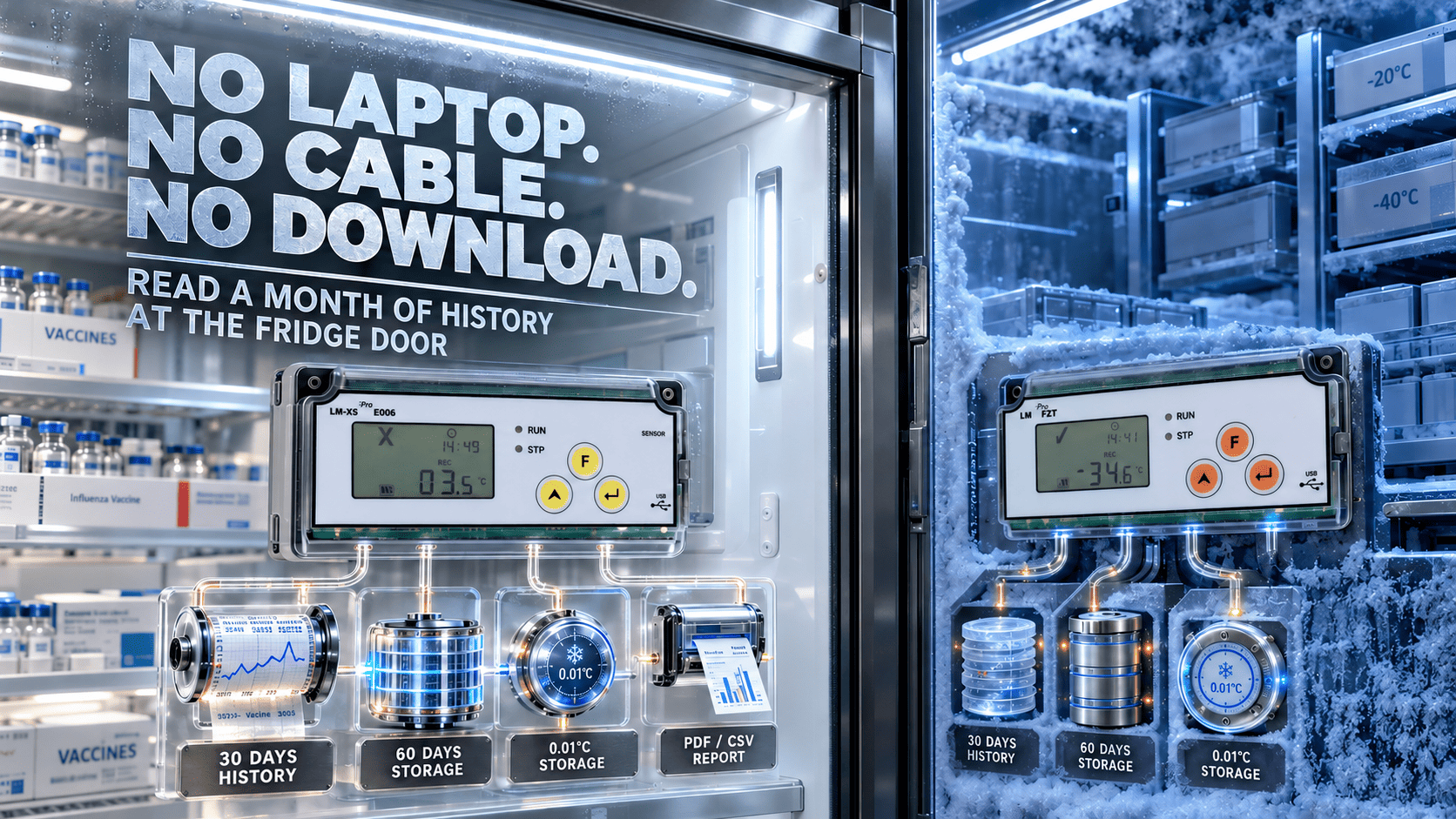
On-device history means the logger stores recent temperature records and displays them on its own screen. Therefore, a health worker can scroll back through recent readings at the unit itself without connecting it to a computer or running any software.
On the LM-XS Pro E006 and LM Pro FZT, that window is the last 30 days, read on a large display at 0.1 °C resolution.
Behind it sits 60 days of stored data at 0.01 °C, waiting for the day a formal record is needed.
The deep record is for the auditor. The screen is for the person standing at the fridge door at nine in the morning. Most data loggers give you only the first.
A Check That Takes Seconds Gets Done; a Check That Takes Setup Gets Skipped
The real gain here is behavioural. When reviewing a record requires a laptop, cable, and software, the review becomes occasional. In contrast, a display-based check takes seconds and becomes routine.
That isn’t a technical argument. It’s a human one.
Routine monitoring is a programme expectation, not a preference. WHO EVM assessments and WHO GDP guidance under TRS 961 Annex 9 both rest on storage being watched continuously, not reconstructed afterwards.
A 30-day window on screen means a slow drift is caught while it is still correctable.
Put the Daily Check Where the Unit Is
Choose loggers that show recent history on the device for everyday checks. Keep full downloads for audits and reporting, so routine monitoring happens at the unit and formal records stay available when needed.
Both of G-Tek’s WHO-PQS vaccine series loggers are built this way, drawing on 30 years of instrumentation work in Vadodara.
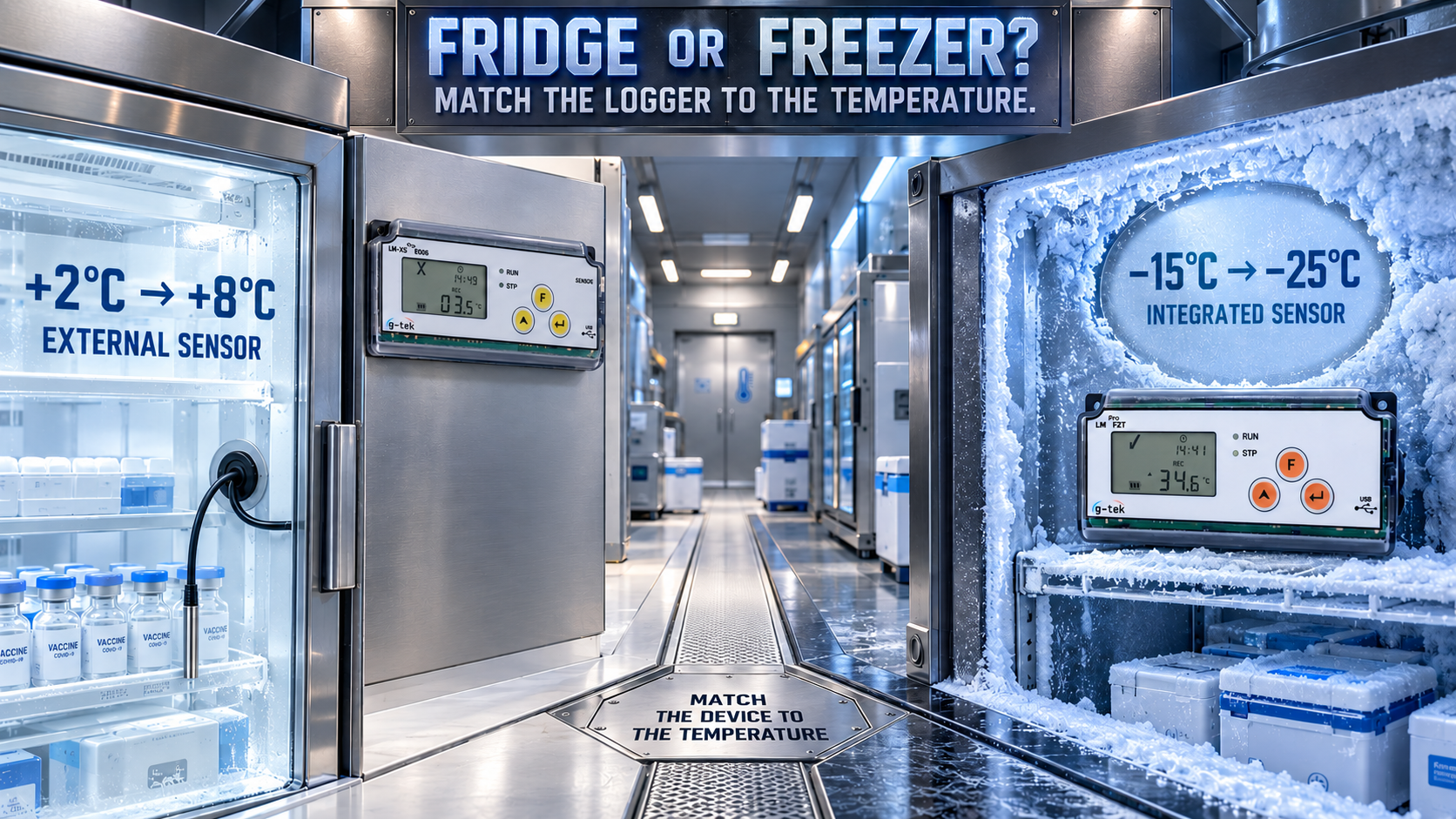
The LM-XS Pro E006 for refrigerators (TR06.3) carries audio-visual alarm indication. Meanwhile, the LM Pro FZT for freezers (TR06.4) adds a battery indicator on display.
Both run beyond 5.5 years on a single battery. They also produce a direct PDF/CSV summary across the full 60 days.
Additionally, both ship calibrated from our NABL ISO/IEC 17025-accredited laboratory.
A vaccine logger with display history therefore supports routine monitoring at the unit while keeping records available for audits and reporting.
Frequently Asked Questions
Can You Check a Vaccine Logger's History Without a Computer?
Yes. On-device history shows the last 30 days of readings on the screen. No laptop, cable, or software is needed.
How Much Data Do These Loggers Hold?
Sixty days of stored records, with the most recent 30 days viewable directly on the display.
Do You Still Need Software if the Logger Has a Display?
The display covers the daily check. A direct PDF/CSV summary report handles documentation for audits.
Which G-Tek Loggers Show History on the Device?
Both LM-XS Pro E006 for refrigerators and LM Pro FZT for freezer storage.
Where Is G-Tek Corporation Located?
Vadodara, Gujarat – manufacturing monitoring instruments for over 30 years, with pan-India support.
Make the Daily Check Something That Actually Happens
A record only protects stock if someone reads it. Thirty days on the device turns a weekly chore into a few seconds at the fridge door.
With a vaccine logger with display history, staff can review recent temperature records without depending on a computer or software for routine checks.
Want routine checks your staff will actually do? Talk to the G-Tek team about how your units are reviewed today and get a recommendation on loggers with on-device history.
Related Posts