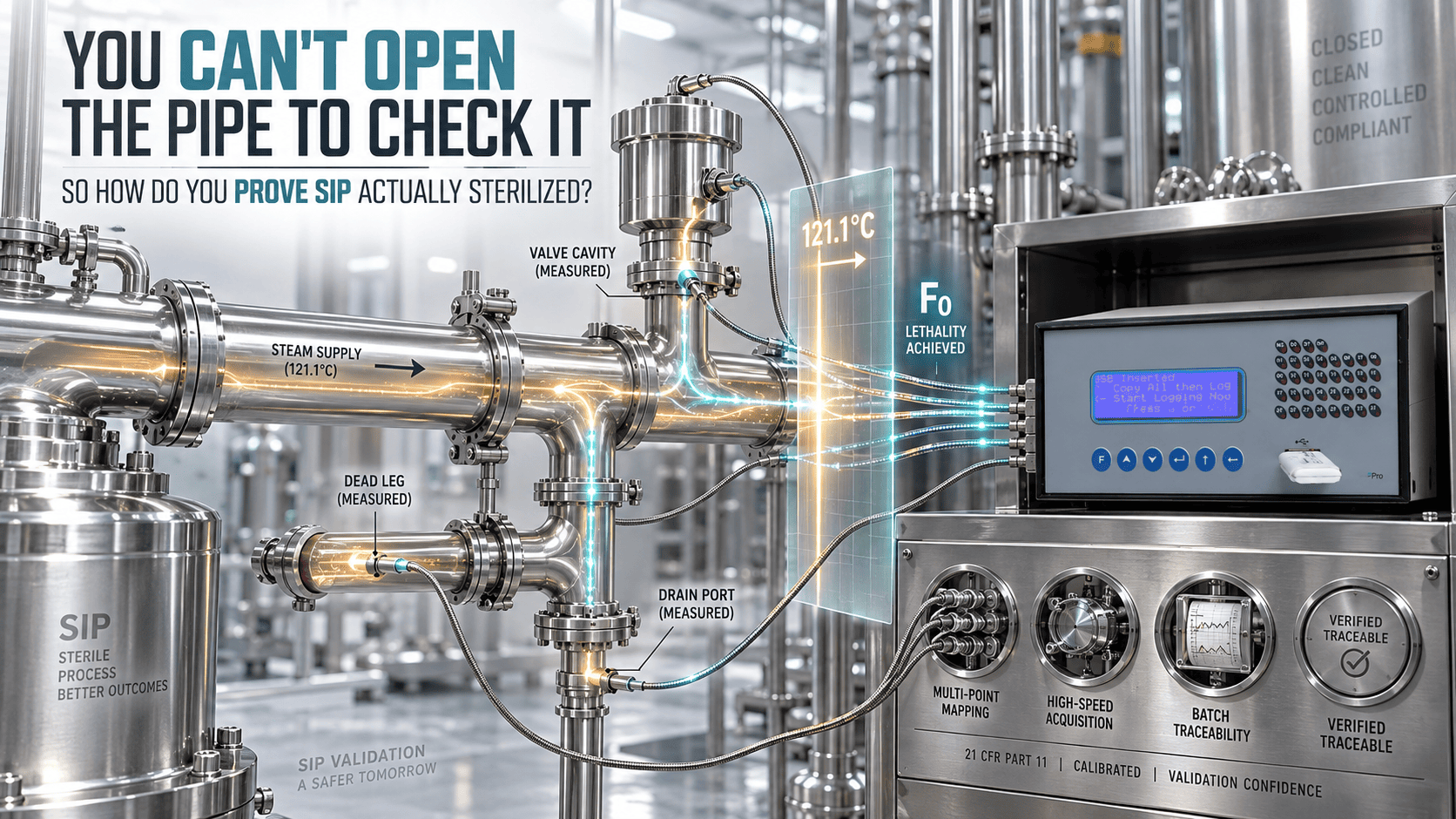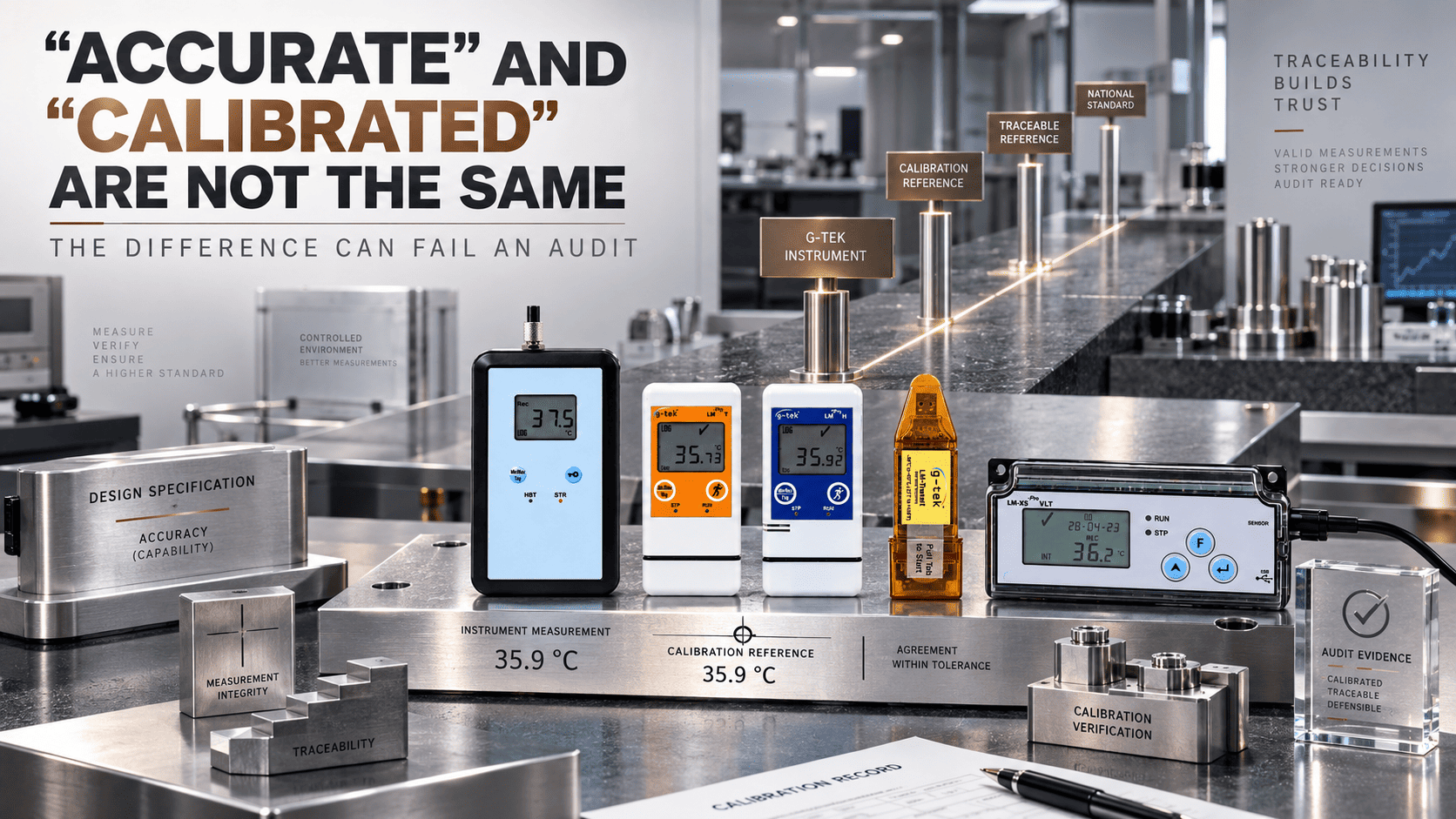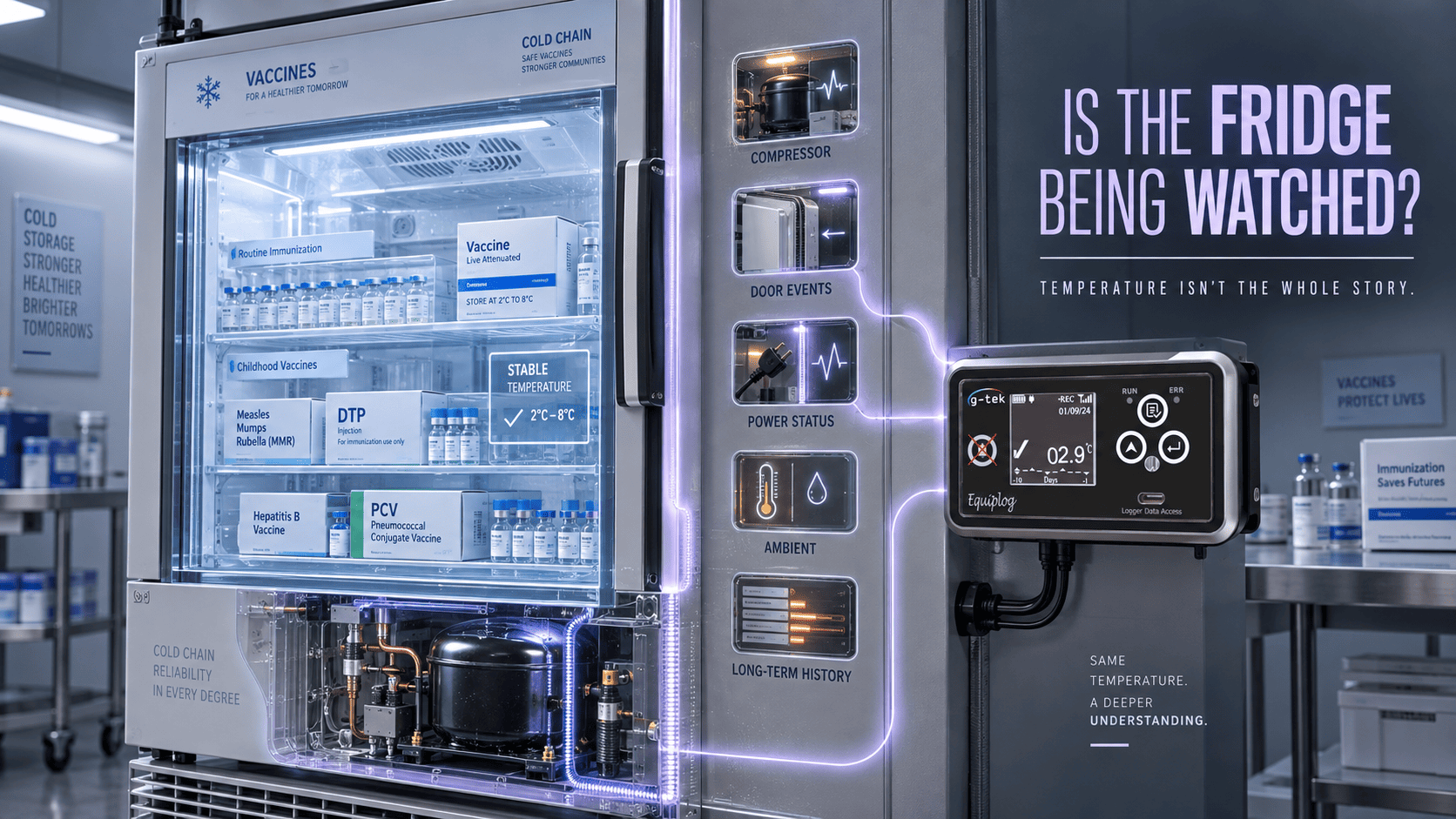
By Asutosh Shah & Alpesh Shah · Founders, G-Tek Corporation 30+ years in temperature monitoring,…
F0 Sterilization Explained: Why Temperature Alone Is Not Enough
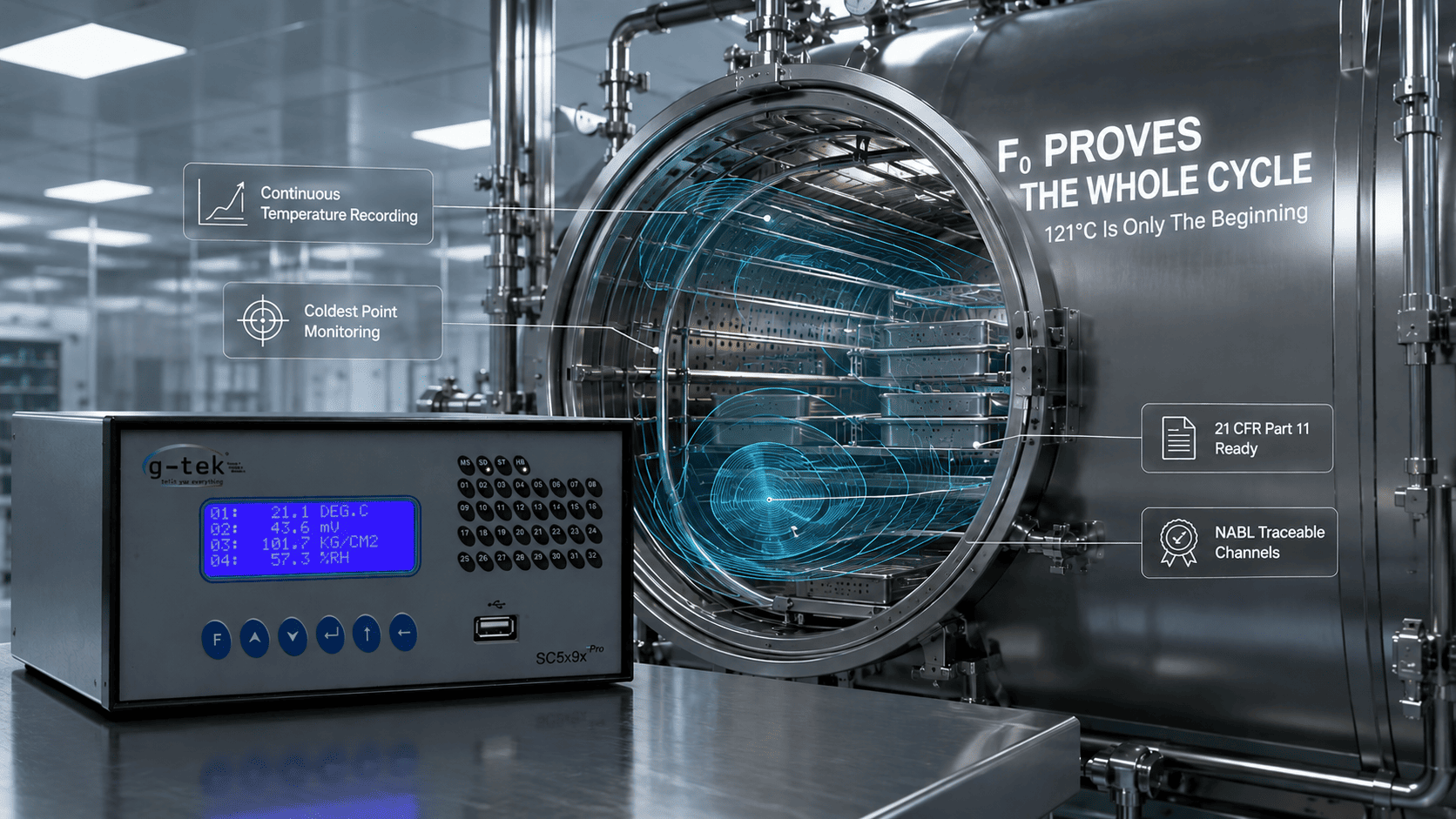
A new QA trainee watches the autoclave cycle finish.
The chamber display touched 121°C. She smiles, ready to release the load.
Her supervisor stops her with one question:
“For how long, and how much lethality did the coldest point of the load actually accumulate?”
She has no answer.
The temperature was only half the story.
The other half has a name – F0.
In 2026, a moist-heat sterilization cycle is not judged only by whether it reached 121°C. It is judged by the F0 sterilization value – the total accumulated lethality the load receives over time, expressed as equivalent minutes at 121°C.
A cycle can reach the correct temperature and still fail if the coldest point of the load does not accumulate sufficient lethality.
Key Takeaways
- F0 sterilization measures the accumulated lethality delivered during a moist-heat sterilization cycle
- Reaching 121°C is not enough – the load must maintain sufficient temperature exposure over time
- F0 is calculated from continuously recorded temperature, especially at the coldest point of the load
- A common target is F0 ≥ 15 minutes for terminal moist-heat sterilization (verify according to process requirements)
- Accurate F0 calculation depends on reliable temperature recording and calibration
What Is F0 in Sterilization?
F0 sterilization represents the total lethality delivered during a moist-heat sterilization cycle, expressed as the equivalent time in minutes at 121°C.
It measures sterilization effectiveness by considering both:
- Temperature
- Exposure time
A sterilization cycle is not successful simply because the chamber reaches the target temperature. The complete time-temperature profile determines whether enough microbial reduction has occurred.
F0 converts the entire temperature curve into a single value by using a reference temperature of 121.1°C and a standard z-value of 10°C.
Higher temperatures accumulate F0 faster, while lower temperatures contribute more slowly.
The calculation approach is widely used in pharmaceutical sterilization processes and is supported by standards such as USP <1229> and ISO 17665 for moist-heat sterilization.
Why Can a Sterilization Cycle Reach 121°C and Still Fail on F0?
A sterilization cycle can reach 121°C and still fail because F0 sterilization must be achieved at the coldest point of the load, not only at the chamber sensor.
Every sterilization load contains areas that heat differently.
A chamber probe may show the correct temperature while:
- A product container heats slower
- A dense load area receives less heat penetration
- A cold spot reaches temperature later than expected
The display may show a successful cycle, but the actual load may not have received enough accumulated lethality.
This is why validated sterilization processes require temperature measurement at representative points to prove the complete load achieved the required conditions.
How Is F0 Calculated and Why Does Recording Accuracy Matter?
F0 sterilization value is calculated from the continuously recorded temperature profile throughout the complete cycle.
Since the F0 value comes directly from the temperature curve, recording accuracy plays a critical role.
A missing reading, incorrect sensor placement, or inaccurate measurement can affect the final F0 calculation.
Reliable Sterilization Validation Requires:
- Continuous monitoring throughout the cycle
- Accurate measurement at critical points
- Traceable calibration
- Reliable electronic records
An F0 value is only as trustworthy as the temperature data behind it.
How Does G-Tek Support F0-Based Sterilization Monitoring?
This is where G-Tek Corporation, manufacturing monitoring and recording instruments in Vadodara since 1990, supports validated sterilization processes.
The G-Tek Universal Scanner records temperature from multiple points during sterilization cycles, including critical load locations where temperature behaviour must be verified.
The recorded data is continuously captured on gtekNet™, creating a traceable temperature record that supports review and F0 calculation.
Every channel is supported by calibration from G-Tek’s own NABL ISO/IEC 17025-accredited calibration laboratory, helping ensure the temperature data behind the sterilization cycle remains reliable and audit-ready.
The same measurement principles apply across the G-Tek data logger range designed for validated GMP environments.
What Should Be Verified Before Relying on F0 Data?
Before using an F0 value for sterilization validation, verify:
- Temperature sensors are placed at critical and coldest points
- Recording continues throughout the complete cycle
- Calibration is traceable and current
- Data integrity requirements are maintained
- Reports provide complete cycle documentation
The goal is not only to achieve an F0 value but to prove how that value was achieved.
An F0 Value Is Only as Good as the Record Behind It
If your sterilization validation depends on F0 sterilization, the value is only as reliable as the temperature record used to calculate it.
Accurate measurement, continuous recording, correct sensor placement, and traceable calibration are what make the sterilization cycle defensible.
Frequently Asked Questions
What is F0 sterilization ?
F0 sterilization is the accumulated lethality value of a moist-heat sterilization cycle expressed as equivalent minutes at 121°C. It considers both temperature and exposure time.
Why is reaching 121°C not enough for sterilization?
Reaching 121°C only confirms the chamber temperature. The load must receive enough time at the required temperature, especially at the coldest point, to achieve the required F0 value.
What is a typical F0 value for sterilization?
A common target is F0 ≥ 15 minutes for terminal moist-heat sterilization, but the required value depends on product requirements, bioburden, and validation parameters.
How is F0 measured accurately?
F0 is calculated from continuously recorded temperature data collected during the sterilization cycle using properly calibrated sensors positioned at critical locations.
Where is G-Tek Corporation located?
G-Tek Corporation is based in Vadodara, Gujarat, manufacturing monitoring instruments since 1990, with an in-house NABL ISO/IEC 17025-accredited calibration laboratory and pan-India support.
Related Posts