Your temperature data is flawless. Every reading is in range, and every chamber has remained…
How Often Should You Calibrate a Data Logger? The Right Interval Depends on Risk, Use and Compliance
A QA executive pulls a logger’s file during an audit, calm and confident everything is in order. Then the auditor points at the calibration certificate and its date.
It expired months ago.
In that instant, the problem isn’t one document. It’s every temperature record that logger produced since then, all now open to question. The logger may have been working fine. The calibration schedule wasn’t.
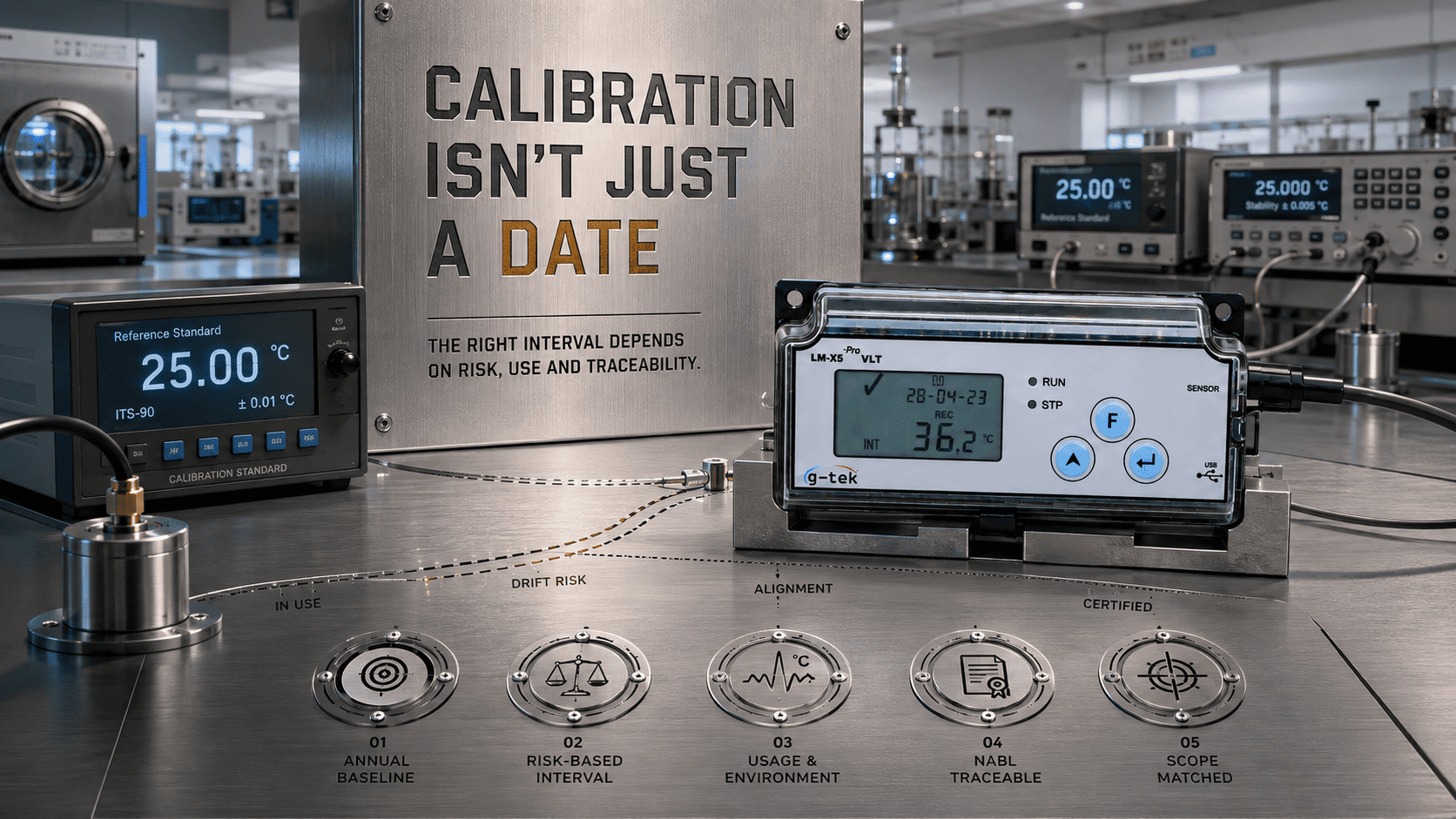
So, how often should you calibrate a data logger? The honest answer isn’t one fixed number. It depends on how critical the application is, how the logger is used, and what regulators, quality systems, and manufacturers require.
But one principle holds: a logger is only as trustworthy as its last valid calibration, and an expired certificate can put subsequent records into question.
🎯 Key Takeaways
- There’s no universal calibration interval; it depends on the application, use, and requirements.
- A common baseline is annual calibration, but critical applications may need it more often.
- An expired calibration can put records made since the last valid calibration into question.
- Heavy use, extreme temperatures, and rough handling may justify a shorter interval.
- Traceable calibration through an accredited NABL ISO/IEC 17025 laboratory helps make the record defensible.
How Often Should a Data Logger Be Calibrated?
A data logger is commonly calibrated at least once a year, but the right interval depends on how critical the measurement is, how heavily the logger is used, and what applicable regulations or manufacturer recommendations require.
Annual calibration is a widely used baseline. A logger sitting in a stable environment on light duty may comfortably follow that interval.
However, a unit used in a GxP-critical, heavily used, or extreme-temperature application may require a shorter interval.
The interval is a risk-based decision, not a fixed rule that applies equally to every logger.
You can see the range built for regulated applications on G-Tek’s temperature and humidity data loggers page.
What Factors Should Decide Your Calibration Interval?
Your calibration interval should be based on the criticality of the data, the logger’s usage and environment, its history of drift, and the requirements of your regulator, manufacturer, or quality system.
The higher the measurement risk and the harder the instrument is used, the more closely the interval should be reviewed.
Think it through honestly. Data supporting blood-bank or vaccine cold-chain decisions carries more weight than a general comfort-monitoring point.
A logger that has shown drift before has already given you useful information about its performance. A unit cycling through ultra-low or high temperatures is also exposed to more demanding conditions than one operating at ambient temperature.
Each of these factors can support a shorter calibration interval.
Electronic records used under 21 CFR Part 11 and monitoring systems used in regulated cold-chain environments also depend on instruments that are appropriately calibrated and controlled.
For setups running multiple probes, a multi-channel temperature scanner may also affect how calibration planning is managed.
The Part Most Buyers Overlook Until Audit Day
Here’s the quiet truth: two loggers can carry calibration certificates, yet the strength of those certificates depends on who performed the calibration and how the measurement is traceable.
Accreditation such as NABL ISO/IEC 17025 provides formal recognition that a laboratory has demonstrated competence within its accredited scope.
That’s an important difference between simply having a calibration certificate and having calibration backed by recognized measurement traceability.
This is where an in-house accredited lab earns its place.
Manufacturing monitoring instruments in Vadodara for over 30 years, G-Tek Corporation runs its own NABL-accredited calibration laboratory, supporting calibration of its LM Pro data loggers with traceability to national measurement standards.
Because the laboratory is in-house, recalibration can also simplify turnaround compared with sending instruments to an unrelated third-party facility, helping keep monitoring systems available and audit-ready.
Before You Set a Calibration Schedule — Verify These
- Accreditation — check whether the laboratory is NABL ISO/IEC 17025-accredited for the required calibration scope.
- Traceability — ensure the calibration certificate provides appropriate measurement traceability.
- Scope match — confirm calibration covers your actual temperature range and includes stated measurement uncertainty.
- Interval basis — set the interval based on criticality, usage, historical performance, and applicable guidance.
- Turnaround — consider how long the logger will be out of service and whether that affects operations.
Set a Calibration Interval That Keeps Every Record Defensible
If you’re unsure how often to calibrate a data logger, the answer should come from the level of risk: how critical the data is, how the logger is used, its operating conditions, and how stable its previous calibration results have been.
Getting the interval right, backed by accredited and traceable calibration, helps keep monitoring records reliable and audit-ready.
👉 Working out your calibration schedule? Share your application and how your loggers are used with the G-Tek team and get a clear recommendation on the right interval and accredited calibration approach.
Frequently Asked Questions
How often should a data logger be calibrated?
A common starting point is once a year, but the right interval depends on data criticality, usage, operating environment, previous drift, and regulatory or manufacturer guidance.
What happens if my logger's calibration expires?
An expired calibration can raise questions about records generated after the valid calibration period. Keeping calibration certificates current helps maintain measurement confidence and audit readiness.
What factors can shorten a calibration interval?
High-criticality applications, heavy use, extreme temperatures, rough handling, and a history of measurement drift may all justify a shorter calibration interval.
Why does an accredited calibration lab matter?
An NABL ISO/IEC 17025-accredited laboratory provides calibration within a formally assessed technical scope, supporting measurement traceability and stronger audit documentation.
Where is G-Tek Corporation located?
G-Tek Corporation is based in Vadodara, Gujarat, and has been manufacturing monitoring instruments for over 30 years, with an in-house NABL ISO/IEC 17025-accredited calibration laboratory and pan-India support.
Related Posts