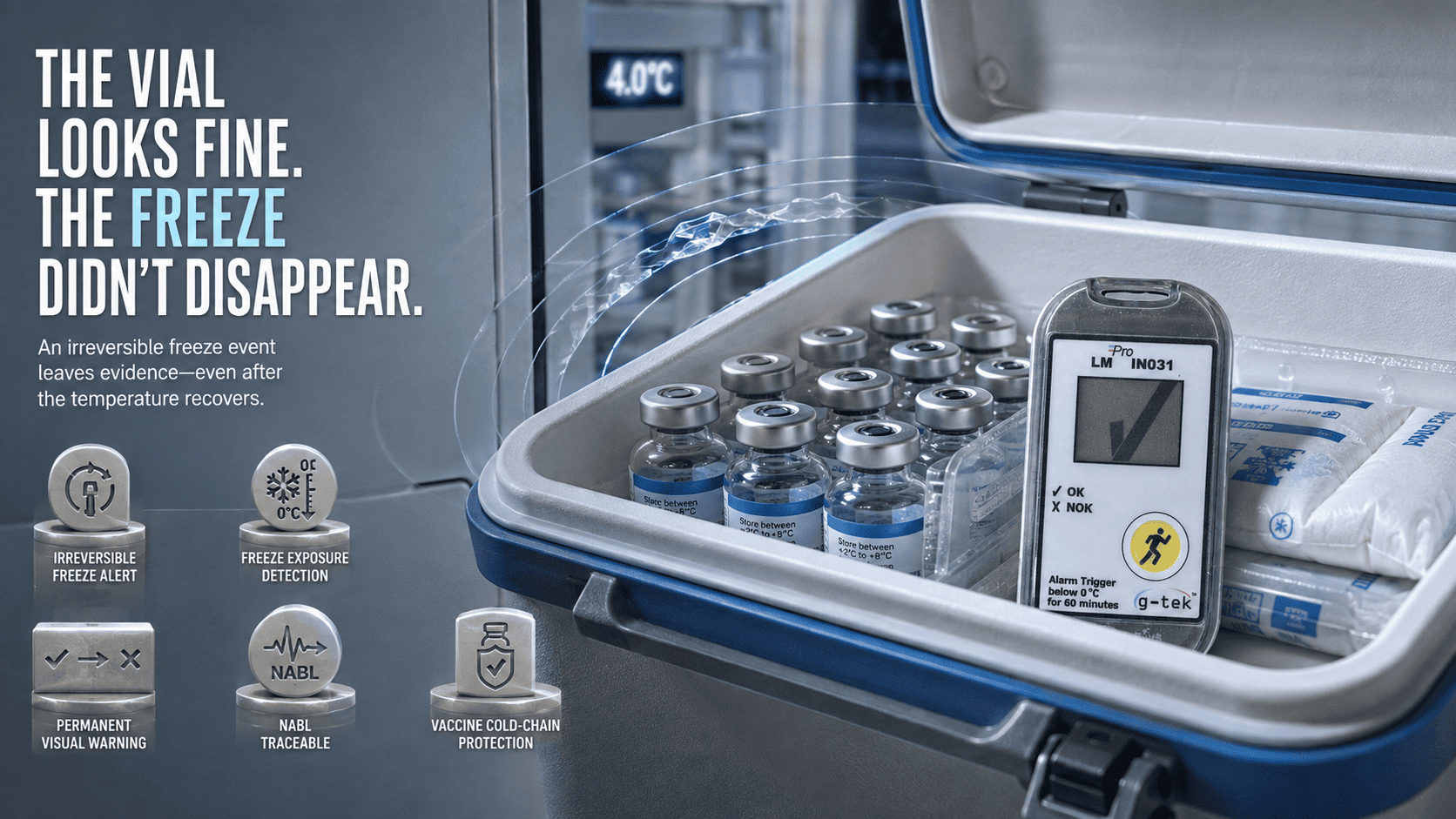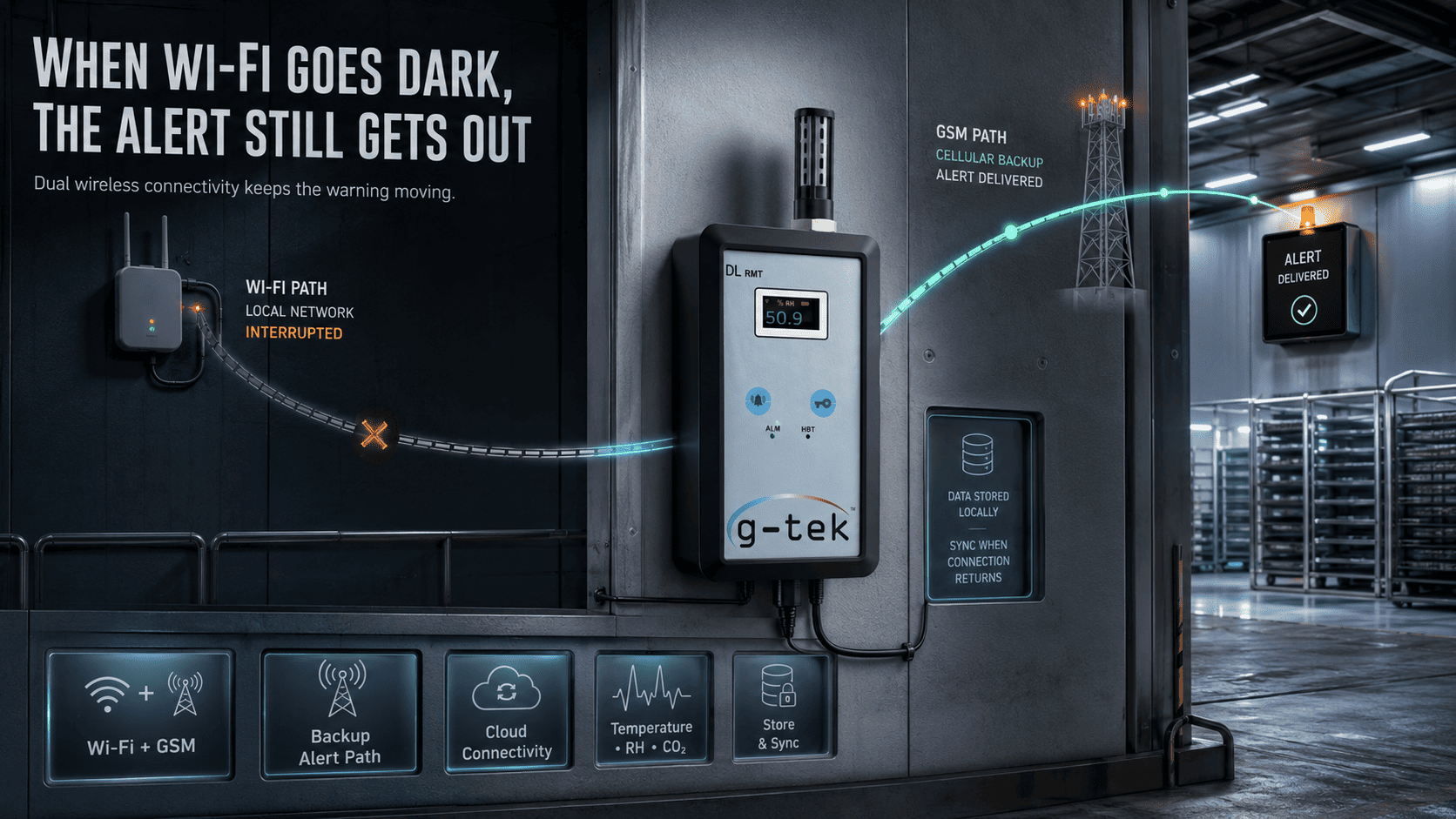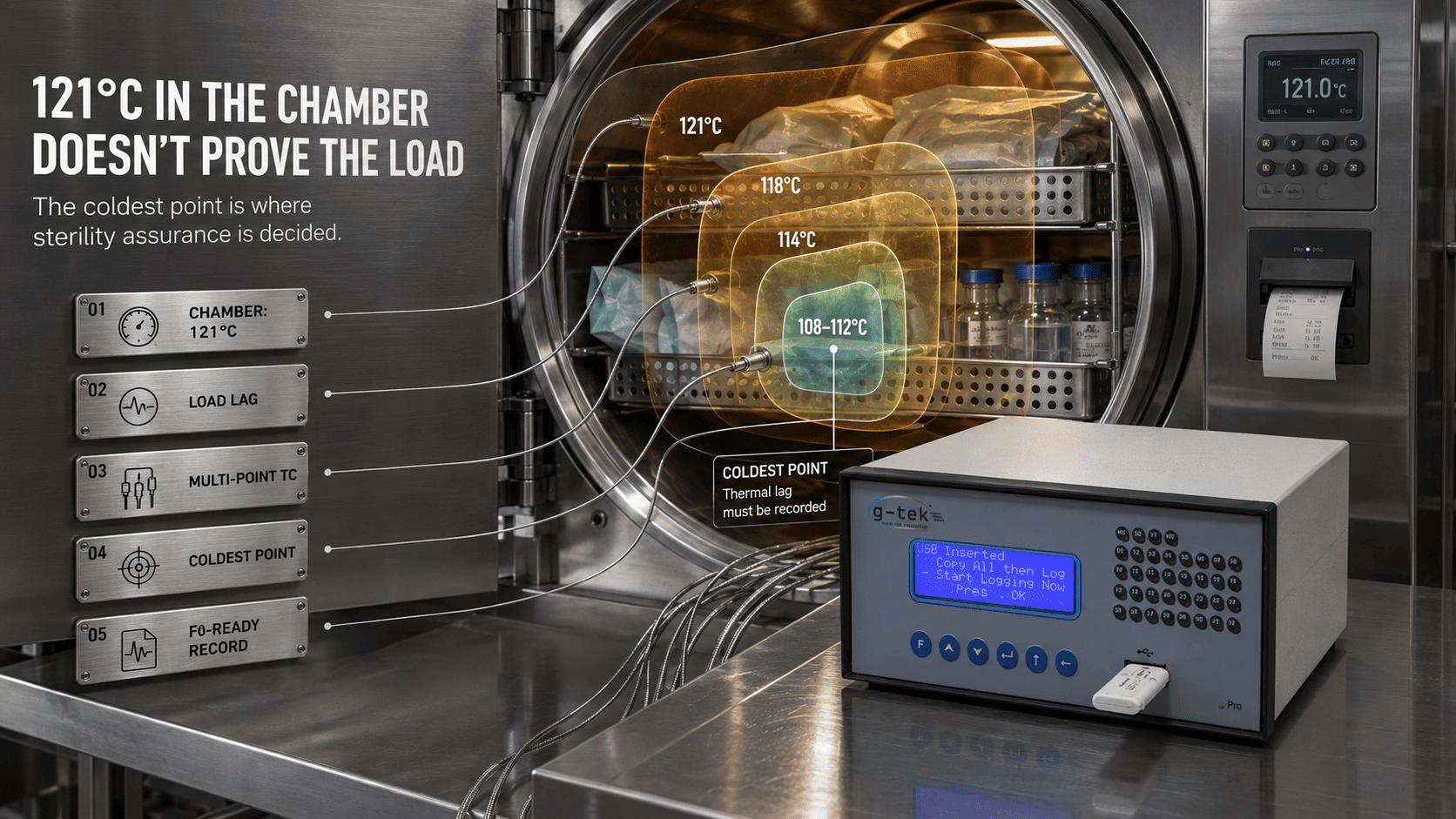
A health worker lifts a vial from the cold box. It reads 4°C. It's clear…
WHO-PQS Vaccine Logger Selection: Which Device Belongs at Each Stage of the Cold Chain?
She spread every monitoring device from her vaccine programme across one desk. Storage fridge. Shipping box. The freeze-sensitive vials. Same logger in all three.
And that was the problem.
Effective WHO-PQS vaccine logger selection isn’t about using one universal logger everywhere. It’s about choosing the right device at each stage of the cold chain.
Storage, transport, and freeze detection each have different monitoring requirements, and matching the device to the stage is what keeps the whole chain properly monitored.
🎯 Key Takeaways
- No single logger fits every cold-chain stage because each stage has different monitoring needs.
- A multi-use programmable logger suits ongoing, reusable temperature monitoring.
- An external-sensor logger suits in-fridge storage over defined periods.
- A freeze indicator flags irreversible freezing, which is critical for freeze-sensitive vaccines.
- A single-use electronic indicator suits individual shipments and transport.
- Each device is designed for a specific WHO-PQS application, so the device should match the stage.
Why Doesn’t One Vaccine Logger Fit Every Cold-Chain Stage?
One logger doesn’t fit every stage because storage, transport, and freeze detection have different requirements reusable vs. single-use, temperature logging vs. freeze indication.
A storage fridge needs ongoing monitoring. A one-off shipment needs a single-use indicator that travels inside the box. Freeze-sensitive vaccines may also need a device that specifically flags freezing exposure.
Different jobs require different device types.
You can see the full range on G-Tek’s vaccine series loggers page.
Which WHO-PQS Logger Belongs at Each Stage?
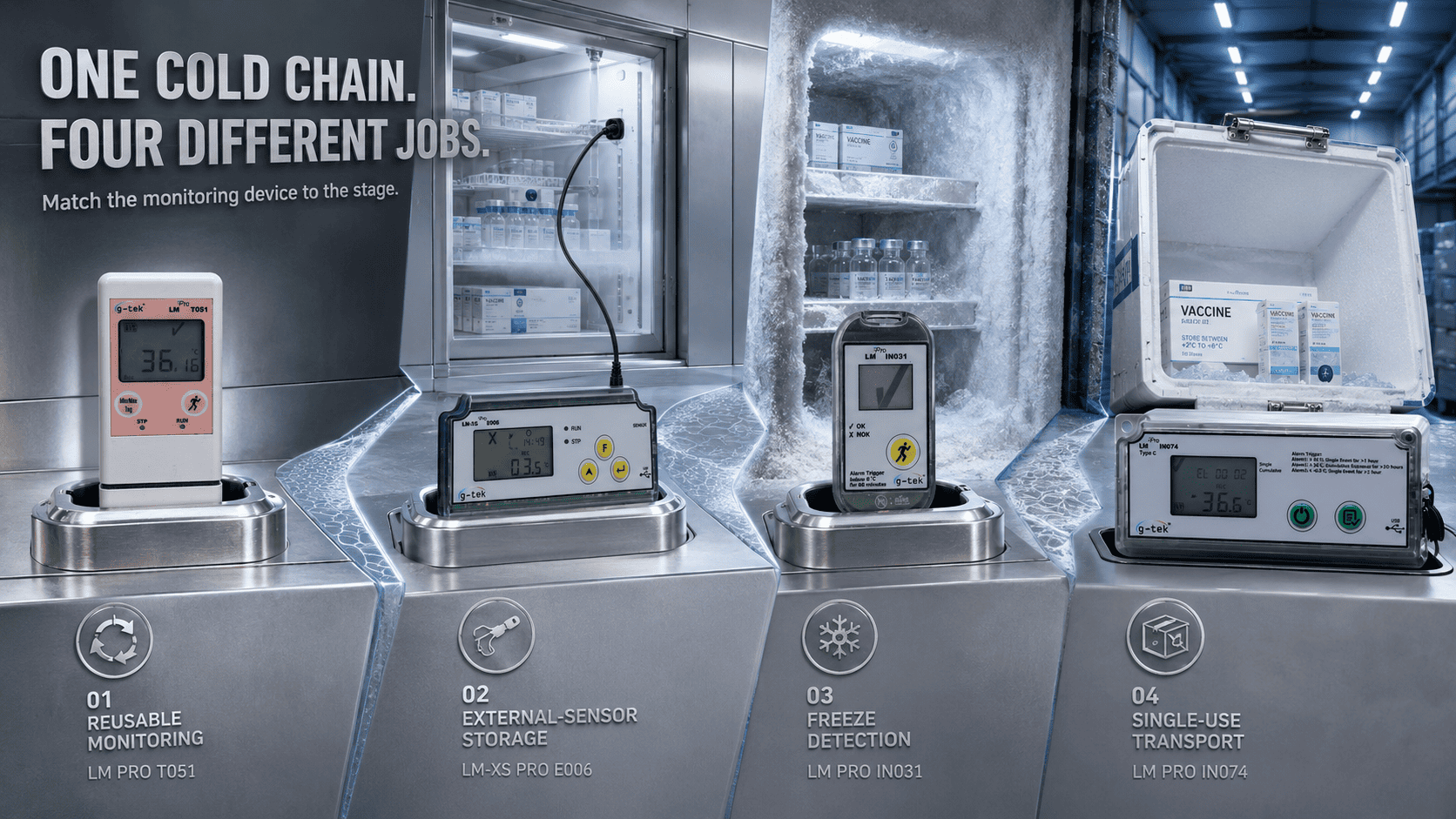
Good WHO-PQS vaccine logger selection starts by matching the device to its actual role: a multi-use programmable logger for ongoing monitoring, an external-sensor logger for in-fridge storage, a freeze indicator for freeze-sensitive vaccines, and a single-use electronic indicator for shipments.
Here’s the mapping:
- LM Pro T051 – multi-use, user-programmable, internal sensor, ✔/X display (TR05.1). Suitable for reusable general monitoring.
- LM-XS Pro E006 – external sensor, 30/120-day logging, review on display (TR06.3). Designed for in-fridge storage.
- LM Pro IN031 – irreversible freeze indicator, Type A/B/C, no software, long service life (IN03.1). Designed for freeze-sensitive vaccines.
- LM Pro IN074 – single-use, 40-day electronic shipping indicator (TR07.4). Suitable for air cargo and transport.
A temperature logger and a freeze indicator are not the same tool. One records temperature over time, while the other provides a one-way freeze alert that does not reset.
For distribution, this distinction sits at the heart of WHO GDP (TRS 957 Annex 5), just as storage monitoring is addressed under TRS 961 Annex 9.
You can also compare device families on G-Tek’s data loggers page.
Before You Choose a Vaccine Logger Verify These Points
- The stage it’s for — storage, transport, or freeze detection; match the device to the job.
- The WHO-PQS reference — confirm the exact PQS code for the device and your programme.
- Single-use vs. multi-use — a shipment indicator and a reusable monitor are not interchangeable.
- Freeze detection — freeze-sensitive vaccines may need a dedicated freeze indicator, not just a standard logger.
- Calibration — use an NABL-traceable certificate matched to the monitoring range. Check accreditation on G-Tek’s calibration page.
Who Makes a Device for Each Stage of the Vaccine Cold Chain?
Manufacturing monitoring instruments in Vadodara for over 30 years, G-Tek Corporation makes a vaccine-series range for different cold-chain monitoring requirements.
The range includes the multi-use LM Pro T051 for ongoing monitoring, the external-sensor LM-XS Pro E006 for storage, the LM Pro IN031 freeze indicator for freeze-sensitive vaccines, and the single-use LM Pro IN074 for shipments, each designed around its respective WHO-PQS application (WHO PQS catalogue).
Every device is traceable to G-Tek’s own NABL ISO/IEC 17025-accredited calibration laboratory, supporting reliable and traceable monitoring records.
Rather than forcing one logger into every application, the range allows a programme to place the appropriate monitoring device exactly where it belongs.
Put the Right Device at Every Stage of Your Cold Chain
If your vaccine programme uses one logger everywhere, there may be monitoring gaps such as a shipment that needs a single-use indicator or freeze-sensitive vaccines that require dedicated freeze detection.
Proper WHO-PQS vaccine logger selection helps match each storage and transport stage with the monitoring device designed for that job.
👉 Mapping monitoring across your cold chain? Share your stages storage, transport, and freeze-sensitive vaccines with the G-Tek team and get a clear recommendation on the right device for each application.
Frequently Asked Questions
Can one logger monitor the entire vaccine cold chain?
Usually not. Storage, transport, and freeze detection have different monitoring requirements, and different devices are designed for each application.
What's the difference between a temperature logger and a freeze indicator?
A temperature logger records temperature over time. A freeze indicator provides an irreversible alert when specified freezing conditions have been reached.
When do I need a single-use vaccine logger?
A single-use logger or indicator is typically used for individual shipments where the device travels with the package and records one journey. Ongoing storage generally uses reusable monitoring devices.
Which G-Tek vaccine loggers are designed for different WHO-PQS applications?
The range includes the LM Pro T051, LM-XS Pro E006, LM Pro IN031 freeze indicator, and single-use LM Pro IN074, each designed for a different vaccine cold-chain monitoring role.
Where is G-Tek located?
G-Tek Corporation is based in Vadodara, Gujarat, and has been manufacturing monitoring and recording instruments for over 30 years, with an in-house NABL ISO/IEC 17025-accredited calibration laboratory.
Related Posts