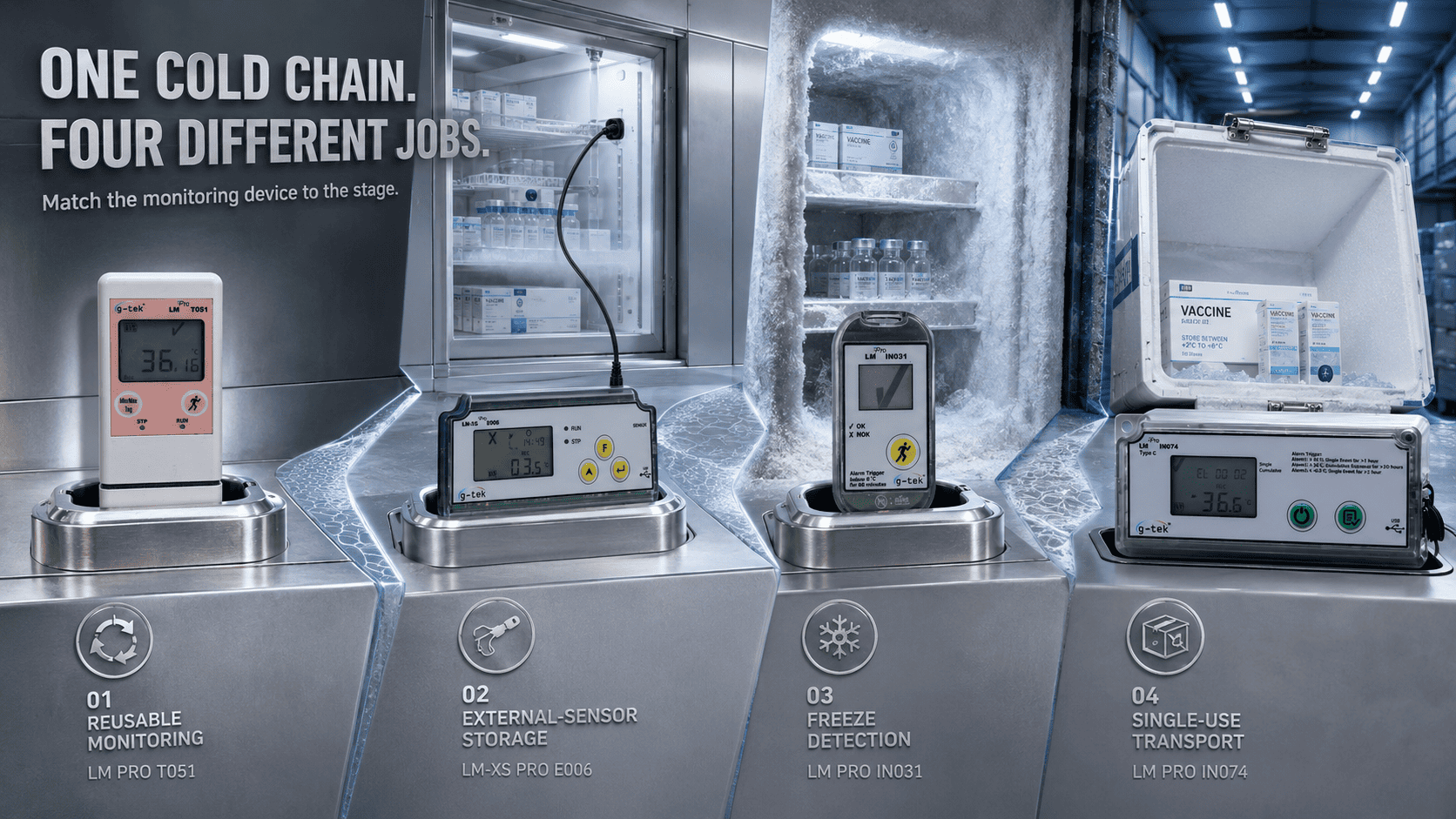
She spread every monitoring device from her vaccine programme across one desk. Storage fridge. Shipping…
Wireless IoT Temperature Logger: Why Dual Wi-Fi and GSM Keep Alerts Working When One Network Fails
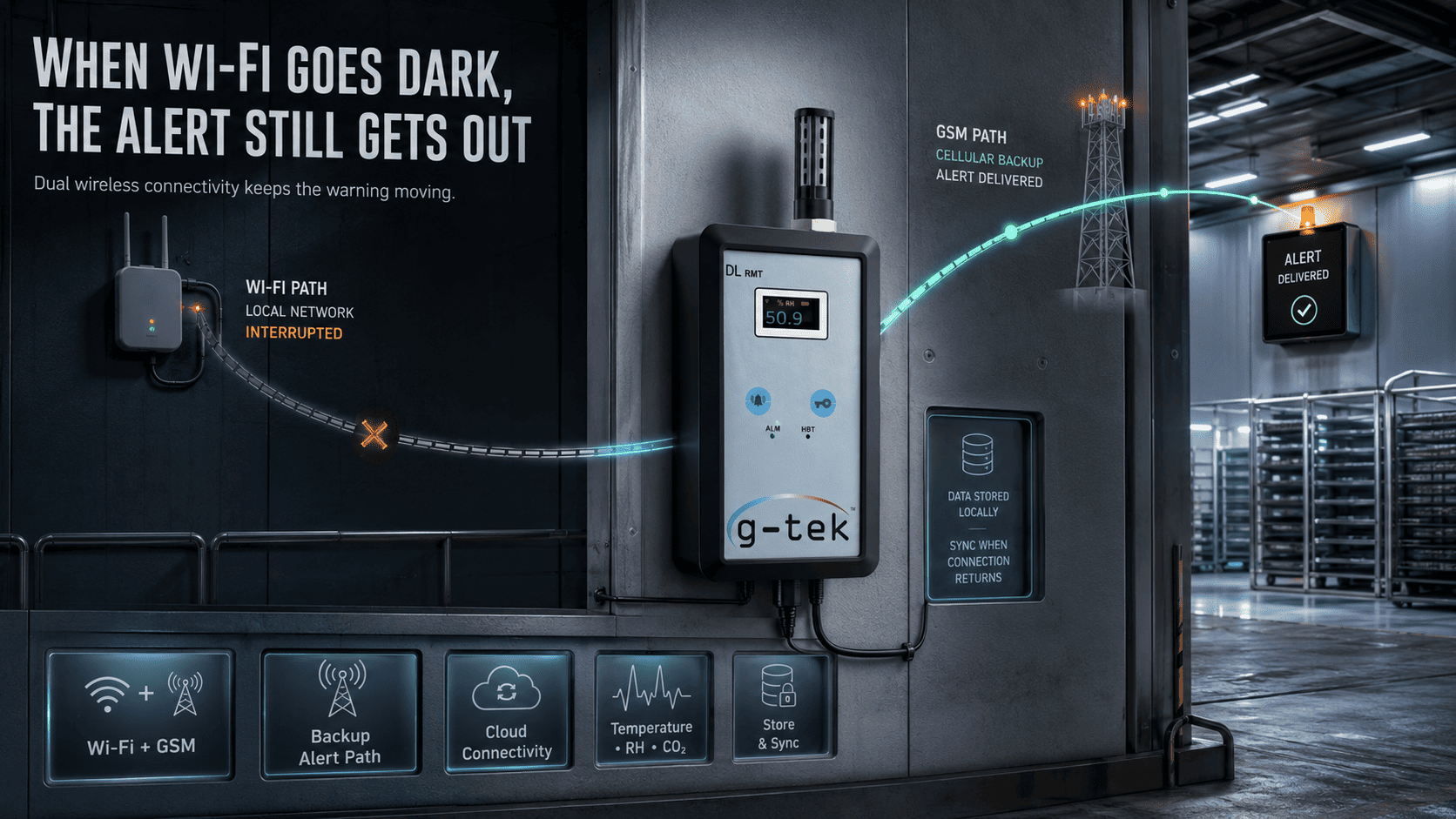
A facility’s Wi-Fi router fails quietly, just after midnight. Down the hall, a cold room begins to warm around 3 AM.
On a Wi-Fi-only logger, that excursion sits silently recorded but is unable to reach anyone until someone walks in hours later. But this device had a second way out.
When the Wi-Fi went dark, it switched to the cellular network and sent the alert anyway. A phone buzzed. Someone acted before the batch was gone.
The real weakness of a wireless IoT temperature logger isn’t whether it records. It’s whether the alert can escape when a network fails. A device that transmits over both Wi-Fi and GSM has a backup path: if one drops, the other can still carry the warning out.
🎯 Key Takeaways
- A wireless logger’s real test is whether the alert gets out when a network path fails.
- Wi-Fi-only monitoring can go silent if Wi-Fi drops the excursion may be recorded but remain unreported.
- Dual wireless (Wi-Fi + GSM) provides a backup path; if one fails, the other can still send the alert.
- GSM works where local Wi-Fi may not be available, including remote sites, transport, and other mobile applications.
- The DL-RMT measures temperature, humidity, and CO₂ together, providing a fuller picture than temperature alone.
Why Does a Wireless IoT Temperature Logger Need Two Transmission Paths?
A wireless logger needs two transmission paths because a single path creates a single point of failure. If Wi-Fi drops, a Wi-Fi-only logger may record the excursion but be unable to send the alert, so no one finds out in time.
Recording and reporting are different jobs.
A logger can capture a perfect data trail and still fail to provide timely warning if that alert cannot leave the site. Two independent transmission paths mean that a failure in one doesn’t necessarily silence the device.
That distinction matters most in unattended storage, where WHO TRS 961 Annex 9 emphasizes continuous monitoring and effective control of temperature-sensitive products.
You can see this approach across G-Tek’s wireless data logger range, designed for applications where reliable remote monitoring matters.
When Does Wi-Fi Alone Fall Short and GSM Help?
Wi-Fi alone can fall short during outages, router failures, and in areas with no suitable coverage. GSM provides another route by sending alerts over the cellular network, including at remote sites and on moving assets where local Wi-Fi may not be available.
Wi-Fi depends on local infrastructure that can fail or simply not exist. GSM uses the cellular network, making it suitable for remote warehouses, delivery vehicles, and other applications away from a fixed Wi-Fi connection.
This supports the broader principles behind WHO GDP / TRS 957 Annex 5 for distribution monitoring, where temperature-sensitive products need appropriate monitoring throughout storage and transportation.
The DL-RMT’s Second Way Out When One Network Fails
Manufacturing monitoring instruments in Vadodara for over 30 years, G-Tek Corporation built the DL-RMT for applications where relying on a single network may not be enough.
It transmits over both Wi-Fi and GSM to a cloud dashboard. If one communication path becomes unavailable, the second path can help maintain remote connectivity and deliver SMS and email alerts. Where Wi-Fi isn’t available, GSM provides an alternative transmission option.
The DL-RMT monitors temperature, humidity, and CO₂ together. It stores readings onboard and syncs them to the cloud once connectivity returns, helping maintain the monitoring record during network interruptions.
Every unit is traceable to G-Tek’s in-house NABL ISO/IEC 17025-accredited calibration laboratory and supports electronic-record requirements such as 21 CFR Part 11 where applicable.
It’s remote monitoring designed to give alerts more than one path to reach the user.
Make Sure the Alert Always Has a Way Out
If you’re monitoring remote or unattended storage, the question isn’t only whether the logger records. It’s whether the alert reaches you when a network fails.
A wireless IoT temperature logger with a backup communication path can make the difference between catching an excursion early and discovering it too late.
It’s worth checking your current setup against G-Tek’s full data logger family before your next monitoring or audit cycle.
👉 Monitoring a remote or unattended site? Share your locations and available network coverage with the G-Tek team and get a clear recommendation on a dual-wireless setup that keeps alerts getting through.
Frequently Asked Questions
Why does a wireless data logger need both Wi-Fi and GSM?
Because a single network path can fail. If Wi-Fi drops, a Wi-Fi-only logger may continue recording but be unable to send an alert. GSM provides a second communication path.
When is GSM better than Wi-Fi for monitoring?
GSM is useful at remote sites, on moving assets, and wherever local Wi-Fi is unavailable or unreliable. It communicates through the cellular network rather than depending entirely on site Wi-Fi infrastructure.
What parameters does the DL-RMT monitor?
The G-Tek DL-RMT monitors temperature, humidity, and CO₂ together. It transmits data to a cloud dashboard over Wi-Fi and GSM, with SMS and email alerts when readings move outside set limits.
Which G-Tek product supports autoclave load temperature monitoring?
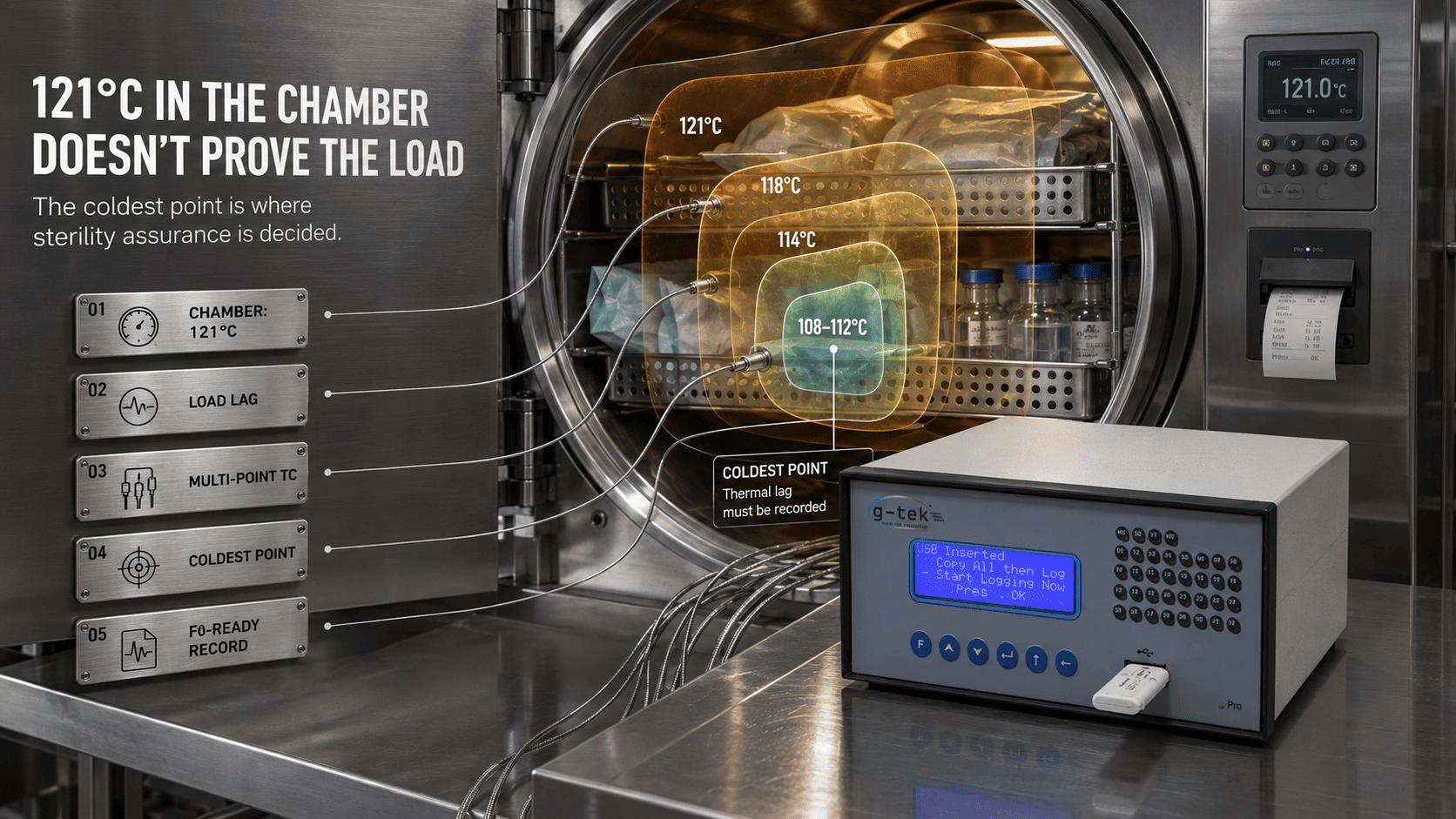
The G-Tek SC5x/SC9x Universal Scanner reads thermocouples placed throughout the load on gtekNet™, recording continuously into a batch-traceable, NABL-calibrated and F0-ready report for validation.
Where is G-Tek located?
G-Tek Corporation is based in Vadodara, Gujarat, and has been manufacturing monitoring and recording instruments for over 30 years, with an in-house NABL ISO/IEC 17025-accredited calibration laboratory.
Related Posts