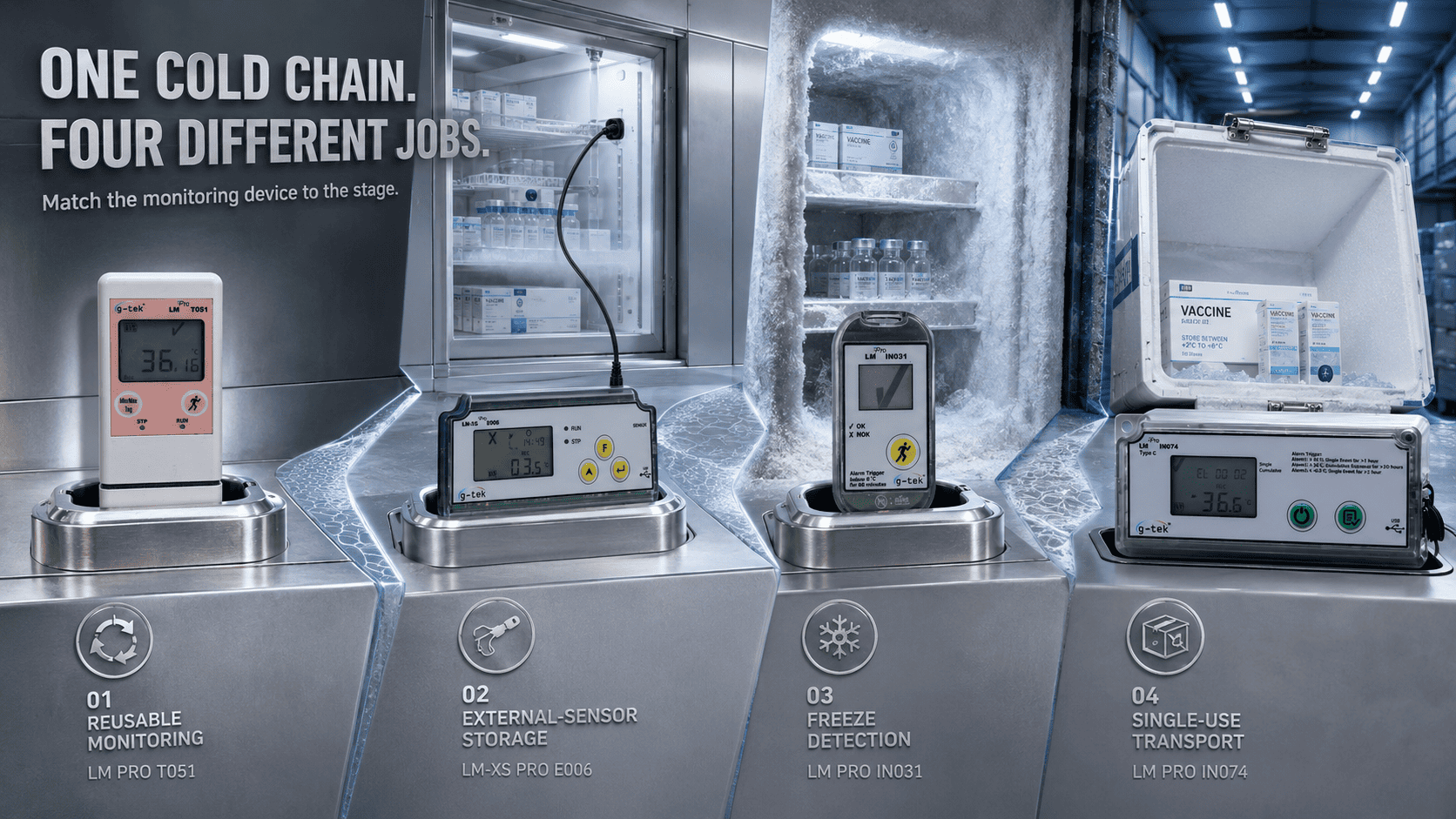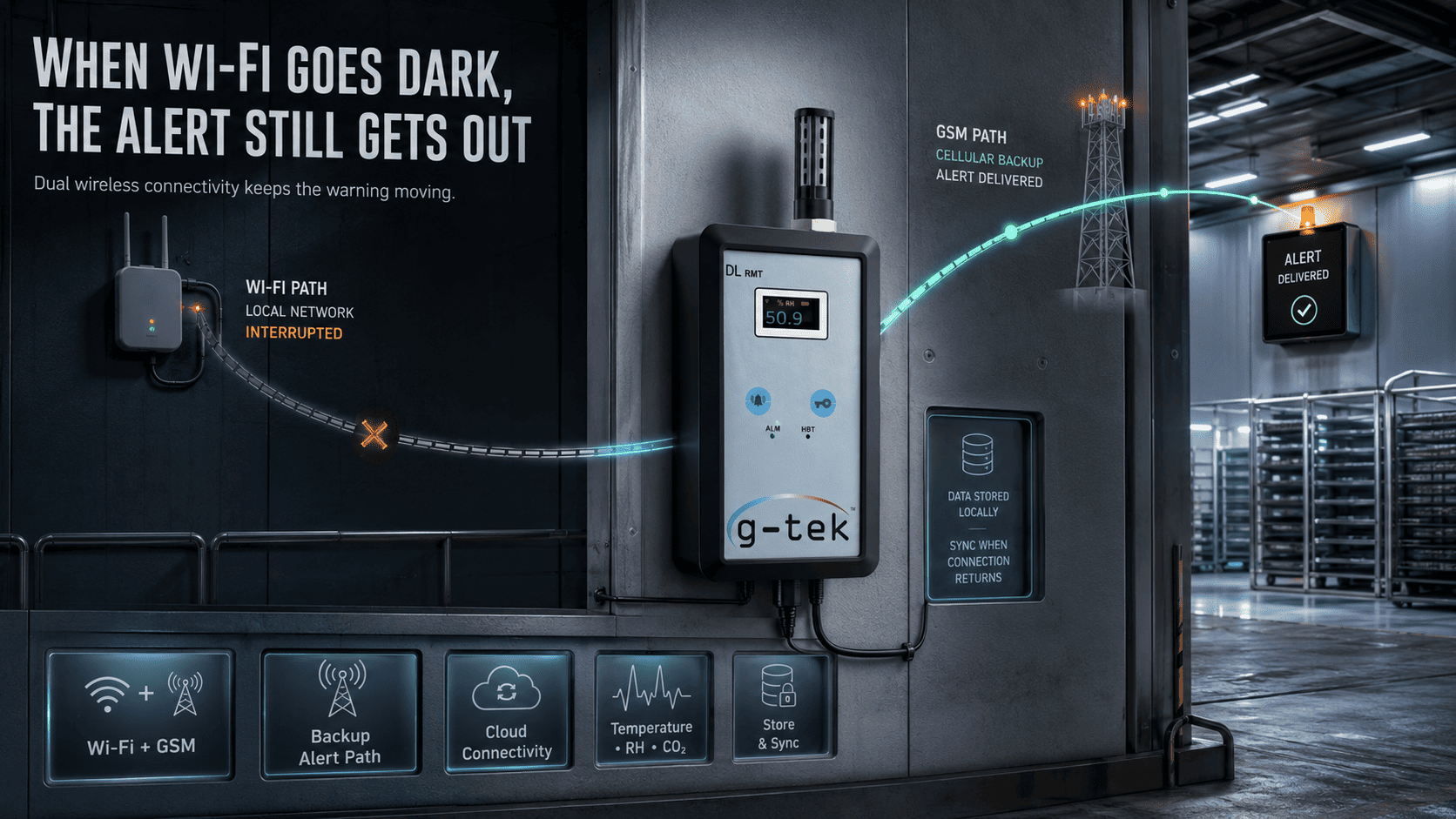
She spread every monitoring device from her vaccine programme across one desk. Storage fridge. Shipping…
Autoclave Load Temperature Monitoring: Why 121°C in the Chamber Doesn’t Prove the Whole Load Was Sterilized
The cycle looked perfect.
A sterilization technician watches an autoclave finish its run. The chamber gauge hit 121°C, the timer ran its course, green light, done.
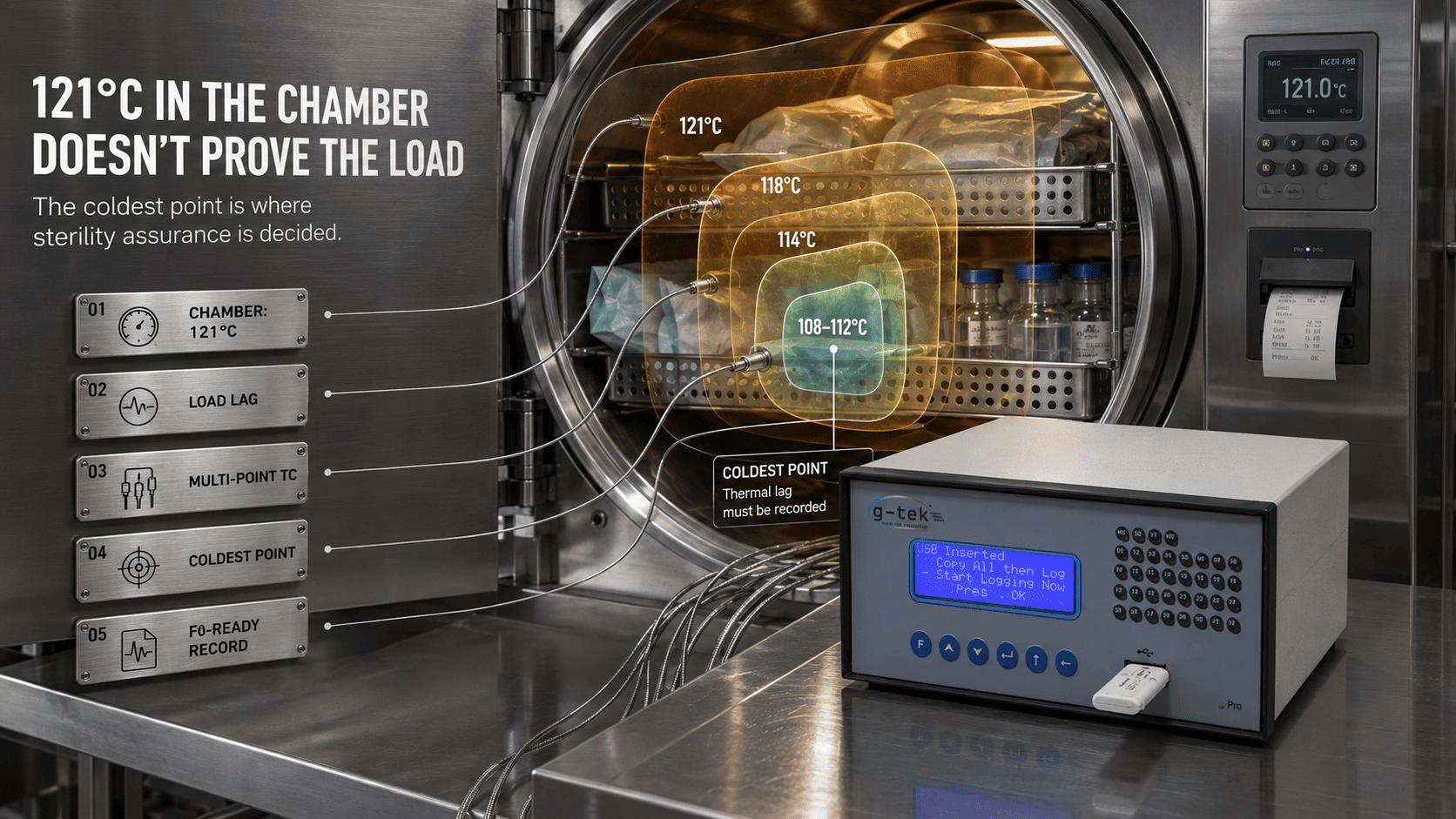
What that reading doesn’t show is that deep inside a densely packed load, the coldest item was still climbing toward temperature, minutes behind the chamber.
The cycle “passed.” But whether that coldest point held sterilizing conditions long enough is a question no one in that room can answer because only the chamber was recorded.
Effective autoclave load temperature monitoring is not about proving only that the chamber reached 121°C. It is about proving that the coldest point of the load also reached the required temperature and held it long enough for sterilization.
The chamber heats first. The load lags. Proving sterility means recording where the heat arrives last, not just where it arrives first.
🎯 Key Takeaways
- Sterilization must be achieved at the coldest point of the load, not just in the chamber.
- The chamber reaches temperature first; densely packed loads can lag behind.
- A chamber-only record can’t prove the coldest point received sterilizing conditions.
- Multi-point thermocouples placed throughout the load capture what the chamber probe can’t.
- OEMs who build in load-point recording ship sterilizers whose cycle performance can be documented.
Why Isn’t Chamber Temperature Enough to Prove Sterilization?
Chamber temperature isn’t enough because sterilization must be achieved at the coldest point of the load, which heats slower than the chamber. Therefore, the chamber can reach 121°C while part of the load is still below the required sterilizing temperature.
Steam heats an empty chamber quickly. But a wrapped, packed, or dense load has a slowest-to-heat point, and sterility depends on that point reaching and holding the required temperature.
A chamber-only reading can overstate what the load actually received. That gap is exactly where a passed cycle and an under-processed load can quietly coexist — the kind of discrepancy that surfaces well beyond a simple chamber data logger.
What Does Autoclave Load Temperature Monitoring Need to Prove?
Proving the load was sterilized takes temperature recording at multiple points inside the load, especially the coldest point, throughout the whole cycle. This allows lethality (F0) to be evaluated where it matters most.
That means thermocouples placed throughout the load, including the identified coldest point, recording continuously across come-up, hold, and cool-down.
The data supports the F0 calculation independently of the chamber probe. This aligns with requirements and guidance associated with ISO 17665, EU GMP Annex 1, USP <1229>, and electronic-record expectations such as 21 CFR Part 11.
The Scanner That Reads the Load, Not Just the Chamber
Here’s where the sterilizer stops relying on the chamber alone.
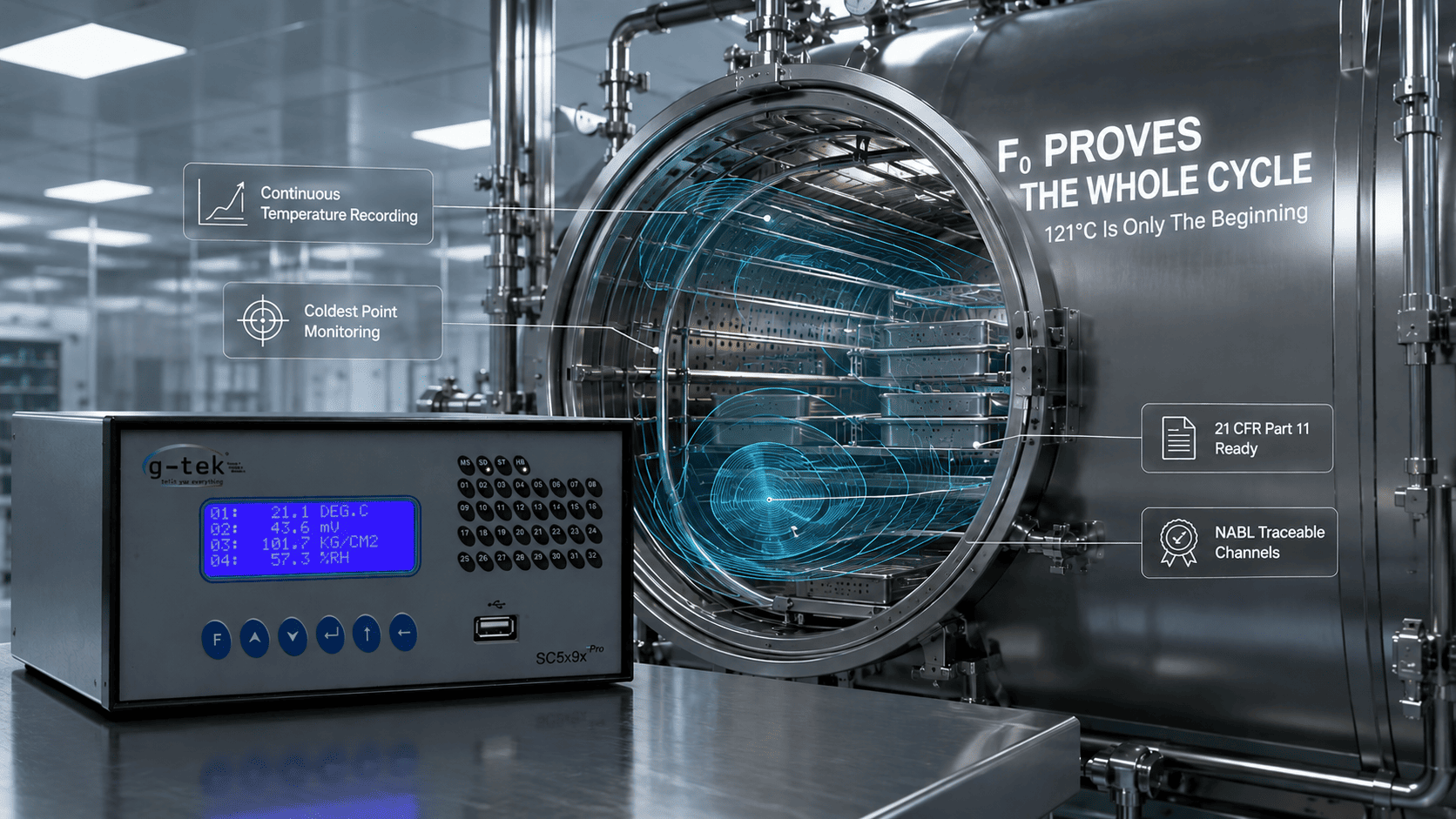
G-Tek’s Universal Scanner reads multiple thermocouples placed throughout the load at once on gtekNet™, recording continuously through the cycle into a batch-traceable, F0-ready report.
Manufacturing monitoring and recording instruments in Vadodara for over 30 years, G-Tek Corporation builds the SC5x/SC9x Universal Scanner to read thermocouples placed throughout a load, including the coldest point.
The system records continuously on gtekNet™ through the entire cycle, producing a 21 CFR Part 11-ready report from which lethality can be evaluated.
Every channel is traceable to G-Tek’s own NABL ISO/IEC 17025-accredited calibration laboratory, helping ensure the sterilization record has the measurement traceability required during a GMP review.
For OEMs, it turns a machine that heated the chamber into one that can document what happened throughout the load.
Ship a Sterilizer That Proves the Load, Not Just the Chamber
If your sterilizers are being specified by pharma or medical-device plants where sterility assurance is critical, load-point proof is what protects the batch.
Reliable autoclave load temperature monitoring documents the coldest point and gives validation teams a clearer picture of what the entire load experienced during the cycle.
👉 Building your next sterilizer? Walk the G-Tek team through your load configuration and cycle and get a clear recommendation on building load-point recording in from the start.
Frequently Asked Questions
Why isn't chamber temperature enough?
Because sterilization must be achieved at the coldest point of the load, which heats slower. The chamber can reach 121°C while part of a dense load is still below the required sterilizing temperature.
What is the coldest point in a load?
It is the slowest-to-heat location, often deep inside a wrapped or densely packed item. Sterility depends on this point reaching and holding the required conditions, so it must be monitored.
How is sterilization of the load proven?
By placing thermocouples throughout the load, including the coldest point, and recording continuously through the cycle. This helps confirm whether the required lethality (F0) was achieved where it matters most.
Which G-Tek product supports autoclave load temperature monitoring?
The G-Tek SC5x/SC9x Universal Scanner reads thermocouples placed throughout the load on gtekNet™, recording continuously into a batch-traceable, NABL-calibrated and F0-ready report for validation.
Where is G-Tek located?
G-Tek Corporation is based in Vadodara, Gujarat, and has been manufacturing monitoring and recording instruments for over 30 years, with an in-house NABL ISO/IEC 17025-accredited calibration laboratory.
Related Posts