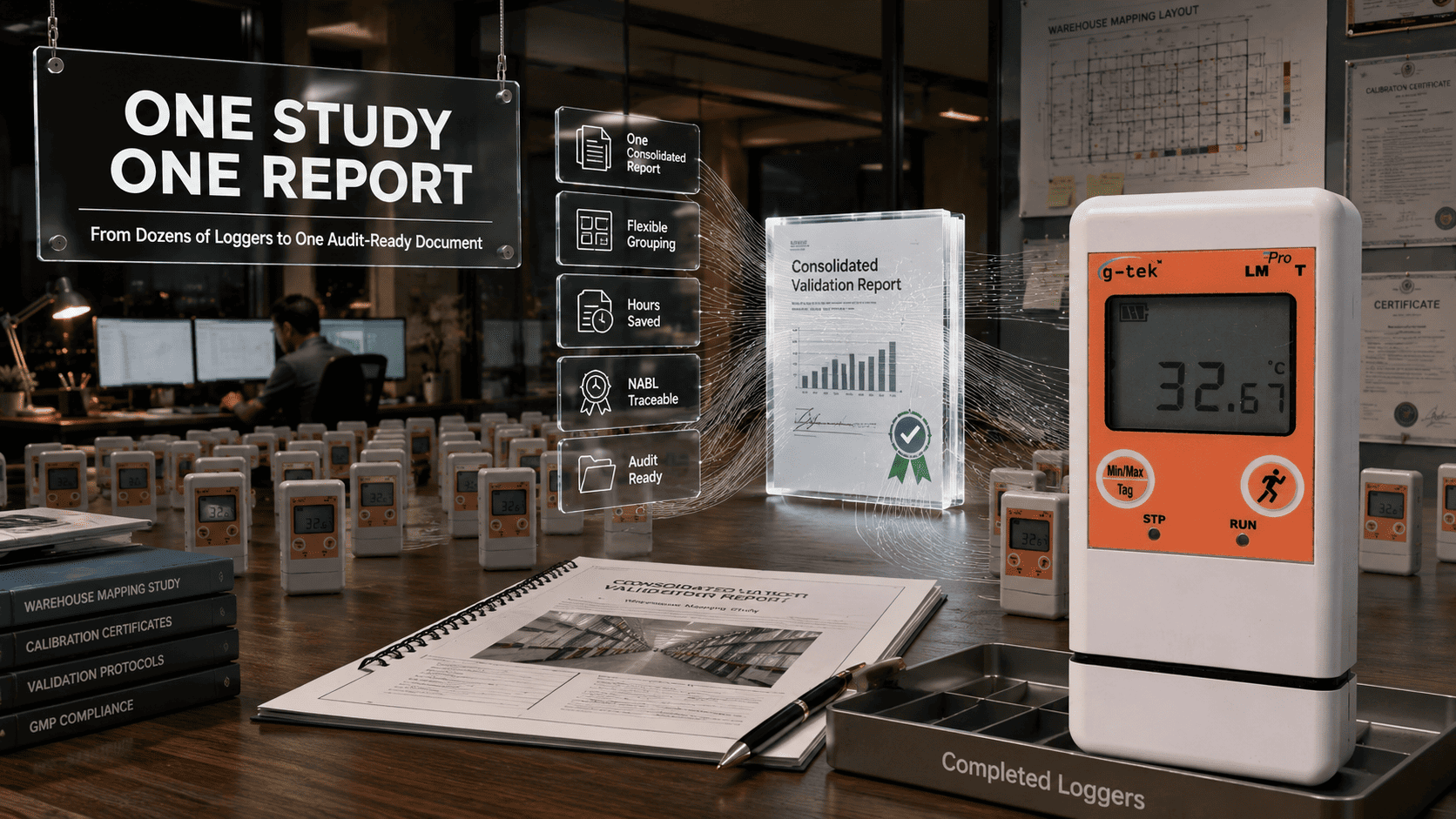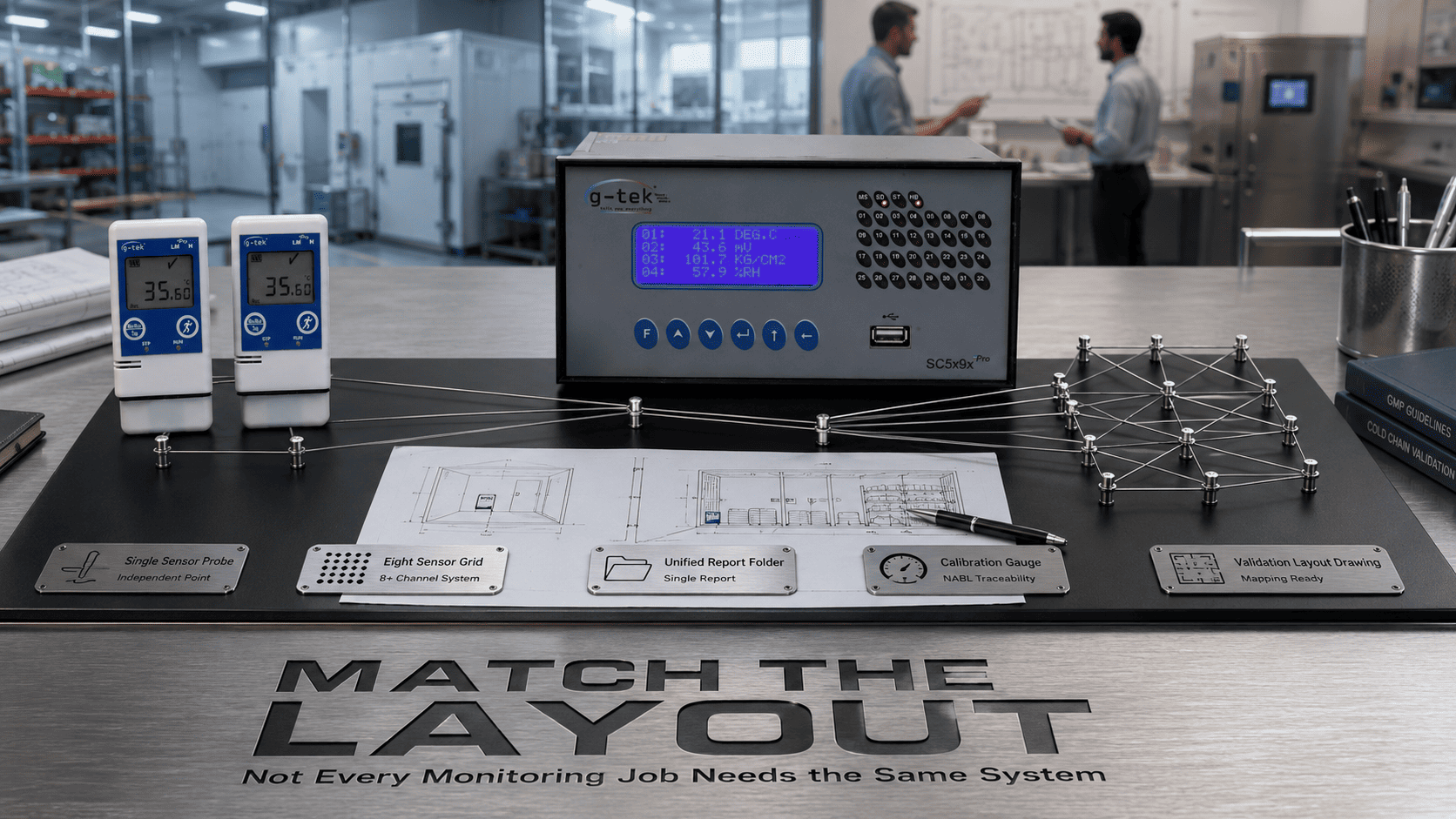
It's 11 p.m. on a Friday. The warehouse mapping study wrapped six hours ago. Fifty…
Two Days Into the Cycle, One Shelf Drifted – Lyophilizer Temperature Monitoring Matters
It’s day two of a three-day lyophilization run. The operator glances at the controller. Everything reads on profile, so he moves on.
What the single control probe can’t show is that the shelf in the back corner has been running slightly warm during primary drying for the last several hours.
Three days in, the batch fails on residual moisture, and there’s no independent record to say which shelf drifted, or when.
In 2026, lyophilizer temperature monitoring is about more than checking what the control probe reads. Every monitored shelf needs a reliable temperature record across a cycle that can run for days.
🎯 Key Takeaways
- Lyophilization cycles run for days across freezing, primary, and secondary drying
- Shelf-to-shelf variation can affect a batch even when the control probe reads on profile
- A single control probe can’t show what every shelf experienced throughout the cycle
- Independent, multi-shelf lyophilizer temperature monitoring helps document a uniform and traceable cycle
- OEMs that build in multi-shelf recording can provide stronger cycle documentation
Why Does One Drifting Shelf Compromise a Whole Freeze-Drying Batch?
A brief shelf temperature variation can affect the drying process because each monitored shelf must follow the required temperature profile.
Freezing establishes the ice structure. Primary drying removes ice through sublimation under vacuum. Secondary drying helps remove remaining bound moisture.
A single control probe reads one location. It may control the cycle effectively, but it cannot independently show the temperature experienced at every shelf.
What Does Lyophilizer Temperature Monitoring Need to Prove?
Effective lyophilizer temperature monitoring requires independent temperature recording across multiple shelves, continuously through freezing, primary drying, and secondary drying.
For regulated environments, the monitoring system should also be evaluated against applicable GMP validation expectations, 21 CFR Part 11, and EU GMP Annex 11 requirements.
Shelf-by-Shelf Proof Built Into the Machine With G-Tek
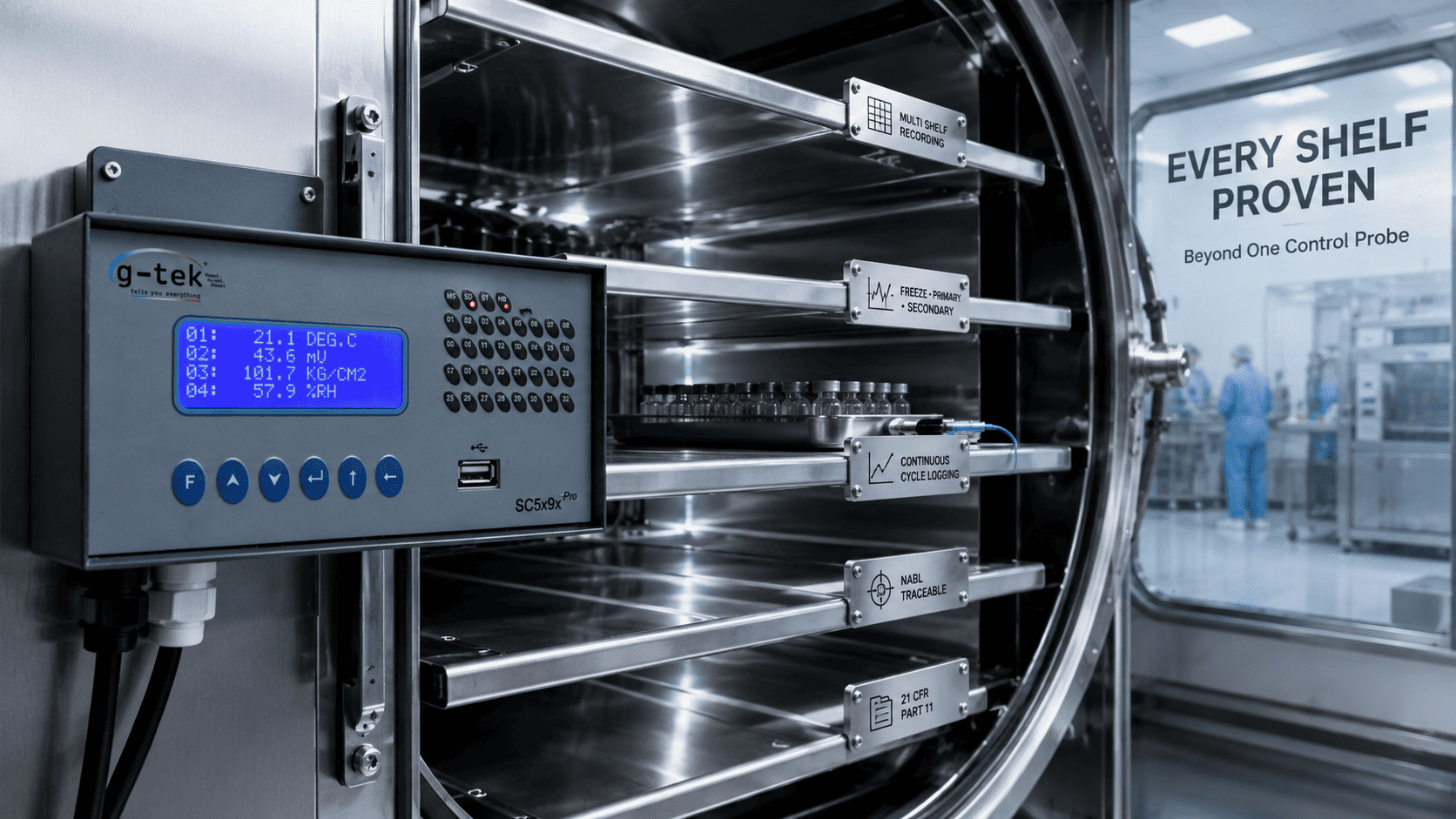
G-Tek Corporation builds the SC5x/SC9x Universal Scanner for multi-point temperature recording applications.
For lyophilizers, the system can be configured to record temperature across multiple monitored shelves simultaneously.
The monitored data can be recorded continuously on gtekNet™, creating a traceable cycle record.
Every applicable measurement channel can be supported through G-Tek’s own NABL ISO/IEC 17025-accredited calibration laboratory.
Ship a Freeze Dryer That Proves Every Shelf
For freeze dryer OEMs, adding independent lyophilizer temperature monitoring helps turn a machine that simply runs the cycle into one that can also document how monitored shelves performed throughout it.
👉 Before your next freeze dryer build, walk the G-Tek team through your shelf layout and cycle stages and get a clear recommendation on building multi-shelf recording in from the start.
Frequently Asked Questions
Why does shelf uniformity matter in a lyophilizer?
Each shelf’s product needs to follow the required temperature conditions through freezing and drying.
Why isn't the freeze dryer's control probe enough?
The control probe reads one location and helps control the process. It doesn’t independently record how every shelf behaves.
How should lyophilizer temperature monitoring be done?
Lyophilizer temperature monitoring should use independent recording across representative shelves throughout freezing, primary drying, and secondary drying.
Which G-Tek product can record a freeze dryer cycle?
The G-Tek SC5x/SC9x Universal Scanner can record multiple monitored shelf temperatures on gtekNet™.
Where is G-Tek Corporation located?
G-Tek Corporation is based in Vadodara, Gujarat.
Related Posts