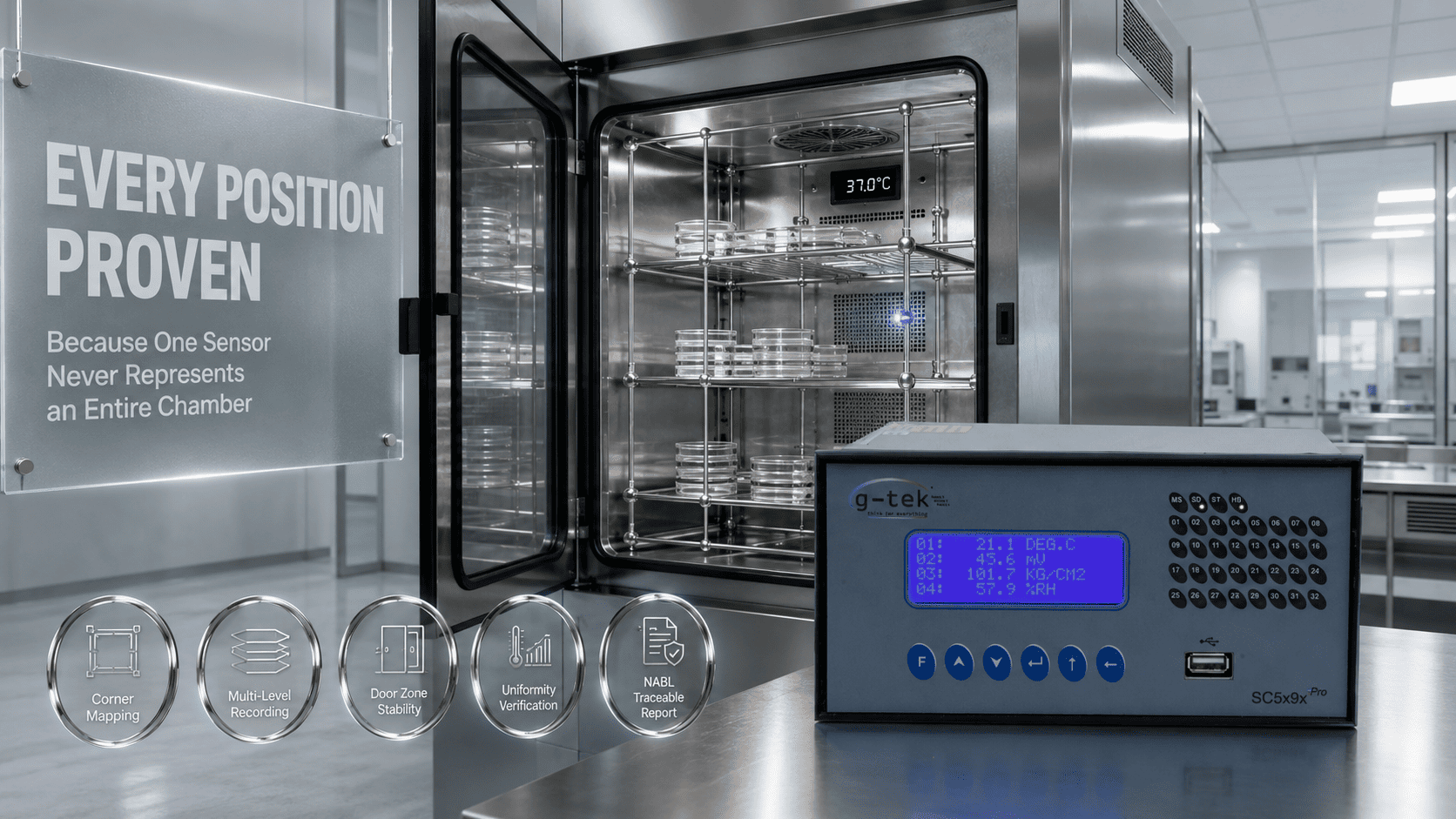
A microbiologist loads plates into the incubator, sets 37°C, and checks the display every morning…
Warehouse Mapping Data Logger: The Logger Choice That Decides Your Study
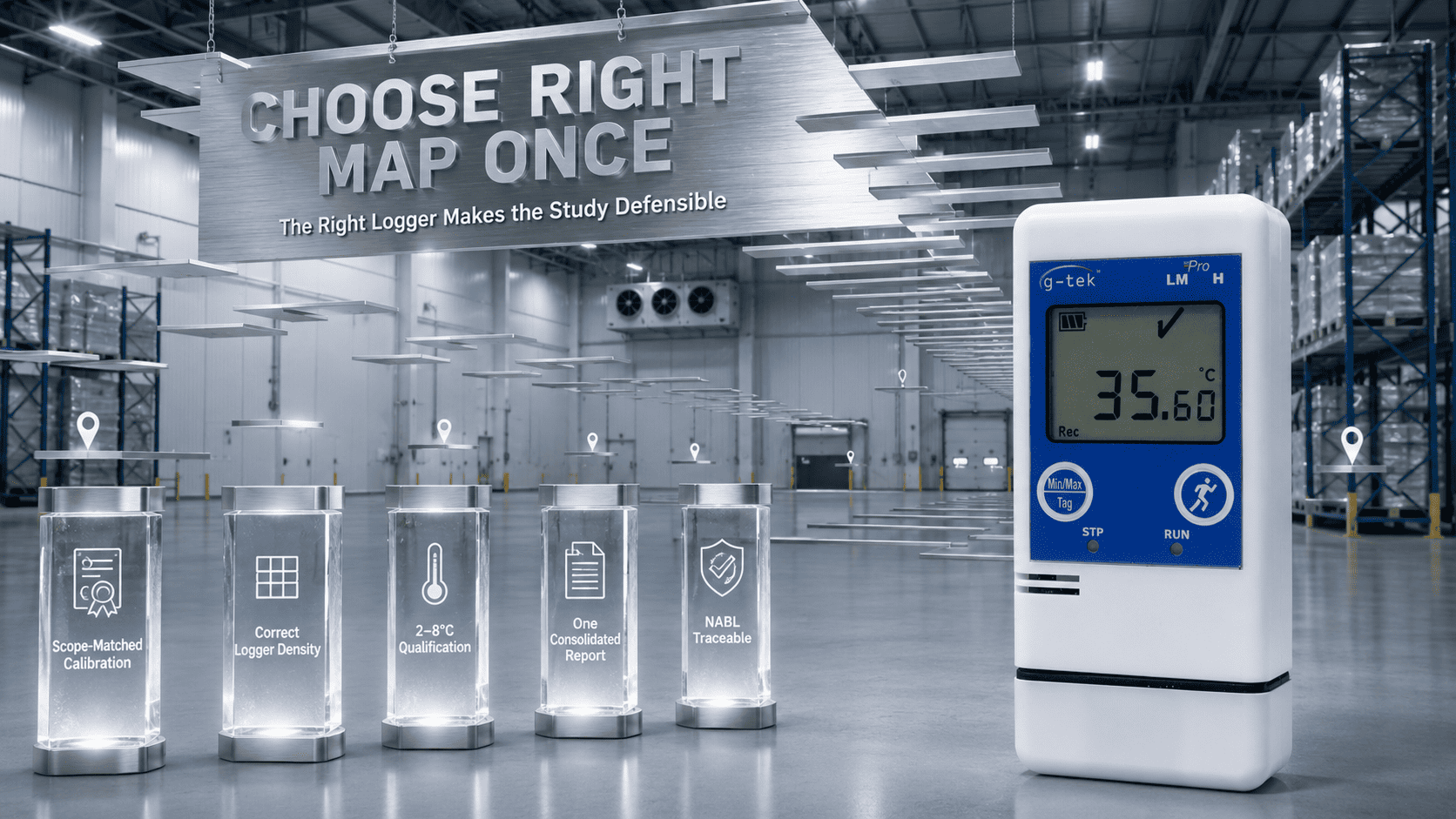
A validation lead sits at her desk, quotes spread across the screen, and picks the loggers that came cheapest and quickest.
Weeks later, during review, the problems surface:
Too few loggers for the warehouse volume the auditor expects.
Calibration certificates that don’t match the cold-storage temperature band.
Forty separate files that somehow need to become one report.
The study that looked complete now needs to be repeated.
In 2026, the success of a warehouse mapping study is often decided before a single logger is placed — by the warehouse mapping data logger selection. The right loggers cover the required volume, carry calibration matched to the exact temperature range, and provide consolidated reporting. The wrong choice can turn a completed study into a re-run.
🎯 Key Takeaways
- A warehouse mapping study’s success is decided by the logger choice before placement begins
- A warehouse mapping data logger should match the required temperature range and study conditions
- Logger quantity must cover the warehouse volume, zones, corners, doors, and different heights
- Calibration scope must match the exact temperature band being mapped
- Data should consolidate into one report instead of multiple files merged manually
- The right logger setup creates a defensible study that supports validation review
What Makes a Warehouse Mapping Data Logger Right for the Study?
A warehouse mapping data logger is suitable when it provides the required temperature range, scope-matched calibration, enough units to cover the storage area, and software support for consolidated reporting.
Warehouse mapping is not about selecting one high-performing logger. It is about selecting the right combination of loggers for the complete storage environment.
The selection should consider:
- Temperature range being mapped
- Number of monitoring points required
- Warehouse size and layout
- Study duration
- Calibration requirements
- Reporting and data review process
Any one of these factors being overlooked can weaken the complete mapping study, even if the placement process is performed correctly.
Explore G-Tek’s data loggers designed for validation and monitoring applications.
How Do You Choose the Right Loggers Before a Warehouse Mapping Study?
You choose the right warehouse mapping data logger by matching calibration scope to the exact temperature band, selecting enough units to represent the storage space, and ensuring all collected data can be reviewed in a consolidated report.
A warehouse mapping study commonly requires multiple loggers positioned across:
- Corners
- Centre locations
- Door areas
- Different shelf levels
- Different storage zones
The exact number depends on warehouse size, layout, risk assessment, and validation requirements.
Study duration also matters. Many mapping studies run for 24–72 hours, while larger warehouses may require longer monitoring periods.
Seasonal conditions should also be considered. A summer mapping study may reveal different temperature behaviour compared to cooler seasons.
Every logger should have NABL-traceable calibration with a scope suitable for the temperature range being measured, supporting expectations under WHO TRS 961 Annex 9 and temperature mapping practices.
A logger with the wrong calibration scope can create questions during review, even if the readings appear accurate.
Why Does Calibration Scope Matter for Warehouse Mapping?
Calibration scope matters because the certificate must support the actual temperature range used during the study.
For example, a cold storage mapping study between 2–8°C should use loggers with calibration appropriate for that range.
A general calibration certificate covering a wide temperature range may not always provide the same confidence as a certificate specifically supporting the required measurement band.
A properly selected warehouse mapping data logger should provide:
- Suitable calibration range
- Measurement uncertainty information
- Traceability documentation
- Audit-ready calibration records
This helps validation teams demonstrate that the recorded temperature data is reliable.
How G-Tek’s LM Pro + LmView Help Warehouse Mapping Studies
G-Tek’s LM Pro loggers with LmView are designed to support warehouse and cold-storage mapping studies by combining portable monitoring with consolidated data reporting.
Manufacturing monitoring instruments in Vadodara since 1990, G-Tek Corporation builds the portable LM Pro T and LM Pro H loggers for point-by-point temperature monitoring.
Each logger is calibrated through G-Tek’s own NABL ISO/IEC 17025-accredited laboratory, helping ensure the calibration documentation matches the monitoring requirements.
The collected data can be reviewed through LmView, allowing multiple logger records to be compiled into a consolidated report instead of manually combining separate files.
For validation teams, this means the study data is easier to review, organize, and present during qualification activities.
Before You Order Your Mapping Loggers, Verify These
Before selecting a warehouse mapping data logger, check:
- Calibration scope matches the exact temperature band being mapped
- Logger quantity covers the complete warehouse volume and zones
- Battery capacity supports the full study duration
- Measurement range suits the storage environment
- Data can be consolidated into one report
- Every logger has suitable traceable calibration documentation
A strong mapping study begins with the right monitoring setup, not after the data has already been collected.
Choose the Loggers Before the Study Chooses for You
If a warehouse mapping study is coming up, the loggers selected today decide whether the study moves smoothly through review or requires additional work later.
Scope-matched calibration, sufficient monitoring points, and consolidated reporting are what make a warehouse mapping study defensible.
👉 Planning a warehouse or cold-store mapping study? Share your storage area, temperature range, and validation requirements with the G-Tek team and get a clear recommendation on the logger and reporting setup that fits your study.
Frequently Asked Questions
What should I look for in a warehouse mapping data logger?
A suitable warehouse mapping data logger should have the correct temperature range, scope-matched calibration, sufficient battery life, enough units for the study, and reporting capability for validation review.
Why does calibration scope matter for warehouse mapping?
Calibration scope ensures the logger’s certificate supports the actual temperature range being measured. A mismatch can create questions during validation review.
How many loggers are needed for warehouse mapping?
The number depends on warehouse size, layout, storage zones, and validation requirements. Larger spaces typically require multiple loggers placed across corners, shelves, doors, and different heights.
Which G-Tek loggers are used for warehouse mapping?
G-Tek’s LM Pro T and LM Pro H loggers are used for warehouse and cold-storage monitoring. Their data can be consolidated through LmView.
Where is G-Tek Corporation located?
G-Tek Corporation is based in Vadodara, Gujarat, manufacturing monitoring instruments since 1990, with an in-house NABL ISO/IEC 17025-accredited calibration laboratory and pan-India support.
Related Posts